Parents replacing cow’s milk after age one
If oat drink will be a regular milk-style drink, compare the child’s age, the carton’s calcium and iodine information, and its place in the wider diet.


Check the product type before shopping by volume: the 4-pint bottles in the reviewed Tesco and Sainsbury’s listings are dairy milk, while the reviewed oat drinks are mainly 1L cartons or multipacks. For a child who regularly uses oat drink in place of cow’s milk after age one, compare calcium, iodine and the child’s wider diet; for a small amount in tea-time food, check the intended use and exact allergen label. Ordinary oat drink must not replace breast milk or infant formula for a child under one.
If oat drink will be a regular milk-style drink, compare the child’s age, the carton’s calcium and iodine information, and its place in the wider diet.
For oat drink in cereal, cooking or tea-time food, several cartons may be a more relevant shopping target than a bottle marked 4 pints. Check the total volume and how each opened carton must be stored.
A dairy-free description does not settle whether a particular carton is suitable for a child with other allergies. Read its oat, cereal and precautionary allergen statements.
Start with the child’s age and how often the drink will be used, then compare the label and the amount you need to buy.
| Priority | What to check | Your needs |
|---|---|---|
| Age and regular use | Check any stated age range, calcium and iodine information, and the drink’s intended role. NHS-linked child-feeding guidance advises checking for at least 120mg calcium per 100ml and iodine when choosing a plant alternative as a regular milk-style drink. | If this will regularly replace cow’s milk after my child turns one, I need to consider the whole diet, not just whether the carton says dairy-free. An ordinary oat drink is not a substitute for breast milk or infant formula under one. |
| Pack quantity | Read the product type and volume together. Tesco and Sainsbury’s list 4-pint dairy milk at approximately 2.27L; the reviewed oat-drink listings include 1L cartons and multipacks. | I’m shopping for oat drink in a household quantity, so I need the combined volume of the cartons rather than a 4-pint label on a dairy bottle. |
| Allergens | Read the current ingredients, emphasised allergens and precautionary statements on the exact pack. Reviewed oat products declare oats or cereals containing gluten; dairy-free does not mean free from every allergen. | Where an allergy matters, I need to check the particular carton against my child’s requirements, including any cross-contact wording. |
| Flavour and use | Compare the nutrition panel and the maker’s stated uses for the exact variant. A no-sugars or barista description alone does not establish age suitability or the right nutritional role. | For a small amount in tea-time food, I want a flavour my child accepts. If the drink will be used regularly, I also need to assess its nutrition and allergens. |
| Storage | Check unopened storage instructions, the date on each carton and directions after opening. The reviewed Alpro Oat No Sugars listing says to refrigerate after opening and use within five days. | Before buying a multipack, I need room to store it and a plan to use each opened carton as directed. |
The reviewed Tesco and Sainsbury’s 4-pint listings are dairy milk, not oat drink. The reviewed oat options are generally cartons or multipacks.
Confirm that the product name says oat drink, then add up the carton volumes before ordering.
An ordinary oat drink is not a replacement for breast milk or first infant formula as the main milk for a child under one.
For an infant, follow age-appropriate feeding guidance. If cow’s milk is excluded from an older child’s regular diet, discuss individual dietary needs with a qualified health professional.
Reviewed oat products declare oats or cereals containing gluten, and precautionary statements can differ between cartons.
Check the current pack’s ingredients and allergen wording every time; seek clinical advice if the child has a diagnosed allergy or has reacted to a food.
Coffee-oriented positioning does not establish that a drink meets a child’s needs when used regularly in place of milk.
Compare the exact carton’s calcium, iodine, nutrition and allergen information with an everyday oat drink, and consider how it will be used.
These brand ranges illustrate different oat-drink formats and variants; check the individual product rather than assuming every drink in a range has the same ingredients or fortification.
Oatly’s UK oat-drink range includes Whole and No Sugars variants in 1L formats.
The reviewed range includes Original, No Sugars and a Growing Up oat drink labelled for ages 1–3.
Minor Figures describes Everyday Oat for uses including tea and cereal, alongside a coffee-oriented Barista Oat.
Tesco lists an own-label 1L oat drink alongside other oat-drink choices.
M&S Food lists 1L oat-drink options, including a barista variant and a simple-ingredient variant.
These multipacks offer 1L oat-drink cartons for households planning tea-time food and drinks. They include everyday, no-sugars, age-labelled and barista-style options; assess each carton for the child’s age, dietary role and allergens.
 No image available
An option to compare if a no-sugars oat drink is wanted for cereal or tea-time food. The listing states 0.0g sugars per 100ml and lists calcium and iodine. It declares oats as a cereal containing gluten; check the current pack’s full allergen information and whether it suits the child’s age and regular dietary use.
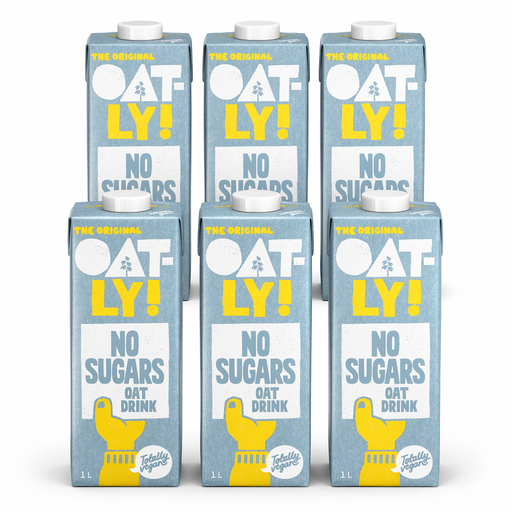 No image available
This six-carton pack is another no-sugars option for planned household use. Its listing states 0g sugars per 100ml and lists calcium and iodine. It contains oats; check the current pack’s full allergen statement and nutrient amounts if it will be used regularly in place of milk.
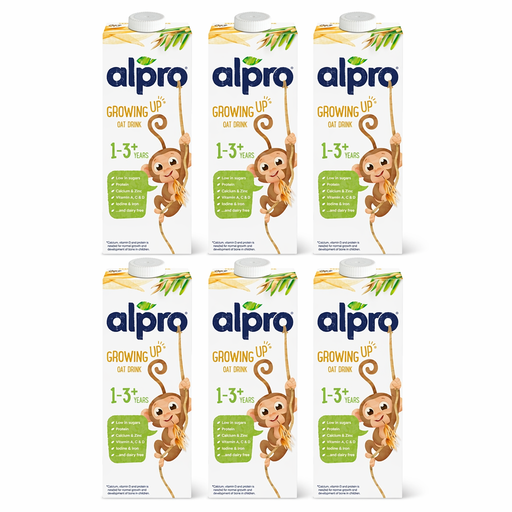 No image available
This is the age-labelled option in the selection: Alpro positions it for children aged 1–3 and lists calcium, iodine and iron. Its listing declares oats. Check the current pack’s allergen statement and nutrition for the child’s needs; the stated age range does not make it an infant-formula replacement.
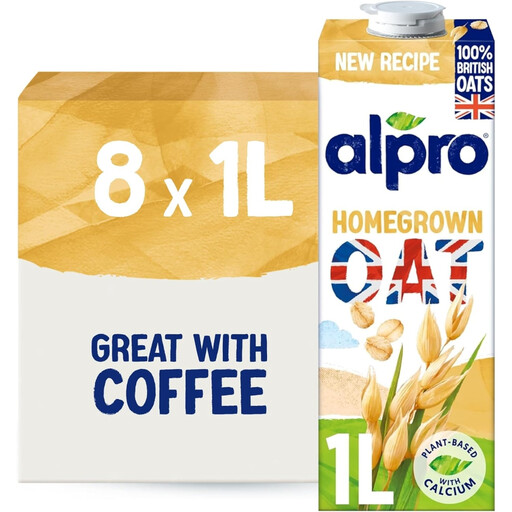 No image available
An Original oat-drink multipack to compare for household use; its listing describes use in hot beverages and lists calcium and iodine. It declares oats as a cereal containing gluten. Check the current pack’s allergen wording and nutrient amounts before using it regularly as a milk-style drink for a child.
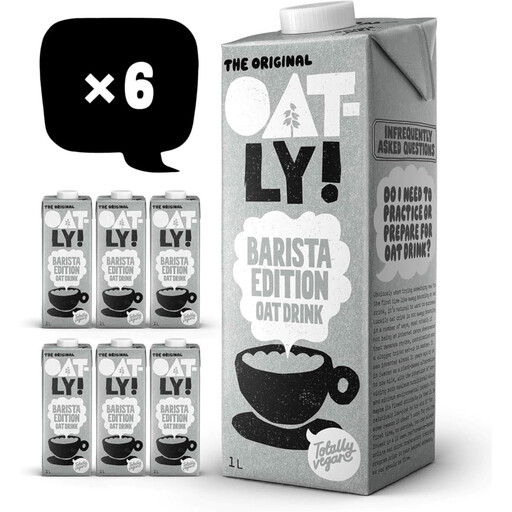 No image available
This oat-drink multipack is primarily positioned for coffee, although its listing also describes use in cereal, smoothies and cooking. It lists calcium and iodine and declares oats. The product description says it is not suitable as a complete milk substitute for infants or young children; do not choose it for that role.
Check the name before buying: the reviewed Tesco and Sainsbury’s 4-pint listings are approximately 2.27L dairy milk, while the reviewed oat drinks are mainly 1L cartons or multipacks. Add up the carton volumes if you need a similar household quantity.
Ordinary oat drink should not replace breast milk or first infant formula as the main milk before age one. Follow age-appropriate feeding guidance and seek qualified advice for an infant with particular dietary needs.
Check the exact carton’s calcium and iodine information and consider the child’s wider diet. NHS-linked child-feeding guidance advises a fortified plant alternative with at least 120mg calcium per 100ml and iodine when used in this role.
No. The reviewed Oatly products describe themselves as free from cow’s milk or dairy, but reviewed oat products also declare oats or cereals containing gluten. Check the exact pack’s ingredients and precautionary allergen statements against the child’s needs.
Follow the instructions on each carton, particularly after opening. The reviewed Alpro Oat No Sugars listing says to refrigerate opened cartons and use them within five days; check dates and storage directions before buying a multipack.