Households serving oat drink each morning
If several people want oat drink with cereal, granola, fruit or hot drinks, calculate the total volume before choosing cartons. A 1L carton is less than half of a four-pint target.


Using the 568ml UK pint cited by the Department for Business and Trade, four pints equal 2.272L: two 1L cartons fall short, while three exceed that quantity. Plan around the number of bowls and drinks you will serve, then choose an everyday oat drink for cereal or a barista drink if foamed coffee matters. Check the exact carton for fortification and allergen information.
If several people want oat drink with cereal, granola, fruit or hot drinks, calculate the total volume before choosing cartons. A 1L carton is less than half of a four-pint target.
If oat drink regularly takes the place of dairy in a plant-based diet, compare the nutrients listed on each carton. Fortification differs between products: Marks & Spencer states that its Only 3 Ingredients Oat Drink is not fortified.
If lattes or cappuccinos are part of the meal, a barista-labelled drink is worth comparing with an everyday carton. Check its ingredients and allergen statement as well as the quantity you need.
Start with the volume your breakfast requires, then decide whether the drink is mainly for cereal, hot drinks or both.
| Priority | What to check | Your needs |
|---|---|---|
| Breakfast quantity | Check the volume per carton and the number of cartons in a pack. Four UK pints equal 2.272L, based on the 568ml pint cited by the Department for Business and Trade; two 1L cartons provide 2L and three provide 3L. | I want enough for the planned bowls and drinks without buying more cartons than I expect to use. |
| Fortification | Compare the exact carton’s ingredient and nutrition panels for added calcium, iodine, vitamin D and vitamin B12. The NHS discusses fortified dairy alternatives in its guidance on vegan diets; individual oat drinks differ. | If oat drink regularly replaces dairy in my breakfast, I want to know which nutrients this particular product lists. |
| Hot drinks | Check whether the product is intended for foamed coffee and read its preparation directions. Tesco and Sainsbury’s give product-specific advice for adding their everyday oat drinks to hot liquids. | Coffee foam matters when I am making lattes or cappuccinos; for an occasional tea, I would also check the ordinary carton’s directions. |
| Allergen labels | Read the finished product’s gluten-free claim, allergen statement and any coeliac-suitability warning. A gluten-free oat ingredient does not by itself establish the status of the finished drink. | Where gluten or oat allergens matter, I need to check the exact pack rather than assume that every oat drink in a range has the same labelling. |
| Pack and storage | Check whether the listing is for one carton or a multipack. Read the carton’s instructions for storage before and after opening and for how soon to use it once opened. | A larger pack could cover several breakfasts, but I want to open cartons at a pace that suits my household. |
Two cartons provide 2L, which is 272ml short of four UK pints.
Estimate what guests will use, then check the total volume on the packs. If a listing describes a four-pint bottle, confirm its printed volume.
Some products list added calcium and vitamins, while Marks & Spencer states that its Only 3 Ingredients Oat Drink is not fortified.
When fortification affects your choice, compare the exact ingredient and nutrition panels rather than relying on the brand or carton size.
Minor Figures labels its Barista Oat gluten free, whereas Marks & Spencer says its researched oat drinks are not suitable for coeliacs. The Food Standards Agency also identifies oats as an allergen, including when they are gluten free.
Check the finished product’s label and suitability statements, not just its oat ingredients or another drink from the same brand.
Everyday oat drinks can come with different preparation advice: Tesco advises adding its drink before hot liquid, while Sainsbury’s advises letting water cool slightly to reduce separation.
Follow the directions on your carton, or compare barista products if foamed coffee is a regular part of breakfast.
These examples show why it pays to compare exact products within a brand, particularly for carton size, fortification and coffee use.
Oatly’s UK Oat Drink Whole 2.8 page lists 0.5L and 1L sizes and describes use in coffee and other hot drinks.
Alpro’s UK Oat Original product is an everyday oat drink listed in a 1L format.
Minor Figures describes Barista Oat for coffee use and labels that product gluten free.
Tesco Long Life Oat Original is a 1L own-brand option for everyday use.
Sainsbury’s Long Life Oat Drink is a fortified 1L own-brand carton.
M&S offers distinct options for a short ingredient list and for coffee preparation.
These options include everyday and barista oat drinks in single cartons and multipacks. Compare the listed pack quantity with your four-pint target before choosing.
 No image available
A barista-style option to consider when making coffee drinks at breakfast. The eight 1L cartons total 8L, considerably more than four pints; check whether that pack quantity suits your household and read the exact allergen label.
 No image available
An everyday oat-drink option for cereal and general breakfast use. This pack contains eight 1L cartons, so it exceeds a four-pint purchase; check the exact carton’s nutrition and allergen panels if those details affect your choice.
 No image available
Consider this named variant if you are comparing Alpro oat drinks for cereal or hot drinks. Its eight 1L cartons total 8L, well beyond four pints; use the exact pack label to compare nutrition, ingredients and allergens with other variants.
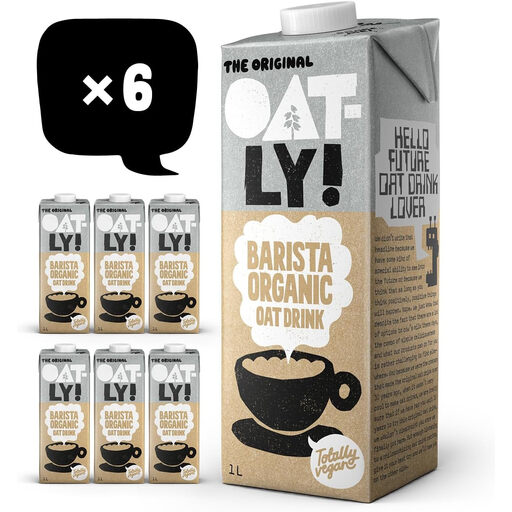 No image available
A coffee-oriented option for a breakfast that includes hot drinks. The six 1L cartons exceed four pints, and this organic variant should not be assumed to behave like Oatly’s other barista drinks. Check its exact pack for fortification and allergen information.
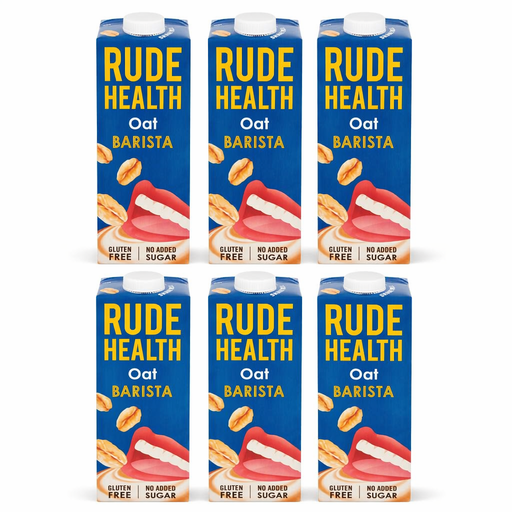 No image available
A single-carton option to consider for coffee or cereal. One 1L carton is less than four pints, so plan for additional cartons if you need that total. Check the finished drink’s gluten-free statement and fortification details on the exact pack where relevant.
No. The Department for Business and Trade cites a UK pint as 568ml, making four pints 2.272L. Two 1L cartons leave a 272ml shortfall; three provide 3L. Check the printed volume rather than assuming a carton matches a four-pint milk bottle.
Not solely for cereal. Barista products are more relevant to compare when lattes or cappuccinos are an important part of breakfast: Minor Figures positions its Barista Oat for those drinks, and M&S describes its Barista Oat Drink as suitable for frothing. Compare ingredients and nutrition if the same carton will also be used on cereal.
No. Tesco and Sainsbury’s list added nutrients for their named long-life oat drinks, while M&S states that Only 3 Ingredients Oat Drink is not fortified. If oat drink regularly replaces dairy in a plant-based diet, compare the exact carton’s nutrient information; the NHS discusses fortified dairy alternatives in its vegan-diet guidance.
No. Check the finished product’s label and any coeliac-suitability warning. Minor Figures labels its Barista Oat gluten free, whereas M&S states that its named oat drinks are not suitable for coeliacs. The Food Standards Agency also notes that oats remain an allergen even when gluten free.
Check the number and size of the cartons, then read the storage and after-opening directions on the exact product. An eight-carton or six-carton pack provides far more than four pints, so consider how many cartons you will open for this breakfast and when you expect to use the rest.