Who is this choice for?
How often you use oat drink, and what you need from its label, changes which details matter most.
Regular dairy-replacement users
If oat drink regularly accompanies lunch, cereal or hot drinks in place of dairy, compare the nutrients declared on each carton. The UK Office for Health Improvement and Disparities notes that plant-based drinks vary considerably in nutrient content.
Organic-first shoppers
If an organic product or short ingredient list is your priority, check its fortification separately. Oatly lists water, organic oats and sea salt for its Organic Oat Drink and describes that product as unfortified.
Shoppers checking gluten and allergens
If you require a gluten-free-labelled drink, look for that claim on the exact carton rather than assuming every oat drink qualifies. Check its oat allergen declaration separately: gluten-free status does not remove oats as an allergen.
What should you check?
Start with how you will use the drink, then compare the relevant declarations on the exact pack rather than choosing by brand or carton format alone.
| Priority |
What to check |
Your needs |
| Fortification |
Compare declared calcium, iodine and vitamins on the exact carton. Use the per-100-ml or per-serving nutrition information to compare products on the same basis. |
I use oat drink regularly instead of dairy and want to know which nutrients this particular drink provides. The UK Office for Health Improvement and Disparities notes that plant-based drinks vary considerably in nutrient content. |
| Iodine |
Check whether iodine appears on the current product label; do not infer it from the brand or another variant. A British Journal of Nutrition analysis of UK National Diet and Nutrition Survey data from 2014–17 reported lower iodine intake among exclusive milk-alternative users than cows’-milk consumers. |
If oat drink frequently replaces cows’ milk for me, I want to check its iodine declaration rather than assume it is fortified. |
| Ingredients |
Read the ingredient list and check any organic designation alongside, not instead of, the nutrient declarations. Oatly describes its Organic Oat Drink as unfortified. |
A short ingredient list matters to me, but I also want to know whether I am choosing an unfortified drink. |
| Gluten and oats |
Look for an explicit gluten-free claim when required, then read the oat allergen declaration. The Food Standards Agency defines gluten-free as no more than 20 mg/kg of gluten in the food as sold. |
I need the exact drink to carry the label I require, without mistaking a gluten-free claim for the absence of oats. |
| Sugars |
Compare sugars per 100 ml on the nutrition panel, including when the product name says “No Sugars”. Keep that figure separate from claims about added sugars. |
If sugars affect my choice, I want to compare the figures on equivalent portions rather than rely on the front of the pack alone. |
| Storage and pack size |
Check the carton size, unopened-storage instructions and directions for refrigeration and use after opening. Apply the directions to the exact product. |
I may open a carton for one lunch and use the remainder over several days, so its storage instructions need to fit that plan. |
Brand references
These product-line examples show why the variant and its current label matter more than the brand name alone.
Oatly
Oatly’s Semi and Organic oat drinks illustrate two different ingredient and fortification choices.
- Oatly lists calcium, iodine, vitamins D2, riboflavin and B12 for its Semi Oat Drink.
- Oatly lists water, organic oats and sea salt for its Organic Oat Drink and describes that variant as unfortified. Check the current carton when comparing them.
Minor Figures
Its Everyday Oat and Barista Oat products are presented for different uses, so check which variant you are considering.
- Minor Figures lists calcium, vitamin D, riboflavin, vitamin B12 and iodine for Everyday Oat and labels that product gluten-free.
- A gluten-free label does not remove oats from the allergen check. Read the declaration on the exact product.
Alpro
Alpro has Original, No Sugars and Barista oat-drink variants; compare their individual labels rather than treating them as one formulation.
- The Alpro Oat Original product information lists calcium and vitamins B2, B12 and D2 among its ingredients.
- Iodine is claimed in product text for an Alpro Oat Original pack but is not named in the ingredient list shown with it. Check the physical carton if iodine affects your choice.
Tesco
Tesco’s oat-drink category is a place to compare listed products from several brands, rather than a single oat-drink formulation.
- Its category listing includes Alpro and Oatly oat drinks.
- A category listing does not establish the nutrients, ingredients or suitability of any particular carton; check its product label.
Oat-drink options on Joybuy
These oat-drink options include No Sugars, Original and coffee-focused Barista variants. For a regular lunch drink or dairy replacement, compare the exact carton’s nutrition, ingredients and storage directions before choosing.
 No image available
Alpro Oat No Sugars Long Life Drink 8 x 1L
For regular lunches, this No Sugars variant gives you an 8 x 1L pack to compare against your usual use. Check its nutrient and oat-allergen declarations if it replaces dairy or you need a gluten-free-labelled drink. Follow the carton’s refrigeration and use instructions after opening.
View on Joybuy
 No image available
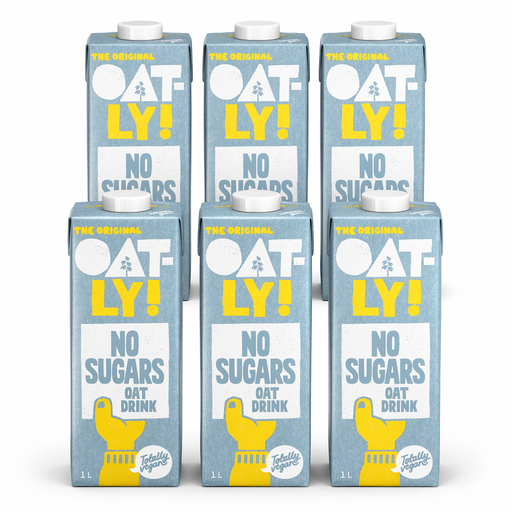
6 Oatly No Sugars Oat Drink 1L
If you want a No Sugars oat drink for everyday use, compare this 1L variant’s nutrition and fortification declarations with other cartons. Check the exact pack for its quantity, storage directions and any gluten-free claim before those details guide your purchase.
View on Joybuy
 No image available
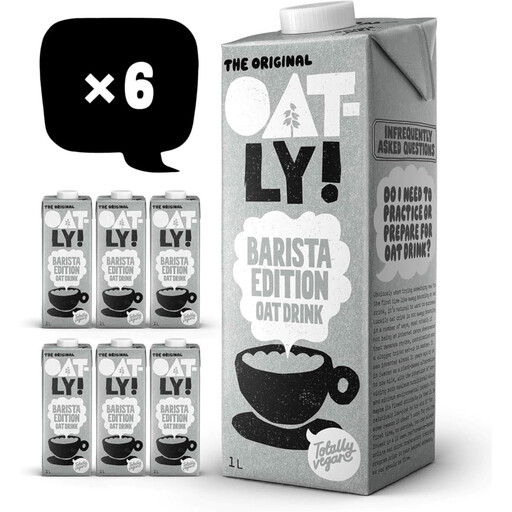
Oatly Long Life Barista Oat Drink 6 x 1L
This 6 x 1L Barista variant is a coffee-focused option if you also use oat drink with lunch. Compare its nutrition label with everyday variants if the drink regularly replaces dairy. Check the exact carton for allergen information and follow its directions after opening.
View on Joybuy
 No image available
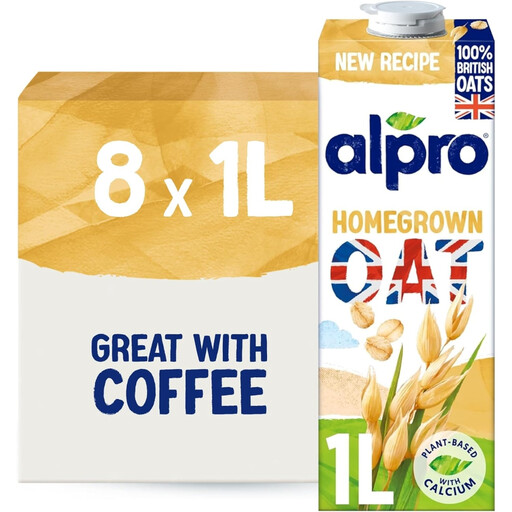
Alpro Oat Original Long Life Drink 8 x 1L
This 8 x 1L Original variant is an option for comparing long-life cartons used across meals and drinks. Its product text claims iodine, but the ingredient list shown with it does not name an iodine ingredient: check the current carton if iodine matters. Check its oat allergen declaration separately, and refrigerate after opening as directed.
View on Joybuy
 No image available
Alpro Barista Oat Long Life Drink 8 x 1L
This 8 x 1L Barista variant is described chiefly for coffee and hot drinks. If you also want it as a regular lunch drink, check the exact carton’s nutrition and allergen declarations rather than assuming it matches an everyday variant. Follow its directions for refrigeration after opening.
View on Joybuy
Questions about choosing oat drink
Does “pre-grated” tell me anything about oat drink?
No. “Pre-grated” describes a cheese format, not an oat-drink attribute. For an oat drink to have with lunch, compare the exact carton’s ingredients, nutrition, allergen information and storage instructions instead.
When should I compare fortified oat drinks?
Compare fortification when you regularly use oat drink instead of dairy and want the drink to contribute particular nutrients. Check calcium, iodine and vitamin declarations on each carton: the UK Office for Health Improvement and Disparities notes that plant-based drinks vary considerably in nutrient content.
Can I assume an organic oat drink is fortified?
No. Check the individual carton rather than inferring fortification from its organic designation. Oatly lists water, organic oats and sea salt for its Organic Oat Drink and describes that variant as unfortified.
Does gluten-free mean an oat drink contains no oat allergen?
No. The Food Standards Agency defines gluten-free as no more than 20 mg/kg of gluten in the food as sold; oats remain an allergen. Check both the gluten-free claim and the allergen declaration on the exact pack if either affects your choice.
How should I plan storage for lunches?
Follow the instructions on the carton you buy, particularly after opening. Oatly says its Semi Oat Drink can be kept at room temperature before opening, while the Minor Figures Everyday Oat listing instructs users to refrigerate after opening and consume it within seven days; those directions should not be assumed to apply to other variants.


