If oat drink will regularly replace dairy in your first food shop, start with a carton that lists calcium, iodine, vitamin D and vitamin B12; the NHS recommends fortified dairy alternatives as part of a planned vegan diet. A barista version is worth considering for regular lattes or cappuccinos, while a short ingredient list may suit a different priority but does not establish that the drink is fortified. Check the exact carton for allergens, nutrition and storage instructions before choosing.
Who is each type for?
For a first shop, the most useful distinction is whether the carton will be an everyday dairy alternative, mainly a coffee ingredient or a product that must meet a specific dietary requirement.
Households using oat drink regularly
If one carton needs to work in cereal, porridge, tea and cooking, check its fortification and nutrition panel rather than relying on the name of the range. The NHS recommends fortified dairy alternatives within a planned vegan diet.
Home latte drinkers
If you often make lattes or cappuccinos, a barista-labelled drink is the more targeted option: Oatly, Minor Figures and M&S each position their cited barista products for coffee use. If it will also be your everyday carton, compare its nutrition panel with an everyday variant.
Shoppers checking gluten and allergens
Choose by the exact product label, not by the fact that the drink is made from oats. The Food Standards Agency distinguishes a gluten-free claim from oat allergen status, and some M&S oat drinks expressly state that they are unsuitable for coeliacs or people with a wheat allergy.
What should you check first?
Decide how you will use the carton most often, then compare the labels for the details that matter to that use. A coffee-focused formula, a fortified everyday drink and a short-ingredient option answer different priorities.
| Priority |
What to check |
Your needs |
| Everyday fortification |
Look for calcium, iodine, vitamin D and vitamin B12 individually on the carton. Compare sugar, fat and protein on the nutrition panel too; fortification does not make every oat drink nutritionally identical to dairy. |
I plan to use oat drink regularly instead of dairy, so I want to know which nutrients this particular carton contains. The NHS recommends fortified dairy alternatives as part of a planned vegan diet. |
| Coffee use |
Check whether the exact variant is intended for frothing or hot coffee. Compare nutrition using the same quantity and unit rather than assuming a barista and an everyday variant have the same formulation. |
Lattes or cappuccinos are a regular part of my routine, and I care how the drink works in coffee. If I mainly use it on cereal, coffee-focused positioning matters less. |
| Gluten and allergens |
Read the gluten-free claim, emphasised allergens and suitability statements on the exact carton. The Food Standards Agency says a gluten-free claim requires no more than 20 mg/kg gluten; oats remain an allergen even in a gluten-free product. |
For my household, a specific gluten or allergy requirement determines which cartons I can consider. An oat ingredient alone does not answer that question. |
| Ingredient simplicity |
Read the ingredient list alongside the fortification statement. M&S lists water, oats and salt in its cited three-ingredient drink and states that this product is not fortified. |
I prefer a short ingredient list, but I do not want to mistake that preference for evidence of added calcium or vitamins. |
| Pack and storage |
Check the number and size of cartons, whether they need chilling before opening, and the instructions for refrigeration and use after opening. |
In a one-person household, I need a pack I can store and use within each carton’s stated period after opening. |
Common buying mistakes
-
Assuming every oat drink is fortified
A short ingredient list may leave out added nutrients. For example, M&S states that its cited three-ingredient oat drink is not fortified.
If the carton will regularly replace dairy, read its ingredients and nutrition panel for the particular nutrients you want, rather than treating all oat drinks as interchangeable.
-
Choosing barista for every use without comparing labels
A coffee-focused formula answers a different need from an everyday carton. M&S positions its cited Barista drink for frothing, while its Semi drink is a separate everyday variant.
If coffee foam is not important to you, compare everyday and barista cartons by your main use and by nutrition values shown on the same basis.
-
Assuming oat means suitable for every gluten requirement
Gluten-free status and allergen status are separate questions. The Food Standards Agency says oats remain an allergen even when a product meets the conditions for a gluten-free claim.
Where gluten avoidance or an allergy is a necessary condition, read the current carton’s gluten-free claim, ingredients and suitability statements before selecting it.
-
Overlooking the instructions after opening
An unopened carton’s storage format does not tell you how long to keep it once opened. That distinction matters if you use oat drink only occasionally.
Check the carton-specific refrigeration and use instructions, then choose a pack size that fits how quickly your household will use it.
A carton you cannot finish within its stated period may go to waste.
Brand and range references
These examples show how named ranges differ; a brand’s positioning does not establish that every one of its cartons has the same ingredients, nutrition or allergen status.
Oatly
Oatly positions its Barista Edition 1L for coffee and says it can be micro-foamed.
- A named coffee-focused option for shoppers who make foamy hot drinks.
- Oatly distinguishes its organic barista variant from the original and describes it as having less coffee functionality. Check the specific variant rather than assuming the two perform alike.
Minor Figures
Minor Figures positions its cited Barista Oat for lattes, cappuccinos and everyday coffee brewing.
- The brand describes a dense foam texture and labels this product gluten-free.
- Its coffee positioning does not replace a check of the exact carton’s nutrition and allergen information for your household.
M&S Plant Kitchen
The cited M&S range includes Whole, Semi, Barista and three-ingredient oat drinks, giving shoppers distinct everyday, coffee and ingredient-list options.
- M&S lists calcium, iodine, vitamin B12 and vitamin D fortification for its cited Whole, Semi and Barista variants.
- Its cited three-ingredient drink is not fortified and is labelled unsuitable for coeliacs and people with a wheat allergy. Check suitability variant by variant.
Alpro
Alpro says it uses British oats in its oat drinks, a sourcing detail some shoppers may wish to consider.
- The brand says its oat drinks use 100% British oats.
- The sourcing statement does not establish the fortification, nutrition or gluten status of an individual variant; read its carton.
Plenish
Tesco’s listing for the cited Plenish Enriched Oat Drink identifies a fortified, gluten-free-labelled option.
- The Tesco listing gives 240 mg calcium per 100 ml and lists iodine and vitamins D, B2 and B12 for that product.
- Those details describe the cited Enriched carton, not every Plenish drink. Check the product label when shopping.
Oat drinks on Joybuy
These options cover long-life everyday and barista oat drinks in multi-carton packs. For a first shop, check the pack size as well as whether you mainly need an everyday drink or one for coffee.
 No image available
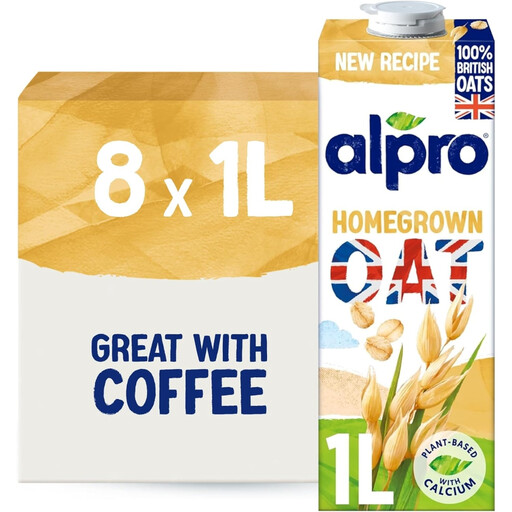
Alpro Oat Original Long Life Drink, 8 x 1L
For a carton used across cereal and hot drinks, check this Original variant’s nutrition, fortification and allergen label against your household’s needs. The long-life pack contains 8 x 1L cartons; also check its instructions after opening.
View on Joybuy
 No image available
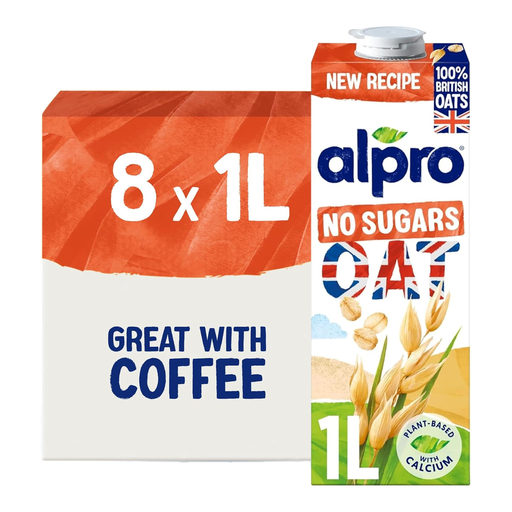
Alpro Oat No Sugars Long Life Drink, 8 x 1L
If you are comparing everyday cartons by sugar content, read this No Sugars variant’s nutrition panel alongside its fortification and allergen information. The long-life pack contains 8 x 1L cartons; consider whether that quantity suits your first shop.
View on Joybuy
 No image available
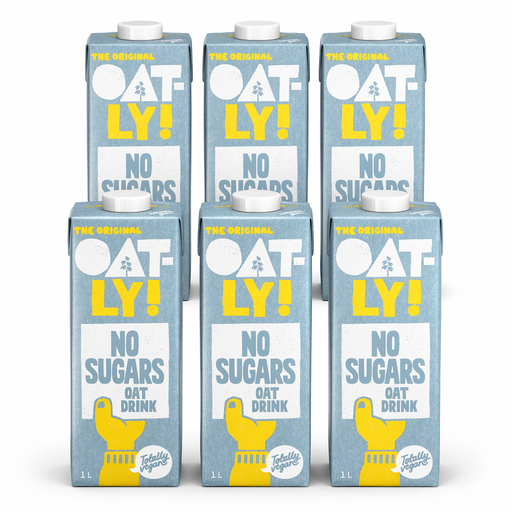
Oatly No Sugars Oat Drink, 6 x 1L
This No Sugars variant is an everyday option to compare if sugar content matters to you. The pack contains six 1L cartons; check the exact carton for fortification, gluten-free status and storage instructions.
View on Joybuy
 No image available
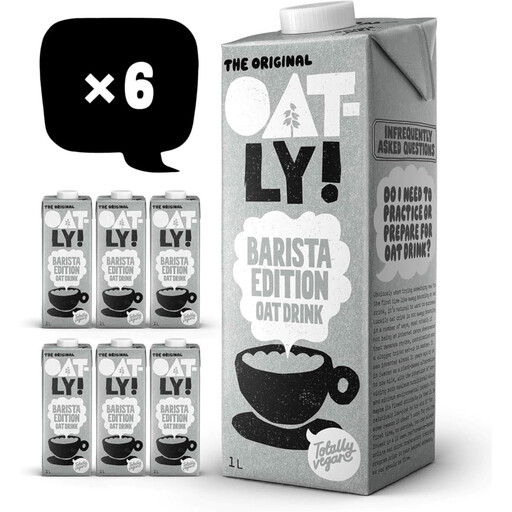
Oatly Long Life Barista Oat Drink, 6 x 1L
If lattes or cappuccinos are a regular use, this Barista variant is the coffee-focused option in the selection. The long-life pack contains 6 x 1L cartons; compare its nutrition and allergen label with an everyday drink if it will serve both purposes.
View on Joybuy
 No image available
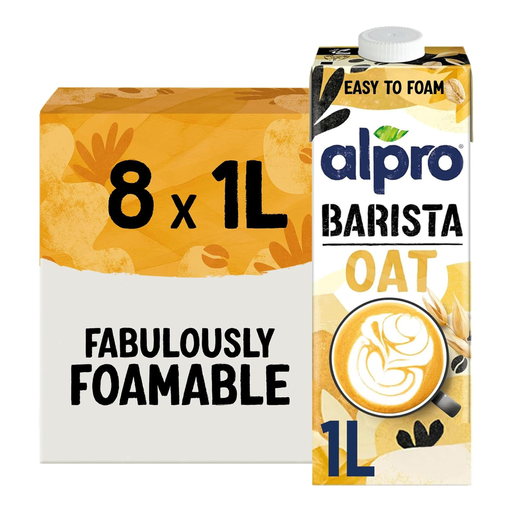
Alpro Barista Oat Long Life Drink, 8 x 1L
For regular coffee use, this Barista variant is another option to compare with everyday oat drinks. The long-life pack contains 8 x 1L cartons; check the current carton for the nutrients and allergen suitability your household requires.
View on Joybuy
Questions about choosing oat drink
Which oat drink should I put in a first food shop?
If it will regularly replace dairy, start by checking a fortified everyday drink for calcium, iodine, vitamin D and vitamin B12. The NHS recommends fortified dairy alternatives within a planned vegan diet; compare the specific carton’s nutrition and allergens as well.
Do I need a barista oat drink just for cereal?
Not for cereal alone: barista variants are positioned for coffee uses such as frothing lattes and cappuccinos. If you also make those drinks regularly, compare a barista carton with an everyday option using their nutrition panels and your main use.
Are all oat drinks gluten-free?
No; check the exact product for a gluten-free claim if that is a requirement. The Food Standards Agency says such a claim requires no more than 20 mg/kg gluten, and oats must still be identified as an allergen.
Does a three-ingredient oat drink provide the same added nutrients as a fortified one?
Not automatically. M&S states that its cited three-ingredient oat drink is not fortified, so read the label for calcium, iodine and vitamins rather than inferring their presence from a short ingredient list.
How should I store oat drink after opening?
Follow the refrigeration and use instructions on the exact carton. For a first shop, also check the pack size against how quickly you expect to use each opened carton.


