One- or two-person households
An ambient pack lets you keep unopened cartons in reserve without chilling the whole case. It suits steady use better than buying several cartons you may need to open at once; follow each carton’s storage directions.


An ambient six- or eight-carton pack can suit a one- or two-person household if there is cupboard space and each opened 1L carton will be used within its stated refrigerated period. Choose an everyday recipe by checking its ingredients, nutrition and allergen label; consider a barista pack when frothing oat drink for coffee is a regular use, rather than assuming it is the right recipe for everything.
For an empty-nester household, the useful measure is how quickly you finish one opened carton, not simply how many cartons fit in the cupboard.
An ambient pack lets you keep unopened cartons in reserve without chilling the whole case. It suits steady use better than buying several cartons you may need to open at once; follow each carton’s storage directions.
If lattes or cappuccinos are a frequent use, compare drinks explicitly made for frothing. A larger pack alone says nothing about how an everyday recipe will behave in coffee.
Fortification, sugars and allergen statements differ between oat drinks, including products from the same brand. Compare the exact cartons you would buy rather than relying on the brand name.
Start with your rate of use and storage space, then choose between an everyday and a coffee-focused recipe. Check nutrition and allergen information on the exact product.
| Priority | What to check | Your needs |
|---|---|---|
| Pack size and storage | Compare six or eight separate 1L cartons, unopened storage directions and cupboard space. Check how long each carton can be refrigerated after opening. | I want fewer shopping trips, but only if I can finish one opened carton within its labelled period. If that is uncertain, a single carton is a more manageable starting point. |
| Everyday recipe | Compare sugars per 100ml, ingredients and any listed calcium, iodine or vitamin fortification on the exact carton. Do not assume all variants from one brand are alike. | For cereal, tea or cooking, I want a recipe whose label fits what matters to my household, rather than choosing by case size alone. |
| Coffee use | Look for an explicitly barista-style formulation and follow its hot-drink directions. Check the opened-carton period as well as the pack count. | If I make lattes regularly, a coffee-focused pack may make sense. If I rarely froth oat drink, I would compare everyday cartons first. |
| Allergen information | Read the current ingredients, emphasised allergens, manufacturing warnings and any explicit gluten-free claim for the exact variant. | When an allergen statement matters in my household, I cannot treat “oat”, “vegan” or the brand name as a substitute for the pack label. |
Unopened ambient cartons can be stored as directed without taking up fridge space, but opening one starts its product-specific refrigerated use period. A large reserve does not extend the life of each opened carton.
Try one or two cartons if your usage is uncertain. With a multipack, open one at a time and note the opening date.
Cartons left unfinished may mean avoidable food waste.
Fortification and ingredients vary by product. Oatly describes its Semi drink as fortified, while M&S states that its three-ingredient oat drink is not fortified.
Compare the exact packs’ ingredients and nutrition panels on the same per-100ml basis.
Oats still require an allergen declaration, and a plant-based recipe does not rule out relevant manufacturing warnings. A gluten-free claim must be checked on the particular product.
Read the current physical carton for the ingredients, allergen warnings and any explicit suitability statement you need.
A coffee-focused recipe addresses a particular use; that does not establish it as the preferable choice for cereal or cooking.
Let the frequency of frothing decide whether to compare barista cases or start with everyday cartons.
These brand examples show why pack format, fortification and storage need checking by product; a brand’s range is not one interchangeable recipe.
Its UK range includes everyday and coffee-focused oat drinks in different storage formats.
Its options include an everyday Oat No Sugars drink and a coffee-focused Barista Oat multipack.
The brand offers a Barista Oat case aimed at households that regularly make coffee drinks.
Its own-label chilled 1L oat drink provides a single-carton option for trying a recipe or buying smaller quantities.
Its own-label 1L oat drink is an everyday carton to compare with multipack recipes.
Its oat drinks illustrate the difference between a short ingredient list and a fortified alternative.
These six- and eight-carton long-life packs offer everyday and barista-style routes for households buying oat drink in reserve. Match the case size to how quickly you use each opened carton.
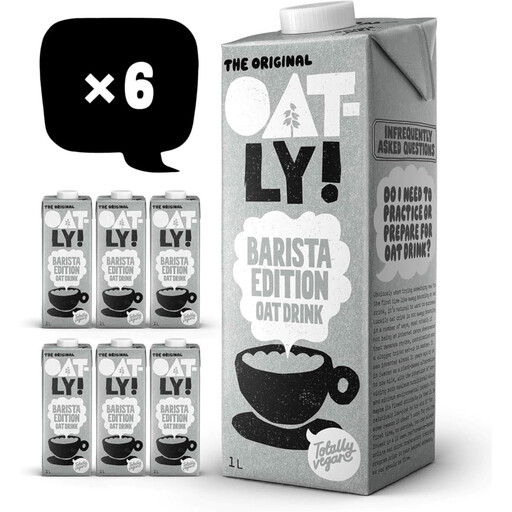 No image available
A six-carton barista pack for a household that regularly makes coffee. Refrigerate each carton after opening and follow its stated seven-day use period; check the carton’s allergen information if relevant.
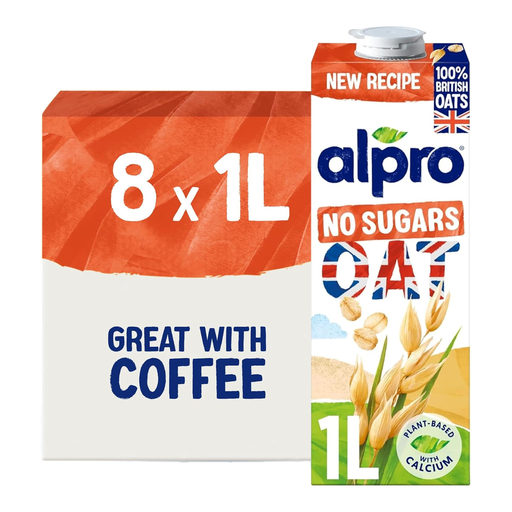 No image available
An eight-carton long-life pack for everyday use where there is room to store the reserve. Refrigerate an opened carton and use it within five days; check the current carton’s sugar and allergen information when comparing recipes.
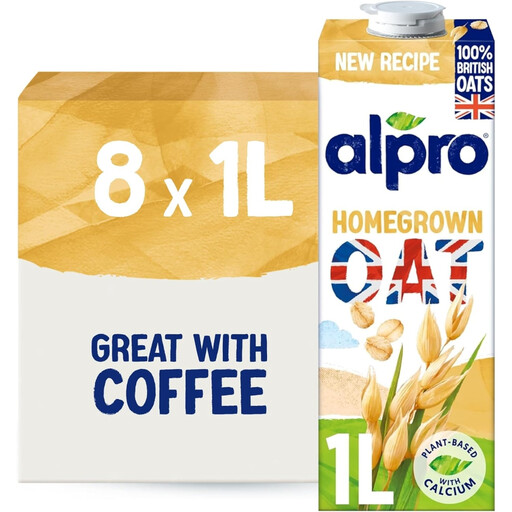 No image available
An everyday long-life option in eight separate 1L cartons. Allow for cupboard storage, then refrigerate each opened carton and use it within five days; compare its own nutrition and allergen label with other Alpro recipes.
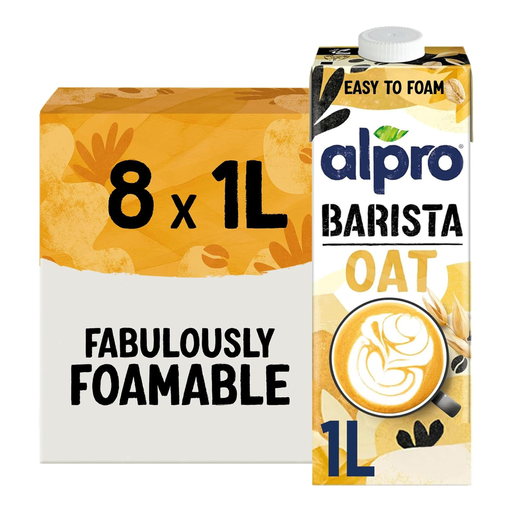 No image available
An eight-carton coffee-focused pack to consider if frothing oat drink is a regular household use. Joybuy’s product information says to refrigerate after opening and use within five days; eight cartons may be more than occasional coffee drinkers need.
 No image available
A six-carton organic barista option for coffee-led use, with a smaller case than the eight-carton choices here. Refrigerate after opening and use within five days; check this variant’s own fortification and allergen label rather than assuming it matches another Oatly drink.
Yes, if you have space for unopened cartons and can finish each opened 1L carton within its labelled refrigerated period. An ambient pack lets you open cartons one at a time; if your rate of use is uncertain, start with fewer cartons.
Follow the exact carton, because the period varies. Tesco says to use its chilled oat drink within five days, while the M&S Whole Oat Drink listing also specifies five days after opening; refrigerate them as directed.
No. Look for an explicit claim on the exact product: the Food Standards Agency defines gluten-free as no more than 20 mg/kg of gluten and notes that oats must still be emphasised as an allergen. Also read any wheat-related warning on the current carton.
No. A vegan recipe and an allergen statement answer different questions. The M&S Whole Oat Drink information, for example, describes a vegan recipe but warns that the product is not suitable for people with milk allergy because milk is present in the environment; check the current pack.
Not necessarily. If frothing for lattes or cappuccinos matters, compare barista formulations; for an everyday drink, follow its preparation directions. Sainsbury’s advises letting hot water cool slightly when adding its oat drink, while Tesco advises against mixing its version with boiling water.