People in the strict low-FODMAP phase
Monash FODMAP identifies oat milk as low FODMAP up to 104ml and high FODMAP at 250ml. Measure the amount poured rather than treating a plant-based carton as a single suitable serving.


During the strict low-FODMAP phase, choose an oat-drink multipack only if you can measure what you pour: Monash FODMAP identifies up to 104ml of oat milk as low FODMAP, but 250ml as high FODMAP. A 1L carton can be used to fill a measured bottle for lunch, while a whole 250ml lunchbox carton does not fit that general strict-phase serving guidance; for regular use, also check the label’s fortification and instructions for storing an opened carton.
Pack size matters differently when you are measuring an oat-drink serving, packing a lunch or using several cartons at home.
Monash FODMAP identifies oat milk as low FODMAP up to 104ml and high FODMAP at 250ml. Measure the amount poured rather than treating a plant-based carton as a single suitable serving.
A small ready-to-drink carton is easy to carry, but its full volume may exceed the strict-phase amount. A measured reusable bottle offers another way to take a portion from a larger carton.
If you use several cartons at home or work, compare carton size with how quickly you use an opened one. Check storage instructions, fortification and whether the drink is intended for everyday use or coffee preparation.
Start with the amount you intend to drink at one time, then choose a pack format that works for where you will use and store it.
| Priority | What to check | Your needs |
|---|---|---|
| Serving amount | Check the volume you will actually pour. Monash FODMAP identifies oat milk as low FODMAP up to 104ml and high FODMAP at 250ml; carton size does not change those amounts. | I need a measured portion for the strict phase, not a whole 250ml carton presented as one serving. |
| Lunch format | Compare a portable carton with a marked reusable bottle filled from a larger pack. Consider how you will keep an opened carton according to its label. | For packed lunches, I can measure a smaller amount before leaving rather than rely on the size of a ready-to-drink carton. |
| Carton storage | Read the unopened-storage and after-opening instructions on the exact pack. Consider whether you will finish an opened 1L carton within its labelled period. | Several cartons are useful at home only if the opened one fits my routine. |
| Fortification | Compare calcium, iodine and vitamin information on current nutrition labels. The NHS identifies fortified dairy alternatives as relevant to vegan dietary planning; a brand name alone does not establish a particular carton’s nutrient levels. | If oat drink replaces dairy foods in my routine, I want to compare the nutrients declared on the packs I am considering. |
| Coffee and allergens | Check whether barista use matters to you, then read the exact ingredient and allergen statements. Marks & Spencer states that its Barista Oat Drink is not suitable for coeliacs or people with a milk allergy. | I want a drink for its intended use, and I need the exact pack’s allergen information rather than an assumption based on plant-based wording. |
Monash FODMAP identifies 250ml of oat milk as high FODMAP, although up to 104ml is low FODMAP under its general guidance.
Measure a smaller amount into a reusable bottle if you want oat drink with lunch during the strict phase.
A coffee-oriented format addresses a different use; it does not change Monash FODMAP’s oat-milk serving guidance.
Choose for coffee preparation only if you need that use. For lunches, compare carton size and how you will measure and carry the portion.
Fortification must be assessed on the product you are buying, particularly if oat drink replaces dairy foods.
Compare the current nutrition panels for declared calcium, iodine and vitamins rather than relying on a brand name.
A drink’s intended audience does not establish its suitability for a particular allergy or coeliac disease. Marks & Spencer explicitly says its Barista Oat Drink is not suitable for coeliacs or people with a milk allergy.
Read the ingredient list, allergen statement and precautionary wording on the exact pack when those restrictions matter.
These examples illustrate formats and label details to compare; a brand’s inclusion does not establish that every product it makes has the same characteristics.
Oatly has a 250ml oat drink described by the brand for lunchboxes; Waitrose & Partners also lists an Oatly Barista Edition pack of 3 × 1.5L for coffee.
Alpro Oat No Sugars is a long-life oat drink to compare when you want a standard carton rather than a ready-to-drink lunch portion.
Minor Figures lists Everyday Oat in a 6 × 1L pack for shoppers comparing larger-carton formats.
Tesco Groceries lists own-brand 1L oat drinks, including a Long Life Oat Original option.
Marks & Spencer’s Barista Oat Drink is a coffee-oriented example with declared added calcium, iodine and vitamins B12 and D.
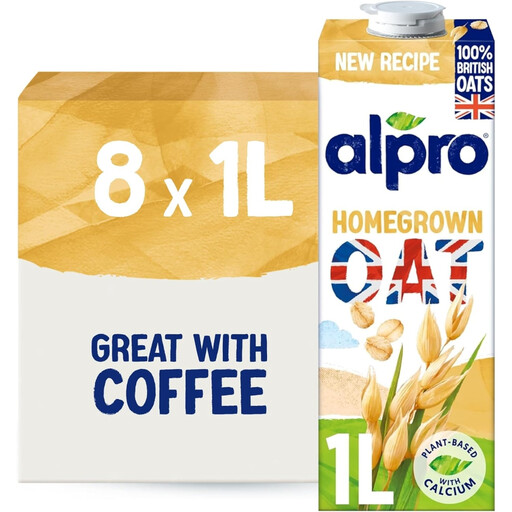
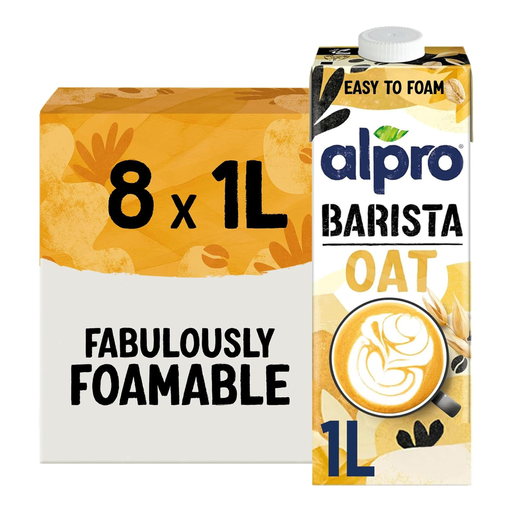
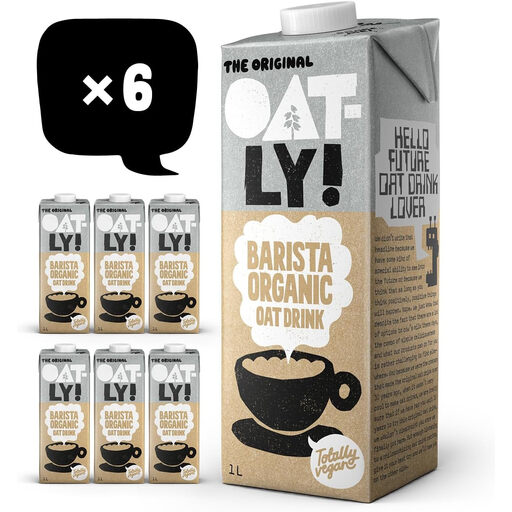
These larger-carton multipacks offer options for measuring oat drink at home or into a lunch bottle; two are positioned for coffee use. None should be treated as a whole-carton strict-phase serving on the basis of its pack format.
 No image available
The 1L cartons can be used to measure oat drink into a smaller lunch bottle. For strict-phase portions, Monash FODMAP identifies up to 104ml of oat milk as low FODMAP; check the current carton for nutrient, allergen and after-opening storage details.
 No image available
This larger-carton format is an option for regular use when you can measure each portion. Monash FODMAP identifies up to 104ml of oat milk as low FODMAP; compare the current label’s nutrient, allergen and opened-carton instructions with your needs.
 No image available
Consider this coffee-oriented pack if that is how you intend to use the drink. Its barista designation does not alter Monash FODMAP’s oat-milk guidance: up to 104ml is identified as low FODMAP, while 250ml is high FODMAP. Check the current nutrient and allergen labels.
 No image available
The six-carton, barista-labelled format is relevant to regular coffee preparation rather than a ready-to-drink lunch portion. If measuring oat drink during the strict phase, use Monash FODMAP’s cited amount of up to 104ml and check this variant’s current nutrition and allergen labels.
Not as a low-FODMAP serving under Monash FODMAP’s general oat-milk guidance: it identifies up to 104ml as low FODMAP and 250ml as high FODMAP. Individual amounts may be explored later during reintroduction and personalisation rather than assumed from the carton size.
Pour a measured amount into a clean reusable bottle rather than relying on a whole 250ml carton. Monash FODMAP identifies up to 104ml of oat milk as low FODMAP; follow the opened carton’s storage instructions for what remains.
Yes, compare their current nutrition panels if oat drink is replacing dairy foods in your routine. The NHS identifies fortified dairy alternatives and nutrients including calcium, iodine, vitamin D and vitamin B12 as relevant to vegan dietary planning; check what each particular product declares.
Do not assume so from plant-based wording. Check the exact pack’s allergen information: Marks & Spencer states that its Barista Oat Drink is not suitable for coeliacs or people with a milk allergy.
Monash FODMAP describes an initial step of 2–6 weeks followed by reintroduction to explore individual tolerances, rather than indefinite strict restriction. The NHS says a dietitian may recommend a low-FODMAP diet for IBS.