Everyday oat-drink shoppers
If oat drink mainly goes into cereal, tea, smoothies or cooking, consider whether a standard carton meets those uses before choosing a coffee-specific version or several cartons at once.


For cereal, tea and cooking, start with a standard 1L oat drink; choose a barista version when making coffee with foam is a regular use. A multi-carton pack is worth considering if you have room for it and will use the cartons before their dates—not simply because the pack is larger.
If oat drink mainly goes into cereal, tea, smoothies or cooking, consider whether a standard carton meets those uses before choosing a coffee-specific version or several cartons at once.
If you regularly make lattes or cappuccinos, the product’s foam claims and heating instructions are more relevant than they would be for someone who mostly pours oat drink cold.
If added nutrients, gluten-free labelling, allergens or a child-use statement matter in your household, check the exact carton. Products from the same brand can differ.
Decide how you will use the oat drink first, then check whether the carton size, label and storage instructions fit that routine.
| Priority | What to check | Your needs |
|---|---|---|
| Pack size | Compare the number and volume of cartons. Check storage instructions and whether you can use the pack before its dates. | I use oat drink often enough to finish several cartons, and I have somewhere suitable to keep the unopened pack. |
| Coffee use | Look for stated barista or foam use and follow the product’s heating guidance. A standard carton may have different hot-drink instructions. | Foam matters to me for regular lattes or cappuccinos; otherwise, an everyday carton may cover how I use oat drink. |
| Fortification | Read the exact carton’s ingredient and nutrition panels for added calcium, iodine and vitamins. Do not assume every product in a range has the same additions. | When I use oat drink regularly in place of dairy, I want to know which nutrients are declared on the carton. |
| Allergens | Check the current oat and allergen statements, any manufacturing warnings and explicit gluten-free labelling where relevant. | I cannot judge suitability from the words ‘plant-based’ alone; the statement on the particular pack matters to my household. |
A case gives you more cartons at once, but that is useful only if its quantity and storage requirements fit your routine.
Check the carton count, storage instructions and dates before choosing a multi-pack over individual cartons.
Sainsbury's lists calcium, iodine, vitamin D and B12 for its Oat Drink, while M&S states that its Only 3 Ingredients Oat Drink is not fortified.
If those additions matter to your household, read the nutrient information on the exact product rather than relying on its brand or category.
Sainsbury's advises letting hot drinks cool slightly to reduce separation with its standard oat drink. Alpro describes its Barista Oat as foamable and supplies steaming guidance.
For regular lattes or cappuccinos, check the drink’s stated coffee use and heating instructions before choosing it.
Oat and manufacturing warnings vary by product. Coeliac UK also notes that standard oats can come into contact with gluten-containing grains during production.
Read the current pack’s allergen statement, and look for explicit gluten-free labelling if that is a requirement.
These examples show why it helps to compare specific cartons rather than assume that every drink from one brand serves the same purpose.
Tesco’s own-label Oat Drink 1L is a standard-carton option for everyday uses.
Sainsbury's Oat Drink 1L is a standard oat drink with declared fortification.
Oatly has standard, whole and barista oat drinks, including multi-carton formats.
Alpro Barista Oat is presented for coffee preparation.
Minor Figures Barista Oat is a coffee-focused drink offered in a six-carton format.
M&S has separate simple-ingredient and barista oat drinks.
These oat-drink packs contain six or eight 1L cartons. They include everyday and barista variants, so choose by intended use as well as pack size.
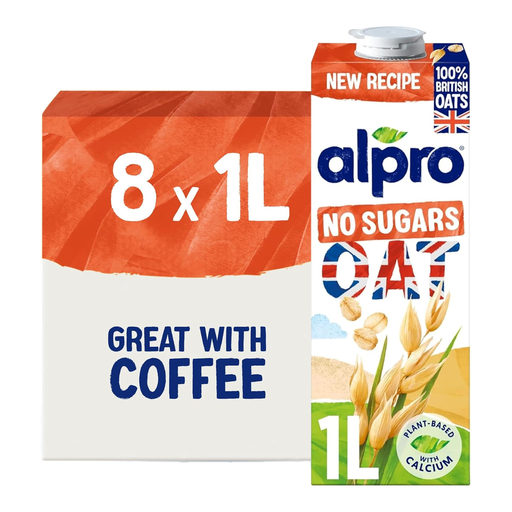 No image available
An everyday oat-drink option for households planning to use eight cartons. Check the current nutrition and allergen panels if the ‘No Sugars’ variant or gluten suitability is important to your choice.
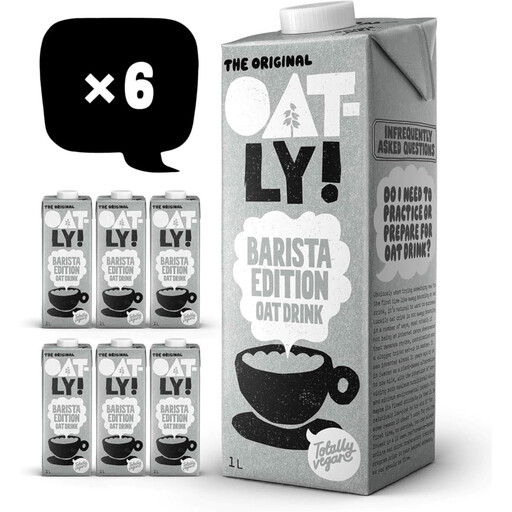 No image available
A six-carton barista variant to consider if you prepare coffee regularly. Check the pack’s heating, opened-carton storage and allergen instructions for your intended use.
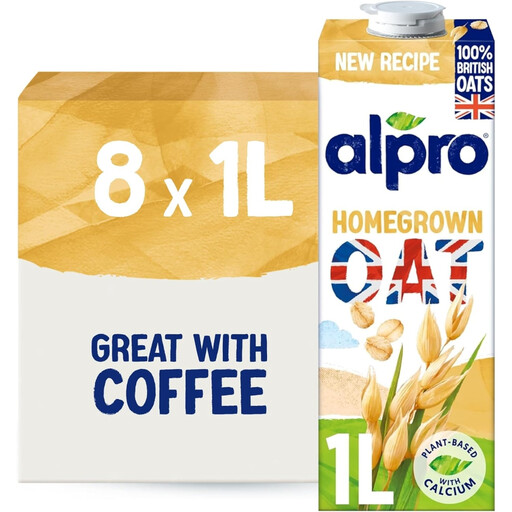 No image available
An eight-carton original variant for everyday oat-drink use. If particular added nutrients or allergen information matter, compare the exact carton’s label with other variants.
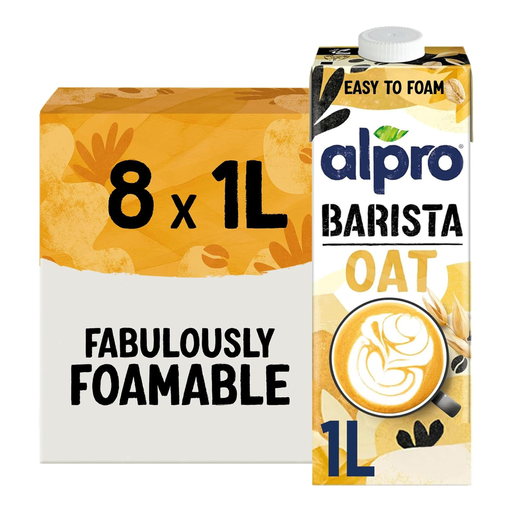 No image available
An eight-carton coffee-focused variant for a household that uses barista oat drink regularly. Follow the exact pack’s preparation and storage instructions rather than applying guidance from another Alpro variant.
 No image available
A six-carton organic barista variant. Check its particular ingredient, nutrient and coffee-preparation information if you are comparing it with Oatly’s other barista drinks.
No. A six-pack is useful when you can store the cartons and expect to use them before their dates. Check the pack quantity and storage instructions against your household’s usual use.
A standard oat drink is a sensible starting point for those uses. Consider a barista variant if you regularly make drinks where foam matters, and follow that product’s heating guidance.
No. Sainsbury's lists calcium, iodine, vitamin D and B12 for its Oat Drink, whereas M&S says its Only 3 Ingredients Oat Drink is not fortified. Read the exact carton if added nutrients are part of your decision.
Do not assume that every oat drink has the same child-use guidance. Sainsbury's says its Oat Drink is not suitable as a main milk-drink alternative for children under three; M&S does not recommend its Only 3 Ingredients Oat Drink as a dairy replacement for children under 36 months. Follow the statement on the specific product.
No. Look for explicit gluten-free labelling on the particular product. Coeliac UK notes that standard oats can come into contact with gluten-containing grains during production; also check the current pack for oat and other allergen statements.