People planning high-protein meals
If oat drink goes into your porridge, cereal or smoothie, its contribution depends on the amount you use. Check the carton’s protein figure alongside the other foods in the meal.


Choose oat drink for how you use it, not as the main protein source in a high-protein meal. Cambridge University Hospitals NHS Foundation Trust identifies foods such as pulses and tofu as protein-rich options; for the drink itself, compare the protein figure on the exact carton, then consider fortification or coffee use. A 4-pint pack size would not tell you how much protein the drink contributes.
If oat drink goes into your porridge, cereal or smoothie, its contribution depends on the amount you use. Check the carton’s protein figure alongside the other foods in the meal.
If it is a regular part of your meals, compare the exact product’s listed calcium, iodine and vitamin fortification. Products from the same category do not necessarily have the same nutrient profile.
If you mainly add oat drink to lattes or cappuccinos, a barista formulation may fit that use. Its coffee positioning does not establish that it contributes more protein.
Start with protein for the amount you will pour, then check the other label details that matter to your meals and how you store the drink.
| Priority | What to check | Your needs |
|---|---|---|
| Protein per portion | Read protein per 100ml or per 100g, noting which basis the label uses. Consider how much drink goes into the meal and whether another food supplies the protein you need. | I use oat drink in cereal or smoothies, but need the whole meal to contribute protein. Cambridge University Hospitals NHS Foundation Trust identifies pulses and tofu among protein-rich foods. |
| Fortification | Check the exact carton for calcium, iodine and listed vitamins. M&S says its Only 3 Ingredients Oat Drink is not fortified; Oatly says the same of its Organic oat drink. | If oat drink regularly replaces dairy in my meals, I want to know which nutrients this particular version lists, rather than relying on the brand name. |
| Sugars and energy | Compare sugars and energy on the same label basis, as well as protein. Check the nutrition panel rather than treating a front-of-pack claim as the whole nutritional picture. | I may use several portions across cereal and drinks, so I want the figures for the amount I actually pour. |
| Allergens | Read the current ingredients, allergen statement and any suitability warning for the exact product. Do not infer coeliac or allergy suitability from a vegan claim. | Where oats, gluten, wheat or soya are a concern, I need product-specific information before using the drink. The Food Standards Agency identifies oats as a possible risk for people with an oat or gluten allergy or intolerance. |
| Coffee use | Look for a product described for coffee if frothing matters. Compare its protein and other nutrition figures separately; a barista label describes its intended use, not its protein contribution. | For a latte, coffee use may matter more to me than a small difference in the drink’s listed protein. |
| Pack and storage | Check the stated pack size and the opened-carton instructions. Tesco’s Long Life Oat Original says to refrigerate after opening and consume within five days; Sainsbury’s Long Life Oat Drink says to use it within three days. | I want a pack I can use within its stated storage period. A search for four pints does not replace checking the size of the carton offered. |
Even M&S Only 3 Ingredients Oat Drink, which lists 1.3g protein per 100g, needs to be considered in the context of the portion used and the rest of the meal.
Choose the drink for the role it plays, and include a separate protein-rich food if the meal needs a substantial protein contribution. Ask your clinician or registered dietitian about a prescribed dietary target.
Neither claim tells you the product’s protein content or establishes that it is suitable for every allergy or intolerance.
Read the nutrition panel, ingredients and allergen statement on the exact carton before use.
Fortification differs between products: M&S says its Only 3 Ingredients drink is not fortified, while the checked Tesco Oat Drink lists added calcium, iodine and vitamins.
If those listed nutrients matter to your choice, compare the exact variants rather than choosing by brand or ingredient-list length.
A barista drink is positioned for coffee use; that description does not establish a substantial protein contribution to breakfast or a snack.
Choose it when coffee use is the deciding factor, and check its own nutrition panel if protein, sugars or energy also matter.
These examples illustrate differences between particular oat drinks; a brand name alone does not identify a product’s formulation.
Its three-ingredient drink and Plant Kitchen Barista drink serve different buying priorities.
Compare its organic and fortified variants as separate products.
Its Original and No Sugars oat drinks allow a product-by-product comparison of protein, sugars and listed fortification.
Its checked 1L oat drink lists both protein and fortification.
Check its chilled and long-life own-label drinks as distinct cartons.
Its Barista Oat is described by Minor Figures for lattes and cappuccinos.
These cartons cover oat drinks for coffee and everyday use, including no-sugars variants. Compare their own protein figures and pack sizes; the selection is not a list of 4-pint bottles.
 No image available
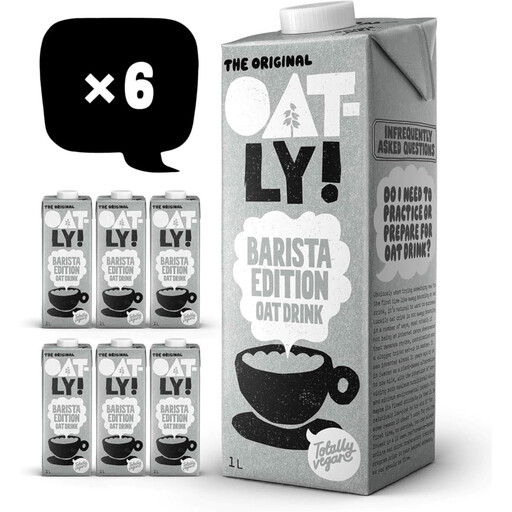
A barista oat drink to consider when coffee use matters. Its listed protein is 1.1g per 100ml, and its description lists calcium, iodine and vitamins D2, B2 and B12. Refrigerate after opening and use within seven days; the drink alone is not the meal’s main protein food.
 No image available
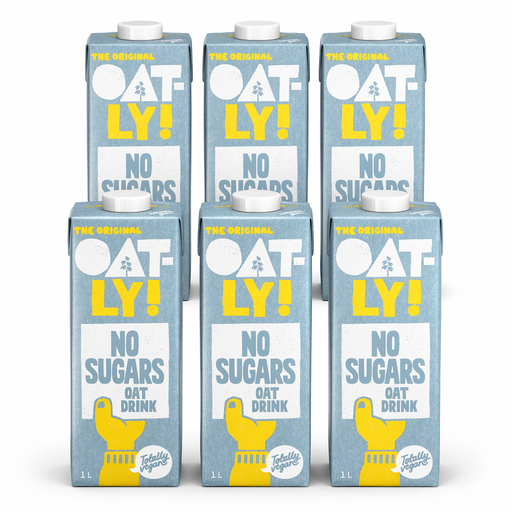
For comparing sugars alongside protein, its listed figures are 0g sugars and 1g protein per 100ml. Its description also lists calcium, iodine and vitamins D2, B2 and B12. Check the carton’s allergen information if oats or gluten are a concern.
 No image available
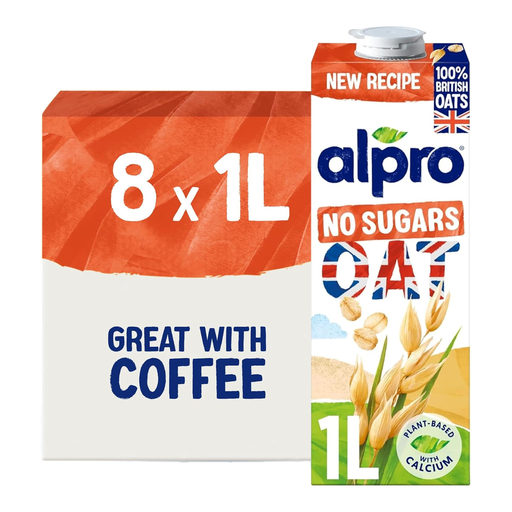
An everyday oat drink whose listed nutrition table gives 0.9g protein and 0g sugars per 100ml; its description also lists calcium, iodine and vitamins. If sugars matter to your choice, check the current carton’s full nutrition panel, as the product wording is inconsistent. Refrigerate after opening and use within five days.
 No image available
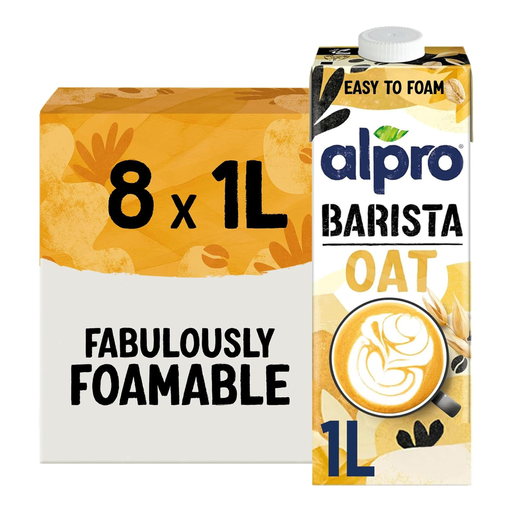
Described for coffee, this barista drink lists 0.8g protein per 100ml and names added calcium and vitamins B2 and D2. Choose it for its intended coffee use rather than assuming the barista label means more protein. Refrigerate after opening and use within five days.
 No image available
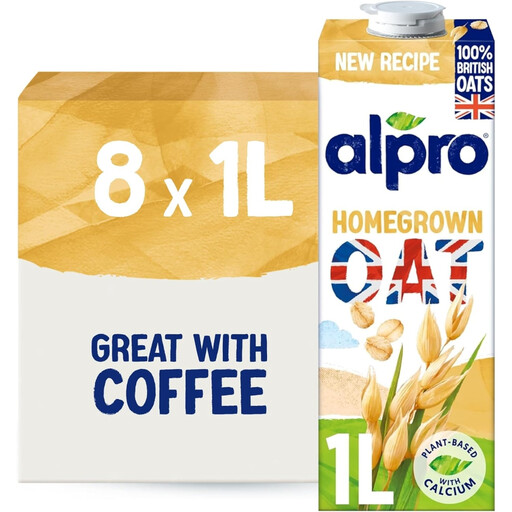
Described for cereal, smoothies and hot drinks, this version lists 0.8g protein per 100ml and added calcium and vitamins B2, B12 and D2. Pair it with a separate protein food when the meal needs a substantial protein contribution. Refrigerate after opening and use within five days.
Do not rely on an ordinary oat drink as the main protein source in a high-protein meal. For example, M&S lists 1.3g protein per 100g for its Only 3 Ingredients Oat Drink; check the amount you use and include a separate protein-rich food where needed. Cambridge University Hospitals NHS Foundation Trust identifies pulses and tofu among protein-rich foods.
If oat drink regularly replaces dairy in your meals and fortification matters to you, compare the exact carton’s listed calcium, iodine and vitamins. The checked Tesco Oat Drink and Alpro Oat Original list added nutrients, whereas M&S says its Only 3 Ingredients drink is not fortified and Oatly says its Organic drink is not fortified.
Follow the instructions on your carton, because periods differ by product. Tesco’s Long Life Oat Original says to refrigerate after opening and consume within five days; Sainsbury’s Long Life Oat Drink says to refrigerate and use within three days.
No: a vegan label does not establish suitability for a particular allergy or coeliac disease. The Food Standards Agency identifies oats as a possible risk for people with an oat or gluten allergy or intolerance, while the checked Sainsbury’s oat drink carries a soya-allergy warning related to manufacturing methods. Read the current label for the exact product.
No. Pack size does not tell you how much protein a portion contributes. Check the size actually stated on the product—such as the 1L cartons in this selection—then compare protein on the label and consider how quickly you will use each opened carton.