Choose a long-life oat drink if you want to keep unopened breakfast cartons in a cupboard, but follow the carton’s refrigeration and use instructions after opening. If oat drink regularly replaces cows’ milk, compare calcium, iodine, vitamins and sugars on the exact product: the UK Office for Health Improvement & Disparities reports that nutrient composition varies considerably between plant-based drinks. The word ‘filtered’ alone does not answer either question.
Who is this for?
Shoppers keeping breakfast cartons in the cupboard
If you use oat drink on cereal or porridge, or in tea, a long-life carton can be stored unopened at room temperature when its packaging permits it. Oatly distinguishes these shelf-stable cartons from chilled oat drinks, which need to stay cold.
People regularly replacing cows’ milk
Check the exact carton’s calcium, iodine and vitamin information rather than assuming all oat drinks have the same formulation. The UK Office for Health Improvement & Disparities reports considerable variation between plant-based drinks.
Breakfast coffee drinkers
If lattes or cappuccinos are part of your morning routine, a drink labelled for barista use may match how you prepare coffee. Check its nutrition, allergens and storage instructions separately.
What should you check?
Start with how you will store and use the carton, then compare labels for the nutrients, sugars and allergens that matter to your household.
| Priority | What to check | Your needs |
|---|
| Storage |
Check whether the unopened carton is long-life or chilled. Follow its storage instructions before opening and its refrigeration and use instructions afterwards. |
I want a spare carton for weekday breakfasts without treating an opened long-life carton as cupboard-stable. Oatly says its shelf-stable drinks can be stored unopened at room temperature, while chilled versions must remain cold. |
| Fortification |
Read the exact product’s calcium, iodine and vitamin information, as well as its protein value. The UK Office for Health Improvement & Disparities reports that plant-based drinks vary considerably in nutrient composition. |
If I use oat drink instead of cows’ milk most mornings, I want to compare the nutrients on the carton rather than rely on the brand or the word ‘oat’. |
| Sugars |
Compare sugars per 100 ml on the same basis; distinguish ‘no sugars’ from ‘no added sugars’. Alpro UK lists 0 g sugars per 100 ml for Oat No Sugars and 3.2 g per 100 ml for Oat Original. |
I may prefer a no-sugars formulation, or I may prefer a standard oat drink. The figures for those two Alpro products show why I need to check the specific variant. |
| Coffee use |
Check whether the carton is intended for coffee preparation, then read its nutrition and storage information separately. Minor Figures positions Barista Oat for lattes and cappuccinos. |
My breakfast often includes coffee, so intended coffee use matters alongside what the carton contains. |
| Oats and gluten |
Read the oat allergen statement and look for an explicit gluten-free claim if that distinction matters. The Food Standards Agency says gluten-free food must contain no more than 20 mg/kg gluten, but oats remain an allergen. |
I cannot use ‘dairy-free’, ‘vegan’ and ‘gluten-free’ as interchangeable shortcuts, or assume a gluten-free oat drink contains no oat allergen. |
Common buying mistakes
-
Assuming every oat drink has the same nutrients
The UK Office for Health Improvement & Disparities reports considerable variation in plant-based drinks’ nutrient composition. A familiar brand or long-life format does not tell you what nutrients the exact carton contains.
For regular use instead of cows’ milk, compare calcium, iodine and listed vitamins on each product’s nutrition panel.
-
Leaving an opened long-life carton in the cupboard
Long-life storage applies to the unopened product under its stated conditions; opening changes how the carton must be handled.
Follow the carton’s instructions for refrigeration and how soon to use it after opening.
-
Confusing gluten-free with oat-allergen-free
The Food Standards Agency says oats remain an allergen even in food labelled gluten-free.
Check both the gluten-free claim, where relevant, and the exact carton’s ingredients and precautionary allergen statements.
-
Choosing a barista drink on its name alone
A coffee-focused product name tells you its intended use, not whether its nutrient profile matches an everyday oat drink.
For coffee, check the stated preparation use. For cereal or porridge, compare the sugars, fortification, allergens and storage format of the specific products you are considering.
Relevant brands and retailers
Alpro
Alpro has distinct Oat No Sugars and Oat Original products relevant to long-life breakfast shopping.
- Alpro UK lists 0 g sugars, 120 mg calcium and 22.6 µg iodine per 100 ml for Oat No Sugars; Tesco identifies its long-life listing as UHT.
- Alpro UK lists 3.2 g sugars per 100 ml for Oat Original. Check the variant rather than applying one product’s figures to the range.
Oatly
Oatly offers oat drinks in ambient and chilled formats, as well as a Barista Edition for coffee use.
- Oatly says its shelf-stable drinks can be stored unopened at room temperature, whereas chilled drinks must remain cold.
- The format and product name do not replace a check of the specific carton’s nutrition and post-opening instructions.
Minor Figures
Minor Figures describes Barista Oat for coffee preparation and Everyday Oat for general daily use.
- Its Everyday Oat ingredient information lists gluten-free oats, calcium, vitamin D, B2, B12 and iodine.
- Check the exact product rather than assuming its barista and everyday formulations have the same nutrition or storage requirements.
Tesco
Tesco’s oat-drink listings offer a way to compare named long-life formats, including branded products.
- Its listings identify Alpro Oat No Sugar as UHT and Oatly Barista Edition as a long-life 1 L drink.
- Use the exact product page and carton for current ingredients, nutrition and storage instructions.
Joybuy oat-drink options
These options cover long-life breakfast oat drinks and barista-labelled cartons for coffee; check each carton’s storage and nutrition details against your routine.
 No image available
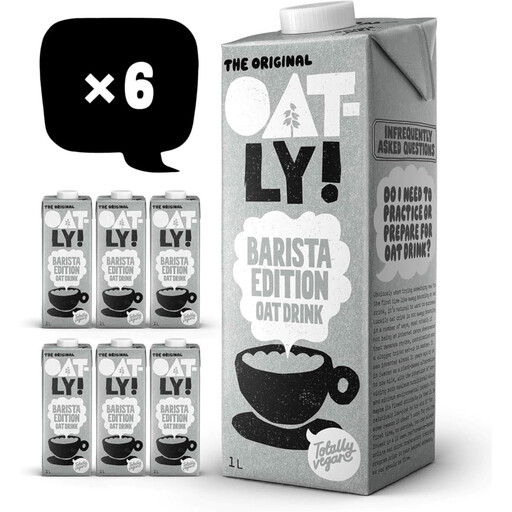
Oatly Long Life Barista Oat Drink, 6 × 1 L
A long-life, barista-labelled option for a weekday coffee routine. Check the carton’s allergen information and its instructions after opening.
 No image available
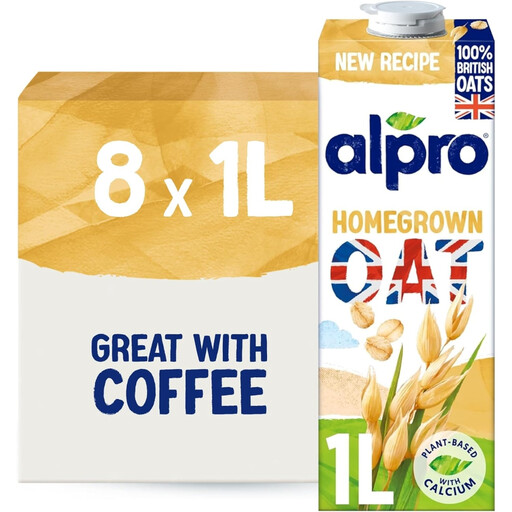
Alpro Oat Original Long Life Drink, 8 × 1 L
A standard long-life oat drink to consider for cereal or hot drinks. Alpro UK lists 3.2 g sugars, 120 mg calcium and 22.5 µg iodine per 100 ml for Oat Original; check the exact carton’s label and storage instructions.
 No image available
Alpro Barista Oat Long Life Drink, 8 × 1 L
A long-life, barista-labelled option for breakfast coffee. Compare its exact carton’s sugars, fortification and oat allergen information with any everyday drink you are considering.
 No image available
Alpro Oat No Sugars Long Life Drink, 8 × 1 L
A long-life option for cereal or hot drinks. Alpro UK lists 0 g sugars, 120 mg calcium and 22.6 µg iodine per 100 ml for Oat No Sugars; confirm the sugar figure on the carton you receive. Joybuy’s product instructions say to refrigerate at +1°C to +7°C after opening and use within five days.
 No image available
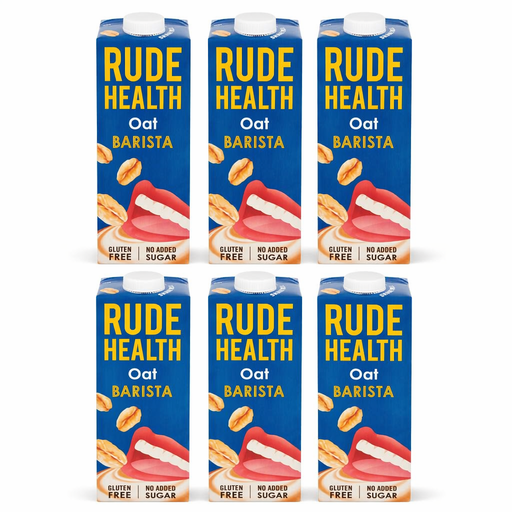
Rude Health Barista Oat, 1 L
A single barista-labelled carton to consider for coffee. If cupboard storage or particular added nutrients matter, check the carton’s unopened-storage instructions and nutrition panel before choosing it; it contains oats.
Questions about oat drink
Does long-life oat drink need refrigeration?
An unopened ambient carton can be stored at room temperature when its packaging permits it; a chilled drink must stay cold. Refrigerate a long-life drink after opening as directed on its carton. For example, Joybuy’s Alpro Oat No Sugars listing specifies +1°C to +7°C and use within five days of opening.
What matters if I use oat drink instead of cows’ milk most mornings?
Compare calcium, iodine, listed vitamins, sugars and protein on the exact cartons. The UK Office for Health Improvement & Disparities reports that nutrient composition varies considerably between plant-based drinks, so one oat drink’s label cannot stand in for another’s.
Does gluten-free mean an oat drink contains no oat allergen?
No. The Food Standards Agency says oats remain an allergen even when a food is labelled gluten-free; that claim concerns a gluten limit of no more than 20 mg/kg in the food as sold. Read the exact drink’s oat and precautionary allergen statements separately.
Does ‘filtered’ tell me which oat drink to choose?
Not on its own. For a weekday breakfast carton, check whether it can be stored unopened in a cupboard, whether it is intended for cereal or coffee, and what its nutrition and allergen labels say.


