What to check before choosing
Start with the child’s age and allergy requirements, then compare the nutrition panels of cartons that remain suitable.
| Priority | What to check | Your needs |
|---|
| Age and use |
Check that the child is at least 1. The NHS says unsweetened, calcium-fortified milk alternatives can be given from that age as part of a balanced diet; before then, oat drink is not a replacement for breast milk or first infant formula. |
I’m choosing a drink to offer with a snack, not a replacement for an infant’s milk feeds. |
| Fortification |
Look for calcium and iodine on the label, then compare energy and protein per 100ml. Kingston and Richmond NHS Foundation Trust suggests 120mg calcium per 100ml as a benchmark when choosing a fortified dairy alternative. |
If dairy is excluded, I want to know what the oat drink contributes alongside the rest of my child’s food and drinks. |
| Sugars and serving |
Compare the sugars figure per 100ml; “mild” does not give that figure. For sugar-containing drinks, the Scottish Dental Clinical Effectiveness Programme advises limiting exposure between meals rather than allowing prolonged sipping. |
I’d like an oat drink with a clear sugars figure and a snack-time serving that does not turn into continuous sipping. |
| Allergy suitability |
Read the current ingredients and allergy statement, including any product-specific suitability warning. GOV.UK lists milk and cereals containing gluten, including oats, among allergens that must be declared when present as ingredients in prepacked food. |
For a child with a diagnosed allergy or coeliac disease, I need the exact carton to fit their requirements; a vegan label alone is not enough. |
Brand and retailer references
These examples show why nutrition and allergy checks belong to the individual drink, not to an entire brand or retailer range.
Alpro
Alpro Oat No Sugars is a fortified option to compare when the sugars figure matters.
- Alpro lists 0g sugars, 120mg calcium and 22.6µg iodine per 100ml for Oat No Sugars.
- Check the current carton and consider the child’s wider diet rather than treating an oat drink as nutritionally interchangeable with cow’s milk.
Oatly
Oatly Oat Drink Semi is a standard oat drink for comparison when naturally occurring oat sugars are acceptable.
- Oatly lists calcium, iodine, vitamin D2, riboflavin and vitamin B12 fortification for this drink.
- Oatly says its sugars come from oats; Oat Drink Semi is not a no-sugars option.
Minor Figures
Minor Figures Everyday Oat is another fortified drink to compare by its ingredients and nutrition panel.
- Minor Figures lists gluten-free oats, calcium, iodine, vitamin D, riboflavin and vitamin B12 in Everyday Oat.
- Gluten-free oats do not, by themselves, establish suitability for every child with an allergy or coeliac disease; check the product’s current advice.
M&S
M&S Semi Oat Drink illustrates why an individual product’s allergy warning takes precedence over plant-based positioning.
- Marks & Spencer states that this drink is not suitable for people with milk allergy, wheat allergy or coeliac disease.
Tesco
Tesco lists oat drinks from several brands, giving shoppers cartons to compare against the same label checks.
- A retailer’s category listing does not establish the ingredients, fortification or allergy suitability of an individual drink.
Oat drinks on Joybuy
These cartons cover no-sugars and standard oat-drink choices for snack-time comparisons. Check the current pack against the child’s age, nutritional needs and allergy requirements before choosing.
 No image available
Alpro Oat No Sugars Long Life Drink, 8 × 1L
A multipack to consider if a no-sugars oat drink fits snack-time use. Alpro lists 0g sugars and 120mg calcium per 100ml for Oat No Sugars; check the current cartons for their nutrition figures and allergy information.
View on Joybuy
 No image available
Oatly No Sugars Oat Drink, 6 × 1L
Another no-sugars multipack to compare for a child aged 1 or over. Check the current carton’s calcium and iodine amounts, other nutrition figures and allergy advice before relying on it as a dairy alternative.
View on Joybuy
 No image available
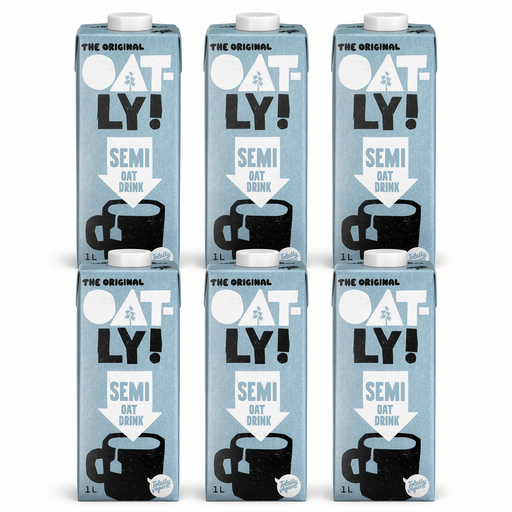
Oatly Semi Oat Drink, 6 × 1L
A standard oat-drink multipack to compare when a no-sugars choice is not required. Oatly lists calcium, iodine and vitamin fortification for Oat Drink Semi and says its sugars come from oats; compare the current carton’s sugars figure and allergy advice before serving.
View on Joybuy
Questions about toddler snack time
Can a toddler have oat drink with a snack?
Yes, from age 1, an unsweetened, calcium-fortified oat drink can be part of a balanced diet, according to the NHS. Before age 1, do not use it to replace breast milk or first infant formula.
What matters most on the carton?
Check the sugars figure, calcium and iodine fortification, and the ingredients and allergy advice. If dairy is excluded, Kingston and Richmond NHS Foundation Trust suggests 120mg calcium per 100ml as a benchmark; compare energy and protein too, particularly if intake is limited.
Does dairy-free mean suitable for a child with a milk allergy?
No. Check the specific carton’s allergy information rather than relying on a dairy-free or vegan description. Marks & Spencer, for example, states that its Semi Oat Drink is not suitable for people with milk allergy, wheat allergy or coeliac disease.
Does “mild” mean an oat drink has no sugars?
No. Compare the sugars figure on the nutrition panel: Alpro lists 0g per 100ml for Oat No Sugars, whereas Oatly says the sugars in its Oat Drink Semi come from oats. Taste wording cannot substitute for the label.
Does it matter when a child drinks oat drink?
For a sugar-containing drink, avoid prolonged sipping between meals. The Scottish Dental Clinical Effectiveness Programme advises confining sugar-containing foods and drinks to mealtimes to reduce the time teeth are exposed to acid attack; offer water for regular between-meal drinking.


