Smoothie drinkers who prefer a mild oat taste
If you want a dairy-free liquid base after exercise, choose its flavour separately from the protein food or ingredient going into the smoothie.


Choose a no-sugars oat drink if you want a less sweet base, or a subtly sweet original variety if that flavour appeals more. Treat either as the liquid in a post-workout drink rather than its main protein source: compare protein per serving and include a separate protein food if that matters to your plan.
If you want a dairy-free liquid base after exercise, choose its flavour separately from the protein food or ingredient going into the smoothie.
If oat drink is a regular part of your diet, check the exact carton for added calcium, iodine, vitamin D and vitamin B12; fortification differs between products.
Oat-based does not automatically mean suitable for coeliacs. Read the product-specific gluten statement and allergen information before choosing.
Start with the drink’s intended use and flavour, then compare its nutrition panel and dietary information for the portion you will use.
| Priority | What to check | Your needs |
|---|---|---|
| Protein | Read protein per serving, not just per 100 ml. The International Society of Sports Nutrition’s guidance for healthy exercising adults discusses 20–40 g of high-quality protein as a general acute dose; oat-drink figures should not be mistaken for that amount. | I want a mild mixer after exercise, but I’ll choose the protein-containing part of my food or drink separately if protein is my goal. |
| Flavour and sugars | Compare sugars and total carbohydrate on the same serving basis. Alpro UK lists 0 g sugars but 6.4 g carbohydrate per 100 ml for Oat No Sugars; its Oat Original is described as subtly sweet. | Would I prefer a no-sugars oat base, or a drink with a softer, subtly sweet flavour? |
| Fortification | Check the exact carton for added calcium, iodine, vitamin D and vitamin B12. Marks & Spencer states that Only 3 Ingredients Oat Drink is not fortified, while its Semi Oat Drink lists added nutrients. | If I use oat drink regularly, I want to know which nutrients this particular carton contains rather than assuming every variety is fortified. |
| Gluten and allergens | Read the current gluten claim and allergen statement. Marks & Spencer labels Only 3 Ingredients Oat Drink not suitable for coeliacs; the Food Standards Agency says oats must still be emphasised as an allergen in food labelled gluten-free. | I need the individual product’s label to match my dietary requirements, even if I have bought another oat drink from the same brand. |
| Drink style | Check whether the product is presented for smoothies or formulated for coffee texture. Minor Figures presents Everyday Oat for smoothies and Barista Oat for coffee. | For a smoothie, I’d choose by flavour and label details; for a coffee-based drink, foam and coffee texture may matter more. |
Minor Figures lists 2.1 g protein per 200 ml of Everyday Oat. That is a different amount from the general 20–40 g acute protein dose discussed by the International Society of Sports Nutrition for healthy exercising adults.
Check protein for the portion you will pour, and choose any separate protein-containing food or ingredient according to your own eating plan.
Alpro UK lists 0 g sugars and 6.4 g carbohydrate per 100 ml for Oat No Sugars. The two figures describe different things.
Compare both lines on the nutrition panel using the portion size relevant to your drink.
Barista varieties are presented for coffee texture. Minor Figures lists 0.7 g protein per 200 ml of Barista Oat, which does not make it a substitute for choosing a protein-containing ingredient.
Choose a barista drink when its coffee use matters; otherwise compare everyday varieties for flavour, nutrition and fortification.
Marks & Spencer states that Only 3 Ingredients Oat Drink is neither fortified nor suitable for coeliacs. Those details cannot be inferred from the words ‘oat drink’ alone.
Check the current nutrition, ingredient and allergen information for the exact carton.
These examples show why it helps to compare individual varieties rather than assuming every drink in a range has the same ingredients or nutrition.
Alpro UK describes Oat Original as soft and subtly sweet and offers Oat No Sugars as a different flavour choice.
Everyday Oat is presented for uses including smoothies, while Barista Oat is presented for coffee.
Oatly presents its Original Oat Drink for drinking, cooking and hot drinks.
Marks & Spencer’s oat drinks include short-ingredient, fortified Semi and coffee-oriented Barista varieties.
Tesco Groceries lists branded oat-drink varieties, including Alpro and Oatly options.
Sainsbury's says its online product descriptions can include ingredients, nutrition, storage and dietary information.
These options include two no-sugars oat drinks and a subtly sweet Alpro Original variety for use as a drink base or accompaniment after exercise.
 No image available
A no-sugars oat-drink option if you prefer a less sweet base for a post-workout smoothie. Alpro UK lists 0 g sugars and 6.4 g carbohydrate per 100 ml for Oat No Sugars; check the carton’s protein and allergen information for your intended serving.
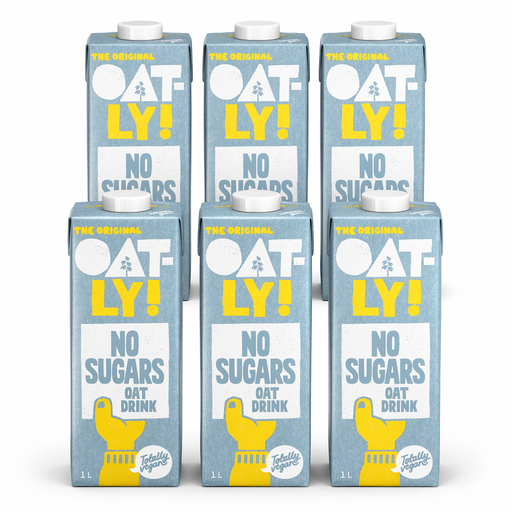 No image available
Another no-sugars oat-drink option for a chilled drink or as the liquid in a smoothie. Check the current carton for its protein per serving and gluten and allergen information before relying on it for a specific dietary need.
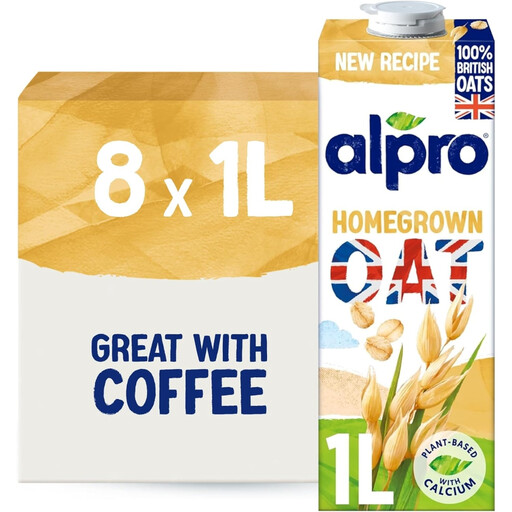 No image available
Consider this variety if you prefer the softly flavoured, subtly sweet drink described by Alpro UK rather than a no-sugars option. Alpro UK lists 3.2 g sugars and 0.8 g protein per 100 ml for Oat Original, so choose any protein-containing part of a post-workout drink separately.
Do not assume it can: check protein for the portion you use and select a separate protein-containing food or ingredient if that is part of your plan. The International Society of Sports Nutrition discusses 0.25 g of high-quality protein per kg of body weight, or 20–40 g, as general acute guidance for healthy exercising adults; Minor Figures Everyday Oat, for example, lists 2.1 g per 200 ml.
No. Alpro UK lists 0 g sugars but 6.4 g carbohydrate per 100 ml for Oat No Sugars. Read both figures and compare the portion you intend to use.
No; check the current label of the exact product. Marks & Spencer labels Only 3 Ingredients Oat Drink not suitable for coeliacs, while Minor Figures describes Everyday Oat as gluten-free. The Food Standards Agency defines gluten-free as no more than 20 mg/kg gluten in food sold to consumers and says oats must still be emphasised as an allergen.
Yes, particularly if you use plant-based alternatives regularly: check the exact carton for the nutrients relevant to your diet. NHS vegan-diet guidance discusses fortified dairy alternatives; Marks & Spencer states that Only 3 Ingredients Oat Drink is not fortified, whereas its Semi Oat Drink lists added calcium, iodine, vitamin B12 and vitamin D.
Follow the instructions on your exact carton, as opened-pack directions are product-specific. Marks & Spencer says to refrigerate its Semi Oat Drink at 0°C to +5°C after opening and consume it within five days.