What should you check?
Set the allergen requirement first, then decide whether the drink is for an occasional recipe or a child’s regular main drink. Compare flavour and ingredients only among products that meet those needs.
| Priority |
What to check |
Your needs |
| Allergens and gluten |
Read the ingredients, declared allergens and precautionary statements on the carton. Where gluten avoidance is required, look for an explicit gluten-free claim; the Food Standards Agency says oat must still be identified as an allergen. |
I need the drink to fit a specific allergy or gluten-avoidance plan, not just to be labelled dairy-free. |
| Use in meals |
Check whether the maker describes the drink as suitable for cooking or baking. Compare its ingredients with what the household accepts in familiar recipes; a stated use does not establish suitability for every recipe. |
I want to use oat drink in food the child already eats, without overlooking an ingredient or allergen that matters to them. |
| Main-drink nutrition |
For a young child who cannot tolerate cow’s milk, NHS clinical guidance advises checking calcium, iodine, vitamins D and B12, energy and protein. Hertfordshire and West Essex Clinical Guidance gives around 40 kcal per 100 ml or more and at least 1 g protein per 100 ml as selection points for a fortified alternative. |
If this will be my child’s main milk drink rather than an occasional cooking ingredient, I need to assess its nutrition as well as its allergen suitability. |
| Ingredients and sweetness |
Compare the current ingredient list and the precise sugars wording. NHS North West Knowledge Now notes that oat processing can produce free sugars, so an unsweetened description and a short ingredient list answer different questions. |
For a familiar meal, I may prefer an unsweetened drink, but I do not want ingredient simplicity to stand in for the fortification my child needs. |
Brand and retailer references
These examples show why suitability must be checked by product and variant, rather than assumed from a brand name.
Oatly
Oatly makes several oat-drink formats, including No Sugars and Barista. Its UK product page says No Sugars can be used in cooking and baking.
- Oatly lists No Sugars as containing no dairy or soy, with added calcium, iodine and vitamins.
- Check the exact carton for a gluten-free claim if gluten avoidance is required; dairy-free wording alone does not establish it.
Alpro
Alpro’s range includes oat drinks with different ingredient lists and intended uses.
- Alpro describes its Organic Oat drink as gluten-free and dairy-free and lists four ingredients.
- The Organic Oat listing also says it may contain other cereals containing gluten. Assess that wording against the individual’s requirements.
Minor Figures
Minor Figures Barista Oat is a coffee-oriented oat drink that the brand labels gluten-free.
- Its published ingredients include oats and added tricalcium phosphate.
- It also contains rapeseed oil and an acidity regulator; a barista formulation is not, by itself, a reason to use it as a child’s main milk alternative.
Tesco
Tesco lists own-label and other brands in its oat-drink category.
- Its category includes products described as gluten-free and products intended for different uses.
- Category placement cannot establish the allergen or nutrition details of an individual carton; check the product label.
Sainsbury's
Sainsbury's lists an own-label Oat Drink with added calcium, iodine and vitamins D and B12.
- The published listing identifies the drink’s fortification.
- Sainsbury's says this product is unsuitable for customers with a soya allergy because of manufacturing methods and unsuitable as a main milk-drink alternative for children under three.
M&S
M&S offers both a three-ingredient oat drink and a fortified Plant Kitchen Whole Oat Drink.
- The three-ingredient drink lists water, oats and sea salt; Plant Kitchen Whole lists added calcium, iodine and vitamins D and B12.
- M&S says the three-ingredient drink is unfortified and not recommended as a dairy replacement for children under 36 months. Its Plant Kitchen Whole listing states exclusions for coeliacs and people with milk or wheat allergy.
Oat drinks on Joybuy
These oat drinks offer options for familiar meals and drinks where their current labels fit the eater’s needs. Check gluten status and any other allergen restrictions on each carton; the selection is not a list of confirmed gluten-free options.
 No image available
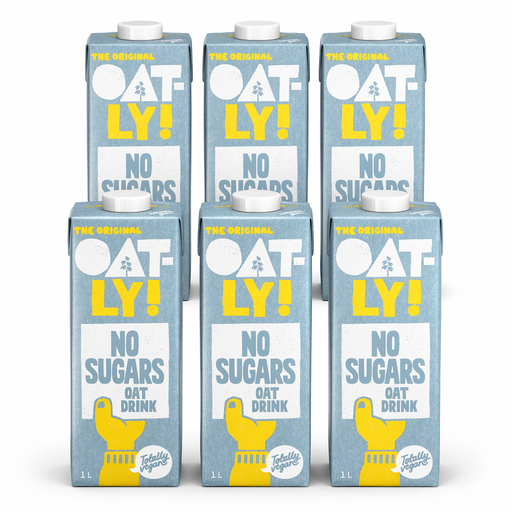
Oatly No Sugars Oat Drink, 6 × 1L
Oatly says its No Sugars drink can be used in cooking and baking and contains no dairy or soy. It lists oats as an ingredient, so check the current carton before using it where gluten avoidance or another allergy applies.
View on Joybuy
 No image available
Alpro Oat No Sugars Long Life Drink, 8 × 1L
An oat-drink option for dairy-free meals where gluten-free status is not required. Check the current carton’s allergen and sugars information before adding it to an accepted recipe.
View on Joybuy
 No image available
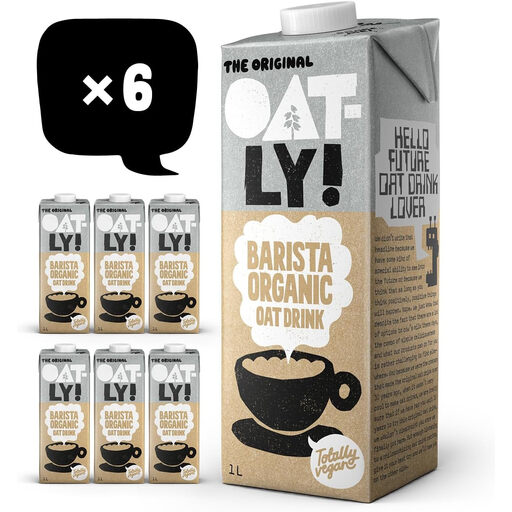
Oatly Organic Barista Oat Drink, 6 × 1L
A barista-format oat drink to consider for cooking or baking where its ingredients fit the meal. Check the current carton for gluten and precautionary allergen statements, and assess fortification separately if it would be a child’s main drink.
View on Joybuy
 No image available
Alpro Oat Original Long Life Drink, 8 × 1L
An oat-drink option for cereal or drinks where dairy is avoided but gluten-free status is not required. If it would replace a young child’s main milk, compare the current carton’s nutrition with the child-specific guidance rather than relying on its everyday use.
View on Joybuy
 No image available
Oatly Long Life Barista Milk, 6 × 1L
A barista-format oat drink to consider for dairy-free cooking or baking when the current allergen label fits the eater. Its product information says it is not suitable as a complete milk substitute for infants or young children; check gluten status on the carton if that matters.
View on Joybuy
Questions about oat drinks
Is a dairy-free oat drink automatically suitable for a child with a milk allergy?
No. Check the exact product’s allergen and precautionary statements against the child’s allergy plan. Marks & Spencer states that its Plant Kitchen Whole Oat Drink is unsuitable for people with milk allergy despite being a plant-based product.
Can an oat drink be used in a gluten-free meal?
Choose one with an explicit gluten-free claim if the meal must be gluten-free, and check its other allergen information too. The Food Standards Agency defines gluten-free as no more than 20 mg/kg gluten in the food as sold; oat must still be declared as an allergen.
What if oat drink will replace cow’s milk as a child’s main drink?
Check the child’s allergen requirements and choose an appropriate unsweetened, fortified alternative rather than assuming any oat drink will do. For young children unable to tolerate cow’s milk, NHS clinical guidance advises checking calcium, iodine, vitamins D and B12, energy and protein; Hertfordshire and West Essex Clinical Guidance gives around 40 kcal per 100 ml or more and at least 1 g protein per 100 ml as selection points. Seek advice from a GP or dietitian if growth or a restricted diet is a concern.
Should I check the carton again when buying a familiar oat drink?
Yes. Read the current ingredients, nutrition and allergen information before serving it, particularly when the meal must meet an allergy or gluten-free requirement. A familiar product name is not a substitute for checking the particular carton.


