Who is choosing the drink?
The distinction is whether the oat drink is for a parent’s own meals and drinks or is being considered for a child.
Breastfeeding parents replacing dairy
For tea, cereal or cooking, check fortification rather than treating every dairy-free carton as nutritionally equivalent. NHS breastfeeding advice identifies calcium and vitamin D in dairy alternatives, and iodine for people following a vegan diet.
Parents choosing a drink for a child over one
Start with the child’s age and any allergy or feeding plan. Black Country 0-18 Years NHS guidance advises checking calcium and iodine fortification when choosing a plant-based dairy alternative; the exact carton’s age statement matters too.
Parents buying for several everyday uses
A carton for breakfast and cooking need not be the same one used to make foamy coffee. Compare the current labels for fortification, sugars and allergens, then choose the format that fits the drinks and meals you actually prepare.
What should you check?
Decide who will use the drink before comparing cartons. Age and allergen checks come before choosing between everyday, whole-style and barista formats.
| Priority |
What to check |
Your needs |
| Parent’s fortification |
Read the exact carton’s nutrition and ingredient information for calcium and vitamin D. NHS breastfeeding advice also identifies iodine for dairy alternatives in a vegan diet. |
I’m using an oat drink in place of dairy in my own meals and drinks, so I want to know which nutrients this particular carton contains. |
| Child’s age and use |
Check whether the drink is for cooking or intended as a main milk drink. The NHS advises breast milk or first infant formula until at least age one; Black Country 0-18 Years NHS says fortified plant alternatives can be used in cooking from six months, but not as a main milk drink before one. |
If the carton might be used for my baby, I need to keep cooking uses separate from the baby’s main milk feed. For an older child, I’ll check the product’s age statement and feeding plan. |
| Sugars and everyday use |
Compare sugars per 100ml and the ingredient list on the current pack. Check whether its stated uses fit cereal, tea or cooking; a product name alone does not settle a sugars preference. |
For daily breakfasts and drinks, I’d rather compare the cartons I might use regularly than choose on the strength of a front-of-pack phrase. |
| Coffee and cooking |
Look for the manufacturer’s stated use: barista products focus on coffee and foam, while a whole-style drink may be positioned for hot drinks, cooking and baking. Compare nutrition separately if that also matters. |
I may want foam for coffee, but I also use oat drink in food. One carton need not cover both tasks if its other label details do not suit us. |
| Allergens |
Read the allergen statement on the exact pack, including coeliac and milk-allergy suitability where relevant. M&S states that its Plant Kitchen Whole and Barista Oat drinks are not suitable for coeliacs or people with a milk allergy. |
Someone in my household avoids particular allergens, so I cannot assume every oat-based drink has the same suitability statement. |
Brand and product-line references
These examples show why the precise product and label matter more than the brand name alone.
Alpro
Its oat range includes everyday, No Sugars and Growing Up products for different uses.
- Tesco’s listing for Alpro Oat No Sugars identifies added calcium, iodine and vitamins, and describes it as containing no sugars or sweeteners.
- Alpro’s Growing Up product page uses both “1-3+” and “3+” age wording. Check the current pack’s age statement before considering it for a child.
Oatly
Its Whole oat drink is presented for hot drinks, cooking and baking as well as drinking.
- Oatly describes Whole as an option for coffee, tea, cooking and baking.
- Those adult and general-use applications do not make it an infant’s main milk feed; NHS infant-feeding guidance still applies.
Minor Figures
Its Barista Oat product is positioned primarily for coffee.
- Minor Figures describes a dense foam texture for lattes and cappuccinos.
- Coffee positioning does not establish child-specific suitability; check nutrition, allergens and intended use separately.
Tesco
Its own-label Oat Drink provides an everyday fortified option to compare by its current label.
- Tesco lists added calcium, iodine and vitamins B12, B2 and D2 for its Oat Drink 1L.
- Check the current ingredients and allergen statement if the drink needs to fit a particular household diet.
M&S
Its oat-drink products include barista, whole and three-ingredient versions with materially different labels.
- M&S lists calcium, iodine, vitamin B12 and vitamin D for its Plant Kitchen Barista and Whole Oat drinks.
- Its Only 3 Ingredients Oat Drink is unfortified and not recommended as a dairy replacement for children under 36 months. M&S also states that its Plant Kitchen Barista and Whole products are not suitable for coeliacs.
Joybuy oat-drink options
These cartons cover a parent’s coffee routine and everyday dairy-free use. Compare their stated fortification, sugars and intended uses; none should be selected as an infant’s main milk feed.
 No image available
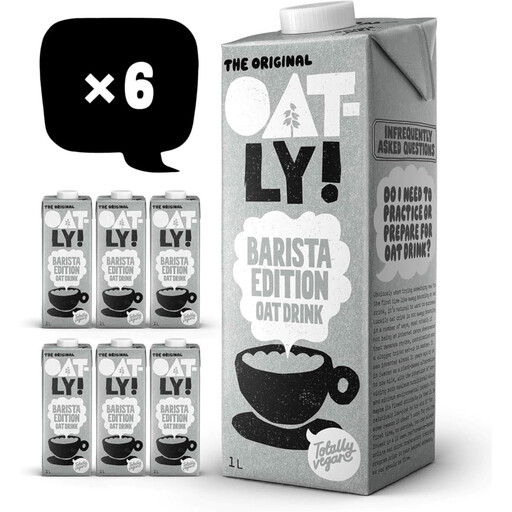
Oatly Long Life Barista Oat Drink 6 x 1L
For a parent making coffee, the product description specifies steaming, frothing and micro-foam; it also mentions cereal, smoothies, cooking and baking. It lists calcium, vitamin D2 and iodine. Refrigerate after opening and consume within seven days, according to the description. This is not an infant’s main milk feed.
View on Joybuy
 No image available
Alpro Oat No Sugars Long Life Drink 8 x 1L
An everyday oat drink described for cereal, smoothies, tea and coffee, with listed calcium, iodine and vitamins B2, B12 and D2. If the sugars content determines your choice, check the current carton’s nutrition panel and ingredients: the product descriptions give conflicting sugar statements. The description identifies gluten-containing oats; check the allergen label if relevant. Do not use it as an infant’s main milk feed.
View on Joybuy
 No image available
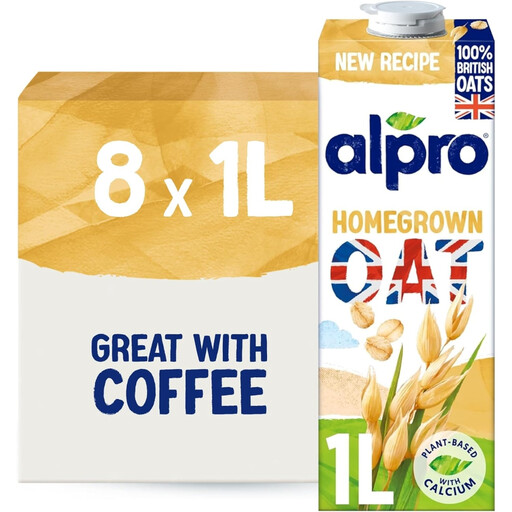
Alpro Oat Original Long Life Drink 8 x 1L
For a parent using oat drink in cereal, smoothies or hot drinks, the description lists calcium, iodine and vitamins B2, B12 and D2. It also identifies gluten-containing oats, so check the current allergen label where relevant. If considering it for a child, check the exact pack’s age suitability and the child’s feeding plan.
View on Joybuy
 No image available
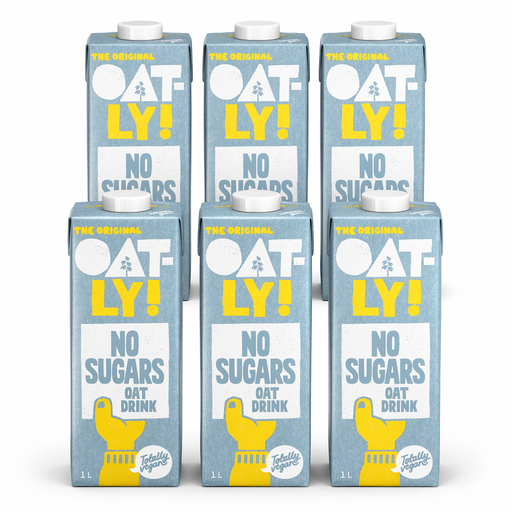
Oatly No Sugars Oat Drink 1L
An everyday option whose stated nutrition panel lists 0g sugars per 100ml, alongside calcium, iodine and vitamins D2, B2 and B12. It can be stored at room temperature before opening. Check the listing’s pack quantity before purchase, and check the exact carton’s age suitability before considering it for a child.
View on Joybuy
 No image available
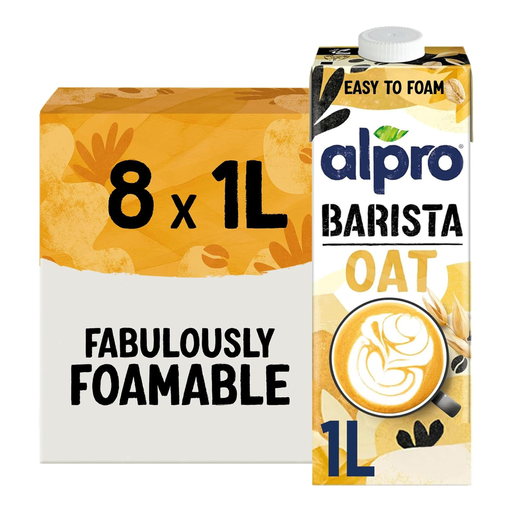
Alpro Barista Oat Long Life Drink 8 x 1L
For coffee use, the description presents it as foamable for flat whites, cappuccinos, lattes and iced coffee. Calcium and vitamin D are listed; if iodine fortification matters to your diet, check the current pack. The description identifies gluten-containing oats. This adult-use drink is not an infant’s main milk feed.
View on Joybuy
Common questions
Can ordinary oat drink replace breast milk or formula before age one?
No. The NHS advises continuing breast milk or first infant formula until at least age one and identifies first infant formula as the suitable alternative to breast milk during the first 12 months. Do not use ordinary oat drink as an infant’s main milk feed.
What should I check in an oat drink while breastfeeding?
For a dairy alternative, NHS guidance identifies calcium and vitamin D fortification, plus iodine if you follow a vegan diet. Read the exact carton’s label and consider the drink as part of your wider diet, not a replacement for all other foods.
Can oat drink be used in a baby’s food before their first birthday?
Black Country 0-18 Years NHS guidance says fortified plant-based dairy alternatives can be used in cooking from six months, but not as a main milk drink before age one. If the baby has a diagnosed allergy or another feeding issue, follow their clinician’s or dietitian’s plan.
Does a short ingredient list make an oat drink suitable for a toddler?
No. M&S states that its Only 3 Ingredients Oat Drink is unfortified and is not recommended as a dairy replacement for children under 36 months. Check the exact product’s age statement and fortification when choosing a non-dairy alternative for a child.
Does using oat drink in coffee change the caffeine advice while breastfeeding?
No. Coffee still contributes caffeine when made with oat drink. The NHS advises no more than 200mg of caffeine a day while breastfeeding.


