What should you check first?
Start with the child’s age and how the drink will be used. Then compare the exact pack’s nutrition and allergen information against your household’s needs.
| Priority |
What to check |
Your needs |
| Age and use |
Is the drink going into food, or being offered as a main drink? Black Country 0–18 years NHS says plant-based alternatives can be used in cooking from around 6 months; NHS guidance says breast milk or first infant formula should remain the main drink until at least age 1. |
I’m making porridge or another weaning food, but I need to keep my baby’s usual milk feeds separate from that recipe. |
| Fortification |
For use from age 1, check that the drink is unsweetened and calcium-fortified. Compare calcium per 100 ml and look for iodine and added vitamins; Black Country 0–18 years NHS advises at least 120 mg calcium per 100 ml and checking iodine in plant-based alternatives. |
If an oat drink will regularly replace dairy drinks in my toddler’s diet, I want its nutrition panel to show what it contributes rather than relying on a dairy-free claim. |
| Allergens |
Read the ingredients and highlighted allergens on the current pack. Where gluten avoidance matters, look for an explicit gluten-free statement; where milk allergy matters, check any precautionary milk wording. The Food Standards Agency distinguishes declared ingredients from warnings about possible cross-contact. |
My child’s allergy or coeliac requirements mean I need to assess this particular variety, not assume that every oat drink has the same free-from status. |
Brand and product-range references
These examples show why the exact variety matters: fortification and allergen suitability cannot be assumed across a brand’s range.
Alpro
Alpro offers standard, no-sugars, barista and growing-up oat-drink varieties.
- Alpro UK lists 120 mg calcium and 22.5 µg iodine per 100 ml for Oat Original, alongside vitamins B2 and D2.
- Alpro cautions that most oat drinks are not gluten-free; check the exact variety if gluten avoidance matters.
Oatly
Oatly has original and barista-style oat drinks used in household food and drinks.
- Oatly describes its original oat drink as fortified with calcium, iodine and vitamins D, B2 and B12.
- Check the UK pack of the variety you buy for its own ingredients and nutrient declaration.
Minor Figures
The Everyday Oat variety is presented as a fortified, gluten-free oat drink for general household use.
- Minor Figures lists gluten-free oats, calcium, iodine and added vitamins among its Everyday Oat ingredients.
- It is an oat drink, not a replacement for an infant’s main milk feed before age 1.
M&S
The M&S range includes both fortified oat drinks and an unfortified three-ingredient variety.
- Marks & Spencer describes Plant Kitchen Whole Oat Drink as enriched with calcium, iodine and vitamins D and B12.
- Its Only 3 Ingredients Oat Drink is labelled unfortified, not recommended as a dairy replacement under 36 months, and unsuitable for coeliacs or people with wheat allergy.
Tesco
Tesco’s oat-drink category lists own-label and other branded varieties.
- The category includes standard, fortified and toddler-oriented product descriptions.
- A category listing does not establish the age or allergy suitability of an individual drink; check its product details and delivered pack.
Oat drinks on Joybuy
These oat drinks cover cooking and baking options for weaning foods, alongside varieties to compare for use from age 1. None replaces breast milk or first infant formula as a baby’s main drink.
 No image available
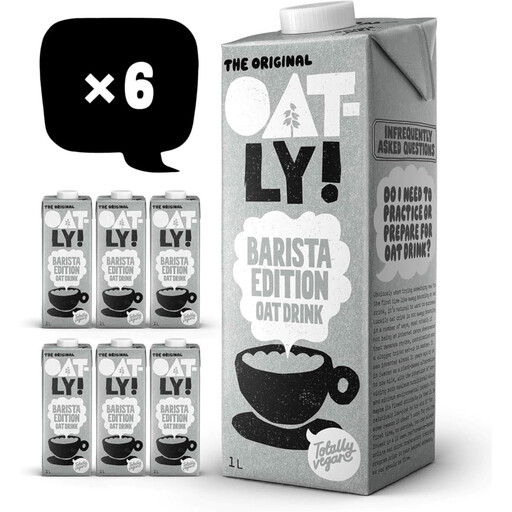
Oatly Long Life Barista Oat Drink, 6 × 1L
A dairy-free oat drink described for cooking and baking, which may suit recipes during weaning without replacing a baby’s main milk feed. The product information lists 120 mg calcium and 22.5 µg iodine per 100 ml. Check the current pack for gluten suitability and allergy-relevant precautionary statements.
View on Joybuy
 No image available
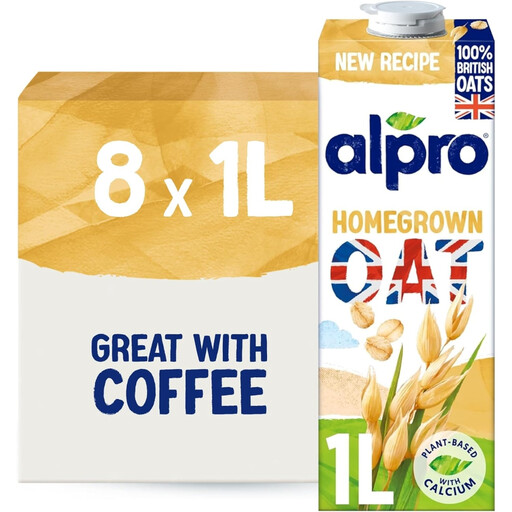
Alpro Oat Original Long Life Drink, 8 × 1L
This dairy-free, no-added-sugars oat drink is an option to compare for family food and drinks from age 1. Alpro UK lists 120 mg calcium per 100 ml for Oat Original, but check this pack’s iodine declaration before relying on it. The product information identifies oats containing gluten; read the current pack for allergy-relevant statements.
View on Joybuy
 No image available
Alpro Oat No Sugars Long Life Drink, 8 × 1L
The No Sugars variety is a dairy-free option to compare for cereal and other family uses from age 1. Its product information lists calcium, iodine and vitamins; use the current nutrition panel to compare amounts per 100 ml. It identifies oats containing gluten and is not a substitute for an infant’s main milk feed.
View on Joybuy
 No image available
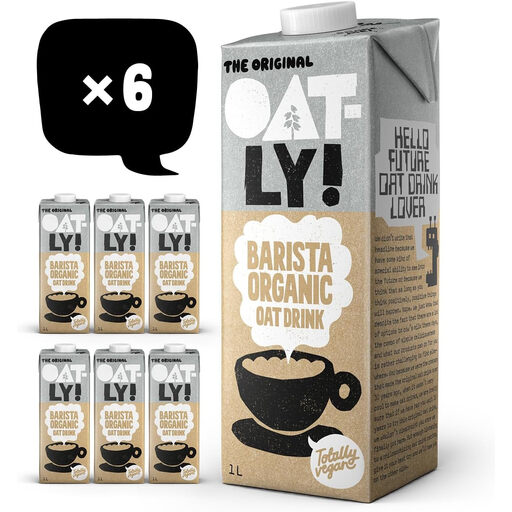
Oatly Organic Barista Oat Drink, 6 × 1L
This dairy-free oat drink is described for cooking and baking, including recipes made during weaning. If considering it as a regular dairy alternative from age 1, compare its current nutrition panel for calcium, iodine and vitamins. Check the pack’s oat and precautionary allergen declarations against the child’s requirements.
View on Joybuy
Frequently asked questions
Can oat drink be my baby’s main drink during weaning?
No, not before age 1. NHS guidance says breast milk or first infant formula should remain the main drink; Black Country 0–18 years NHS says a plant-based alternative can be used in cooking from around 6 months but not as the main milk drink.
What should I compare in an oat drink after age 1?
Look for an unsweetened, calcium-fortified drink and compare its nutrition panel. The NHS allows these alternatives from age 1 as part of a balanced diet, while Black Country 0–18 years NHS advises checking for at least 120 mg calcium per 100 ml and for iodine.
Is a dairy-free oat drink automatically suitable for a child with cow’s-milk allergy?
No. Check the exact pack’s ingredients and precautionary allergen statements; the Food Standards Agency says such statements can indicate possible unintended allergen presence. An ordinary oat drink must not replace a baby’s main milk feed, and formula choices for a diagnosed allergy need individual clinical advice.
Does an oat drink have to be labelled gluten-free?
If coeliac disease or gluten avoidance is relevant, check for an explicit gluten-free statement on the exact product. Minor Figures describes Everyday Oat as made with gluten-free oats, whereas Marks & Spencer states that its Only 3 Ingredients Oat Drink is not suitable for coeliacs.
How should I introduce foods that may trigger allergies during weaning?
NHS guidance advises introducing foods that can trigger allergic reactions one at a time and in very small amounts from around 6 months, so you can spot a reaction. If your baby has a diagnosed food allergy or eczema, or a relevant family history, speak to a GP or health visitor before introducing them.


