Home coffee drinkers
If you make lattes, cappuccinos or flat whites, a carton described as foamable or formulated for coffee is a more relevant starting point than a standard drink with no frothing claim.


For foam-dependent coffee, start with a long-life barista oat drink; for regular use in cereal, tea or cooking, compare fortified standard cartons. If a short ingredient list matters more, check what the exact carton contains rather than assuming it has the same added nutrients. Long-life storage applies before opening: follow the pack’s refrigeration and use instructions afterwards.
If you make lattes, cappuccinos or flat whites, a carton described as foamable or formulated for coffee is a more relevant starting point than a standard drink with no frothing claim.
If oat drink goes into cereal, tea, smoothies or cooking, compare the nutrients and storage instructions on the exact carton you plan to use.
If a simpler ingredient list is your priority, check whether the product also lists the added nutrients you want. Marks & Spencer describes its Only 3 Ingredients Oat Drink as unfortified.
Decide how you will use the drink, then compare the exact cartons for formulation, added nutrients and storage instructions.
| Priority | What to check | Your needs |
|---|---|---|
| Coffee | Look for a barista or foamable description and follow the carton’s heating and frothing directions. A coffee-focused description is not an independent foam test. | I make lattes or cappuccinos and want a drink intended for frothing; otherwise, a standard carton may meet my needs. |
| Added nutrients | Compare the exact labels for calcium, iodine and vitamins D and B12. The UK government’s SACN and COT assessment says nutrient content varies considerably between plant-based drinks. | Oat drink is a regular alternative to dairy in my household, so I want to know which nutrients this particular carton lists. |
| Ingredients | Read the ingredient list alongside the nutrition information. Marks & Spencer lists its Only 3 Ingredients Oat Drink as unfortified. | A short ingredient list matters to me, but I do not want to mistake it for a fortified formulation. |
| Storage | Confirm that the unopened carton is labelled long life or shelf-stable. Check its separate refrigeration and use instructions for after opening. | I want cartons I can keep in a cupboard before opening and can finish within the period stated on the pack. |
| Allergens | Check the exact product for a gluten-free claim when needed, and read its oat-allergen declaration. The Food Standards Agency distinguishes the oat allergen from gluten intolerance. | I need to distinguish a gluten-free claim from suitability for someone with an oat allergy. |
The UK government’s SACN and COT assessment says nutrient content varies considerably between plant-based drinks. Marks & Spencer, for example, lists its Only 3 Ingredients Oat Drink as unfortified.
For regular use instead of dairy, compare calcium, iodine and vitamins D and B12 on the exact carton rather than relying on the words ‘oat drink’.
Oatly’s Barista Edition is described by Sainsbury’s as foamable, while Alpro positions its Barista Oat for coffee. Those descriptions should not be assumed to apply to every standard oat drink.
For lattes or cappuccinos, check for a coffee or frothing description and follow the product’s preparation directions.
Room-temperature storage for a shelf-stable carton applies before opening; the opened carton has separate refrigeration and use instructions.
Check those instructions, note when you opened the carton and refrigerate it as directed.
The Food Standards Agency identifies oats as an allergen in their own right, including when an oat-containing food is labelled gluten free.
Check the exact gluten-free claim if you need one. Do not use that claim as evidence that an oat drink is suitable for an oat allergy.
Oatly has standard and coffee-focused oat drinks; check the particular variant rather than treating them as interchangeable.
Alpro lists Oat Original for general use and positions Barista Oat for coffee.
Minor Figures positions Barista Oat for lattes, cappuccinos and everyday brewing.
Tesco has an oat-drinks category in which shoppers can compare individual product listings.
Sainsbury’s lists both a standard Long Life Oat Drink and a Long Life Oat Barista variant.
Marks & Spencer lists both a Barista Oat Drink with added nutrients and an Only 3 Ingredients Oat Drink.
These options include long-life barista and standard oat drinks for coffee and everyday use, plus a barista oat drink whose unopened storage instructions are worth checking if cupboard storage is essential.
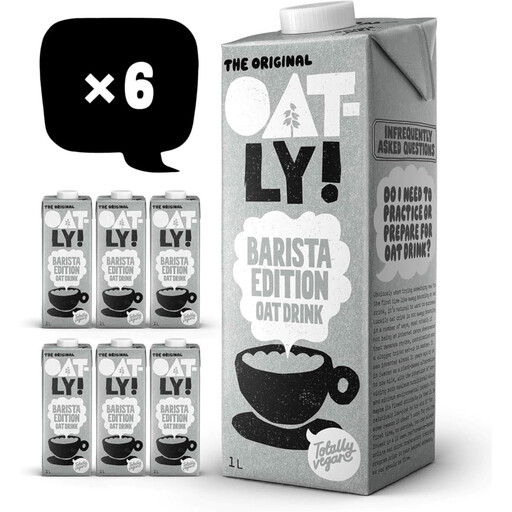 No image available
A six-carton barista option for shoppers making foam-dependent coffee. Check the carton’s allergen declaration and its storage instructions before and after opening.
 No image available
An eight-carton long-life barista option for regular coffee use. If added nutrients or gluten-free labelling matter, check the exact carton rather than assuming another Alpro variant has the same details.
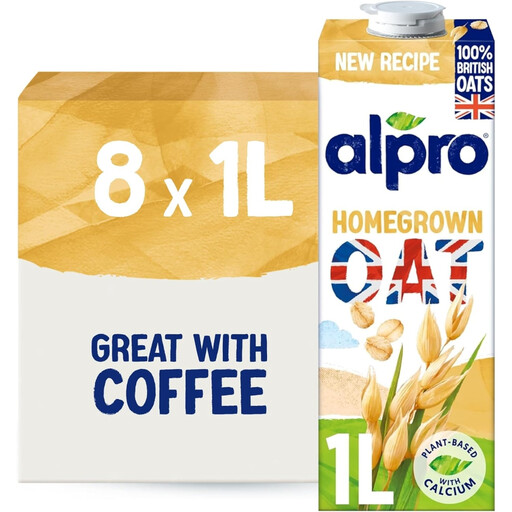 No image available
A standard long-life option for cereal, tea and cooking rather than a specifically barista-labelled drink. Alpro lists calcium and vitamin B12 for Oat Original; check the current carton if iodine or other nutrients affect your choice.
 No image available
An eight-carton long-life option for general use. If its No Sugars variant is important to your decision, read the current pack’s nutrition information and wording before relying on that attribute.
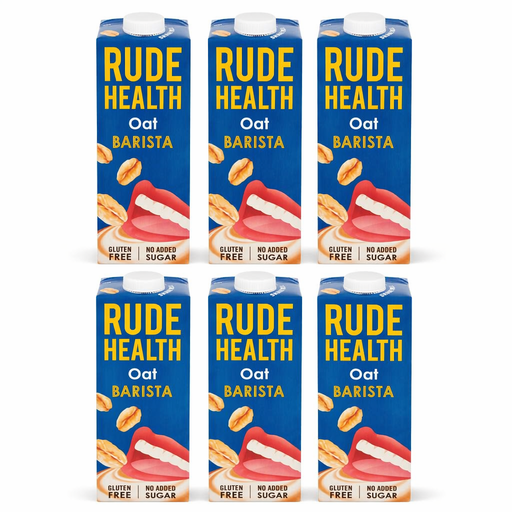 No image available
A single-carton barista oat option for coffee use. If you need a long-life carton for cupboard storage, confirm the unopened storage directions on this product before choosing it.
No. The UK government’s SACN and COT assessment says nutrient content varies considerably between plant-based drinks. If you use oat drink regularly instead of dairy, compare calcium, iodine and vitamins D and B12 on the exact carton.
No. Marks & Spencer describes its Only 3 Ingredients Oat Drink as unfortified, while its Barista Oat Drink lists added calcium, iodine and vitamins B12 and D. Read the label for the particular drink you intend to buy.
Follow the unopened carton’s storage directions; a shelf-stable ambient carton can be kept at room temperature before opening. Refrigerate it after opening as directed and use it within the period stated on that carton.
No. The Food Standards Agency identifies oats as an allergen even in oat-containing foods labelled gluten free. Check a product’s gluten-free claim when needed, but do not treat that claim as evidence of suitability for an oat allergy.