Regular dairy-free breakfast drinkers
If oat drink is a frequent choice for cereal, porridge or a glass, compare the exact cartons’ fortification and nutrition per 100 ml, not just their flavour descriptions.


If oat drink regularly replaces dairy milk at breakfast, compare cartons for calcium, iodine and vitamins D and B12 rather than assuming every recipe contains them. An everyday drink may suit cereal or porridge, while a coffee-led routine gives you a reason to consider a barista recipe. Choose chilled or long-life according to your storage needs, and check the exact pack for allergens and any gluten-free claim.
If oat drink is a frequent choice for cereal, porridge or a glass, compare the exact cartons’ fortification and nutrition per 100 ml, not just their flavour descriptions.
If you add oat drink to hot drinks, check the maker’s preparation advice. Sainsbury’s advises letting hot water cool slightly before adding its Oat Drink; coffee-focused barista recipes serve a different use.
Read the allergen statement on the exact carton. The Food Standards Agency notes that oats remain an allergen even in a product labelled gluten-free; dairy-free wording does not establish gluten-free status.
Start with how you use the drink most often, then compare the exact carton’s nutrition, hot-drink guidance, allergen information and storage instructions.
| Priority | What to check | Your needs |
|---|---|---|
| Fortification | Look for calcium, iodine and vitamins D and B12 on the exact carton. Compare stated amounts per 100 ml where available; recipes can differ within a brand. | If oat drink regularly replaces dairy milk in my breakfast, I want to know which nutrients this particular carton lists. |
| Tea and coffee | Read the hot-drink instructions. Sainsbury’s advises slightly cooler water for its Oat Drink to reduce separation; Minor Figures describes its Barista Oat as intended for lattes and cappuccinos. | My morning drink matters as much as cereal, so I need to decide whether ordinary hot-drink use or a coffee-focused recipe is the better fit. |
| Sugars and serving size | Compare sugars using the same volume: Sainsbury’s Oat Drink lists 4.2 g per 100 ml, while Minor Figures lists 5 g per 200 ml serving for Barista Oat. Check the figures for the variants you are choosing between. | I want to understand the nutrition of the amount I actually pour, rather than compare figures stated for different serving sizes. |
| Allergens and gluten | Read the highlighted allergens and any cross-contact statement. If gluten avoidance matters, check for a gluten-free claim on the finished product; the Food Standards Agency says that claim means no more than 20 mg/kg gluten in the food as sold. | For an allergy or gluten-related requirement, I cannot rely on a dairy-free or vegan description alone. |
| Storage and pack size | Check whether the carton is chilled or long-life, its unopened and after-opening instructions, and how many cartons are in the pack. Oatly says its Chilled Oat Drink Semi must not be stored at room temperature. | A cupboard carton may suit my routine, or I may prefer a chilled carton if I have fridge space; a multipack also needs room. |
Fortification depends on the recipe. Oatly and Sainsbury’s list added nutrients for particular drinks, but that does not describe every chilled, long-life, organic or barista variant.
Read the exact carton for calcium, iodine and vitamins D and B12, and use the per 100 ml panel when comparing products.
A coffee-focused recipe addresses a different breakfast use from pouring oat drink over cereal. Claims about foam describe the maker’s product, not how every drink will perform in your cup.
Choose around your usual breakfast: check nutrition and storage for everyday use, or the maker’s hot-drink guidance if coffee texture matters.
Oats are an allergen even when a product carries a gluten-free claim. Other suitability warnings can differ too: Sainsbury’s says its Oat Drink is unsuitable for customers with a soya allergy because of manufacturing methods.
Check the finished carton’s gluten-free claim, highlighted allergens and relevant manufacturing warnings each time you choose a product.
These brand and retailer examples show different oat-drink formats; their descriptions do not establish the ingredients or suitability of every product in a range.
A reference for chilled everyday and other oat-drink formats.
An option to consider across standard, no-sugars and barista oat-drink formats.
A coffee-focused reference for breakfasts built around lattes or cappuccinos.
An own-label example for comparing everyday breakfast fortification and hot-drink instructions.
A retailer range in which to compare own-label and branded oat-drink formats.
These options include long-life everyday drinks for cereal-focused breakfasts and barista-labelled drinks for coffee-led mornings. Check the exact carton where fortification or allergen information affects your choice.
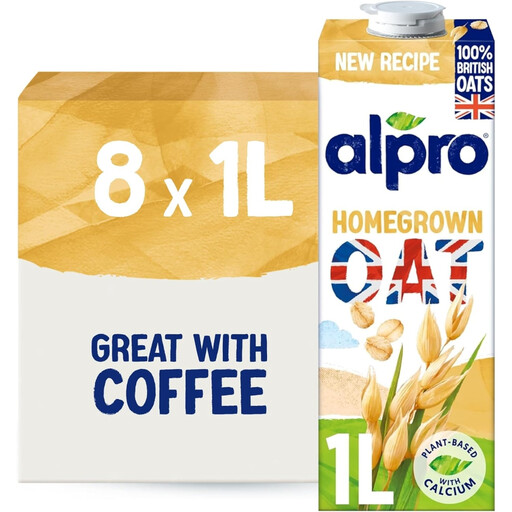 No image available
Consider this long-life pack for regular cereal or porridge use if you have space for eight cartons. Check the exact cartons’ fortification and allergen information if either affects your choice.
 No image available
The No Sugars variant offers another long-life choice for repeated breakfasts. Compare its per 100 ml nutrition panel with the Original variant, and allow room for eight cartons.
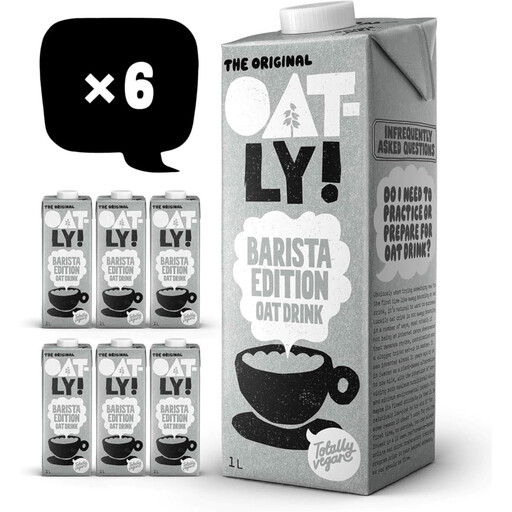 No image available
This barista-labelled long-life pack is an option for a coffee-led breakfast. It contains six cartons; check this variant’s nutrition, storage instructions and allergen statement on the exact pack.
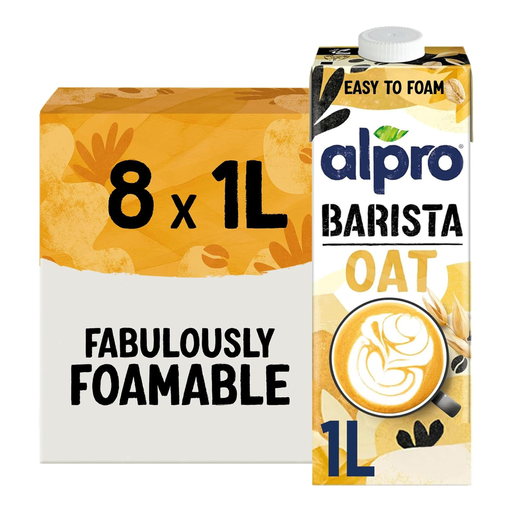 No image available
Consider this barista-labelled pack if coffee is your main breakfast use and eight long-life cartons suit your storage space. Check the exact carton for calcium, iodine and vitamin B12 if fortification matters to you.
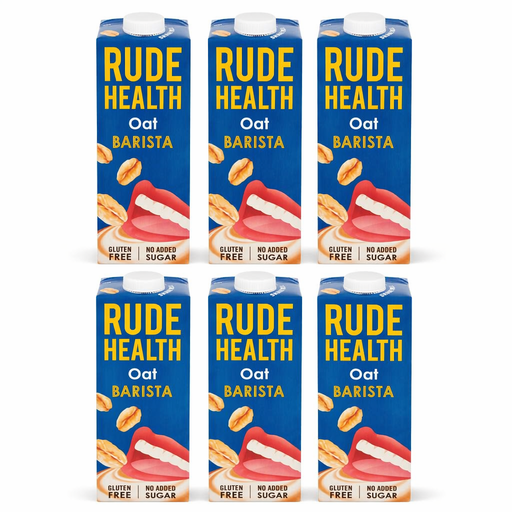 No image available
This single barista-labelled carton may suit a household that does not want a multipack. Check the finished drink’s gluten-free labelling if needed, and read the carton for fortification and after-opening storage.
No. Dairy-free and vegan descriptions do not establish gluten-free status. The Food Standards Agency says food labelled gluten-free must contain no more than 20 mg/kg gluten as sold; oats must still be identified as an allergen.
Check the exact carton for calcium, iodine and vitamins D and B12, then compare nutrition per 100 ml. Oatly Chilled Oat Drink Semi and Sainsbury’s Oat Drink list these nutrients, but their labels do not establish what another variant contains.
Follow the instructions for the particular drink: Sainsbury’s advises allowing hot water to cool slightly before adding its Oat Drink to reduce separation. For a coffee-led breakfast, a barista recipe is another option; Minor Figures describes its Barista Oat as intended for lattes and cappuccinos, rather than providing an independent comparison with standard drinks.
Choose according to the storage space and routine that suit your household, then follow the exact pack’s instructions. Oatly says its Chilled Oat Drink Semi must not be stored at room temperature; a long-life carton is an option when unopened cupboard storage matters, but its after-opening instructions still need checking.