Cereal and porridge eaters who prefer a mild flavour
Look for a product described as subtle rather than assuming every carton marked no sugars tastes alike. Compare the nutrition information per 100 ml if sweetness from the drink matters to you.


For a mild, cereal-first breakfast, start with an oat drink whose description specifically mentions a subtle flavour: Sainsbury’s describes chilled Alpro Oat No Sugar as subtle and creamy, with no sugars or sweeteners. If one carton also needs to work in tea and coffee, Oatly positions its Semi drink for everyday use; choose a barista style when foam matters, and check the exact carton’s nutrition, allergens and storage instructions.
Look for a product described as subtle rather than assuming every carton marked no sugars tastes alike. Compare the nutrition information per 100 ml if sweetness from the drink matters to you.
An everyday oat drink may suit a cereal-and-tea routine. If coffee foam is important, compare a barista version as a separate choice rather than treating it as the default for cereal.
Check the exact carton’s gluten-free claim and allergen statement. The Food Standards Agency notes that oats remain an allergen even when a food is labelled gluten-free, and suitability warnings differ between products.
Start with the flavour and uses you want at breakfast, then compare the nutrition label, allergen statement and instructions for the carton you would actually buy.
| Priority | What to check | Your needs |
|---|---|---|
| Mild flavour | Read the description for the named drink and compare sugars per 100 ml. Sainsbury’s describes chilled Alpro Oat No Sugar as subtly creamy, with no sugars or sweeteners; that description does not establish how other no-sugars drinks taste. | I want cereal or porridge to remain the main flavour, without relying on the name of a drink to predict its taste. |
| Hot drinks | Check whether tea, coffee or foaming is an intended use. Oatly describes its Semi drink as an everyday option; Minor Figures describes its Barista Oat in terms of smooth texture and dense foam. | One carton needs to cover breakfast and my usual hot drink. Foam matters only if I regularly make coffee that calls for it. |
| Nutrition | Compare sugars, fat and salt on the same per-100-ml basis, then check whether calcium, iodine or vitamins are added. Oatly lists 1.5% fat and added nutrients for its Semi drink, while it describes its Organic drink as unfortified. | I want to know what this particular carton contains rather than assume an organic or short-ingredient-list drink has the same fortification as another one. |
| Allergens | Read any explicit gluten-free claim and the full allergen statement on the exact pack. The Food Standards Agency says gluten-free foods must contain no more than 20 mg/kg gluten, but oats must still be identified as an allergen. | If gluten or an allergy affects what I can buy, a broad plant-based description is not enough to establish suitability. |
| Storage | Distinguish chilled from long-life cartons and check refrigeration and use-after-opening instructions. Sainsbury’s says its Long Life Oat Drink must be refrigerated and used within three days once opened. | A carton needs to fit how quickly my household will use it after opening, not just where I can store it beforehand. |
Minor Figures describes its Barista Oat around coffee texture and dense foam. Those characteristics answer a different question from whether an oat drink has a quiet flavour on cereal.
Compare products described for cereal or porridge first; consider a barista carton if foam is part of your routine.
Oatly says its Organic oat drink is not fortified, whereas its Semi drink lists added calcium, iodine and vitamins. The words describe different product choices.
Check the ingredient list and nutrition panel on the exact drink if either a short formulation or added nutrients matter to you.
The Food Standards Agency says oats remain an allergen even in gluten-free foods. M&S also states that its Plant Kitchen Whole Oat Drink is not suitable for coeliacs or for people with milk or wheat allergies.
Use the current pack’s explicit claims and allergen statement to assess the particular product; do not substitute a claim made for another oat drink.
Sainsbury’s instructs buyers to refrigerate its Long Life Oat Drink and use it within three days of opening. It also warns that the drink can separate when added to overly hot drinks.
Choose a pack size you can use within its stated opening period, and follow its instructions for hot drinks.
A carton left unfinished beyond its stated opening period may have to be discarded.
These examples show differences between named oat drinks; a brand or retailer name alone cannot tell you the flavour, fortification or allergen suitability of every product in its range.
Sainsbury’s describes chilled Alpro Oat No Sugar as a subtle, creamy option for cereal, porridge, coffee and tea.
Its cited Semi and Organic oat drinks serve different ingredient and fortification preferences.
Its own-label Long Life Oat Drink offers a product-specific example for comparing storage and fortification.
Its cited Only 3 Ingredients and Plant Kitchen Whole drinks illustrate different formulation choices.
Its Barista Oat is a coffee-focused reference when foam matters more than a cereal-first flavour profile.
Tesco’s oat-drink category provides examples of original, semi, no-sugars and barista formats from different brands.
These oat-drink options include no-sugars and original cartons for a cereal-first routine, alongside barista cartons for people who also want a coffee-focused format. Compare the exact pack before treating any product name as a guarantee of mild flavour or allergen suitability.
 No image available
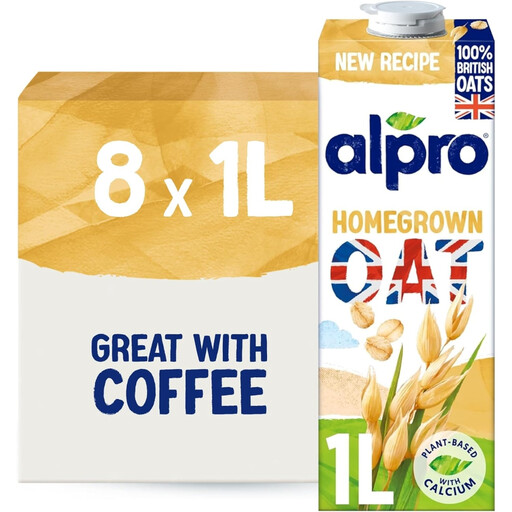
A long-life oat-drink pack to consider for a cereal-first routine. Its sugar descriptions conflict, so check the current carton before relying on the no-sugars wording; also check how soon each 1L carton must be used after opening.
 No image available
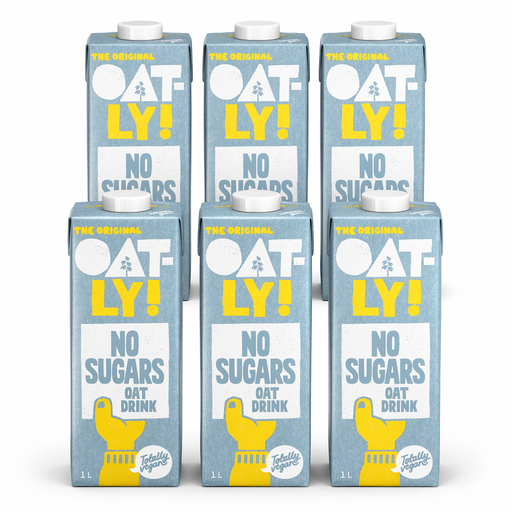
An original oat-drink option for shoppers considering a long-life breakfast carton rather than a no-sugars variant. Compare sugars per 100 ml and the opening-life instructions on this 8 x 1L pack.
 No image available
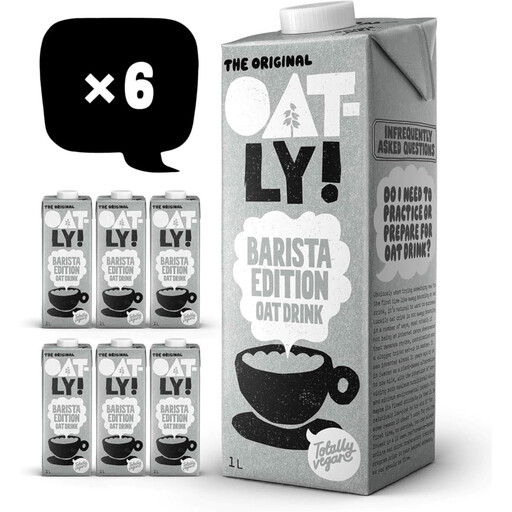
A no-sugars-labelled option if sugar content is central to your choice. Check the current carton’s nutrition panel and flavour description rather than assuming the name establishes how mild it tastes on cereal.
 No image available
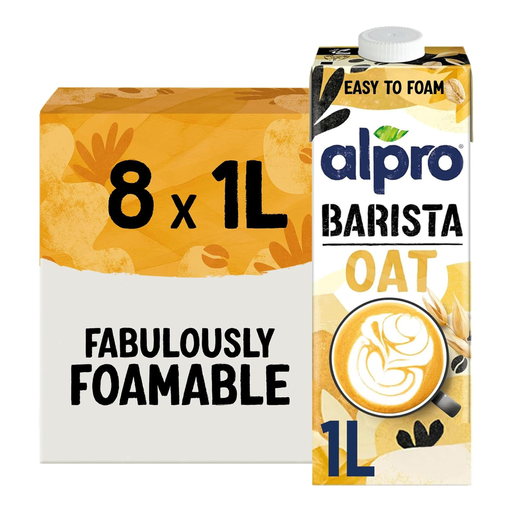
A long-life barista-format option when coffee is an important part of the same routine. If cereal-first mildness matters more, compare its flavour and nutrition label with an everyday oat drink before choosing the 6 x 1L pack.
 No image available
A long-life barista-format pack to consider when your breakfast routine also includes coffee. Check its sugars per 100 ml and allergen statement, and decide whether a coffee-focused format suits the way you use oat drink at breakfast.
Start with a named drink described as subtle and intended for those uses, then check its sugar information on the current carton. Sainsbury’s describes chilled Alpro Oat No Sugar as subtle and creamy, with no sugars or sweeteners, but that description does not predict the taste of every no-sugars oat drink.
Choose according to whether an everyday cereal-and-hot-drink use or coffee foam matters more. Oatly positions its 1.5%-fat Semi drink for everyday use, while Minor Figures describes its Barista Oat around dense foam; neither label alone establishes which flavour you will prefer on cereal.
No. The Food Standards Agency says food labelled gluten-free must contain no more than 20 mg/kg gluten, but oats must still be identified because they are an allergen in their own right. Check the allergen statement if oats are a concern.
No; check the statement for the exact product. M&S says its Plant Kitchen Whole Oat Drink is not suitable for coeliacs or for people with milk or wheat allergies, while Minor Figures makes a gluten-free claim for its Barista Oat. One product’s statement does not apply to another.
Follow the individual carton’s instructions. Sainsbury’s says its Long Life Oat Drink must be refrigerated and used within three days after opening; long-life describes its unopened storage, not how long an opened carton can be kept.