Home bakers replacing milk
If the recipe calls for milk as a liquid ingredient, look for an unflavoured dairy-free oat drink. Check its sweetness and ingredients against the recipe rather than assuming every oat drink has the same formulation.


For a cake recipe that calls for milk, start with an unflavoured dairy-free oat drink that meets the needs of everyone eating the cake; Oatly’s UK baking guidance says its oat drink can replace the milk named in a recipe. A barista version may also work, but its coffee-focused formulation does not establish that it will make a better cake. Check the exact carton for ingredients and allergen information, particularly if gluten, wheat or oats are a concern.
The right carton depends on why the cake needs to be dairy-free and whether anyone eating it has other dietary requirements.
If the recipe calls for milk as a liquid ingredient, look for an unflavoured dairy-free oat drink. Check its sweetness and ingredients against the recipe rather than assuming every oat drink has the same formulation.
A dairy-free statement does not answer the gluten question. Choose a product explicitly labelled gluten free where that is required, and check the current carton for other relevant allergen information.
If a particular oil, protein or additive matters to you, compare the cartons themselves. A short ingredient list does not establish gluten-free status or suitability for someone with a wheat allergy.
Choose for the recipe and the people eating the cake first; then decide whether you also want the drink for coffee or prefer a particular ingredient list.
| Priority | What to check | Your needs |
|---|---|---|
| Replacing milk | Check that the drink is dairy-free and unflavoured. Where a recipe gives instructions for its liquid ingredients, follow those too; Oatly’s UK product guidance says to use its oat drink where a recipe says milk. | I’m making a cake that calls for milk and need a dairy-free liquid in its place. |
| Ingredients and sweetness | Read the ingredient list and sugar information on the exact carton. Alpro describes Oat Original as having no added sugars, while its Barista Oat lists sunflower oil, chicory root fibre and pea protein. | I want to know what will go into a lightly flavoured cake, or I’m avoiding a particular ingredient. |
| Allergen requirements | Look for an explicit gluten-free label if gluten control is required, and check oat and wheat information separately. The Food Standards Agency says oats remain an allergen even when a product is gluten free. | Someone eating my cake needs me to check more than whether the drink is dairy-free. |
| Regular or barista | Compare the specific formulations rather than treating the word ‘barista’ as a baking claim. Alpro lists 3.0 g fat per 100 ml for Barista Oat and 1.5 g per 100 ml for Oat Original; those figures do not establish different cake results. | I may also use the carton for coffee, but I don’t want to assume a coffee-oriented drink will improve my cake. |
| Short ingredient lists | Check the full dietary statements as well as the ingredients. M&S lists water, oats and sea salt for Only 3 Ingredients Oat Drink, but states that this product is not suitable for coeliacs or people with a wheat allergy. | A simpler formulation appeals to me, provided it still meets the requirements of everyone eating the cake. |
‘Dairy-free’ addresses milk, not oats, gluten or wheat. The Food Standards Agency says oats must still be emphasised as an allergen in gluten-free products.
Read the current carton for highlighted allergens and, where needed, an explicit gluten-free claim before using it in a cake for someone else.
Barista drinks are positioned for coffee use, and their formulations can differ from regular oat drinks. Coffee performance does not establish how a cake will rise, set or taste.
For a recipe that simply calls for milk, consider a regular unflavoured drink that meets your dietary needs. Choose a barista version if you also want its coffee-oriented use or its particular ingredients suit the recipe.
M&S Only 3 Ingredients Oat Drink contains water, oats and sea salt, yet M&S states that it is not suitable for coeliacs or people with a wheat allergy.
Check ingredient simplicity and allergen suitability separately; use the dietary statement on the exact pack for the requirement that matters.
These brand and retailer examples show why the product name alone is not enough: formulations and dietary statements differ within oat-drink ranges.
Oatly’s UK pages describe using its oat drinks in cooking and baking wherever a recipe names milk.
Alpro’s Oat Original and Barista Oat pages provide distinct ingredient lists and nutrition information to compare.
Minor Figures markets its Barista Oat for coffee use and labels the product gluten free.
The M&S range includes different oat-drink styles; its Only 3 Ingredients product offers a distinct ingredient-list comparison.
Tesco’s oat-drink category lists products from multiple brands, including regular, barista and gluten-free-labelled options.
These regular and barista oat drinks offer different starting points for a dairy-free cake recipe. Compare the exact pack’s ingredients and dietary statements before baking, especially when someone eating the cake has an allergen requirement.
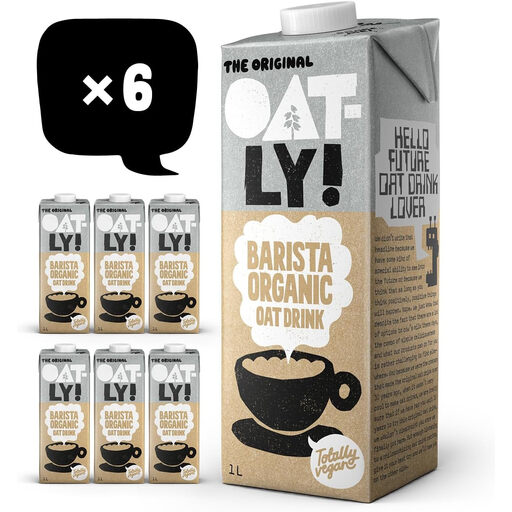 No image available
Consider this six-carton barista pack if you want an oat drink for a cake recipe and also use barista-style drinks elsewhere. Its barista name does not establish better cake results; check the carton for the dietary statements your household needs.
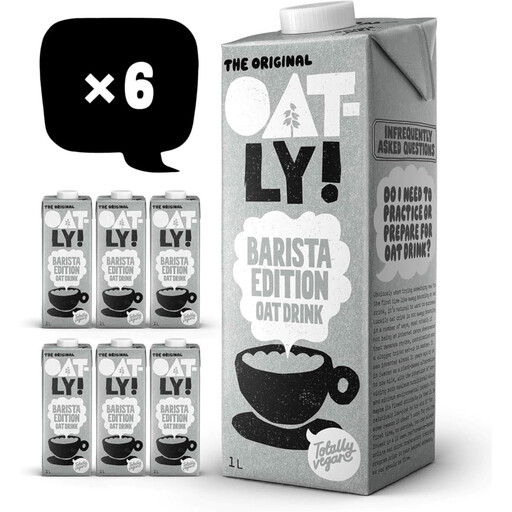 No image available
This six-carton long-life pack is another barista-style option to consider when replacing milk in a cake recipe. Do not treat coffee-oriented positioning as evidence of a baking advantage; check the current pack if gluten control or another allergen requirement applies.
 No image available
This eight-carton regular oat-drink option is worth comparing when a recipe calls for milk and the drink’s sugar information matters to you. Check the exact carton’s ingredients and allergen declaration before using it for someone with additional dietary requirements.
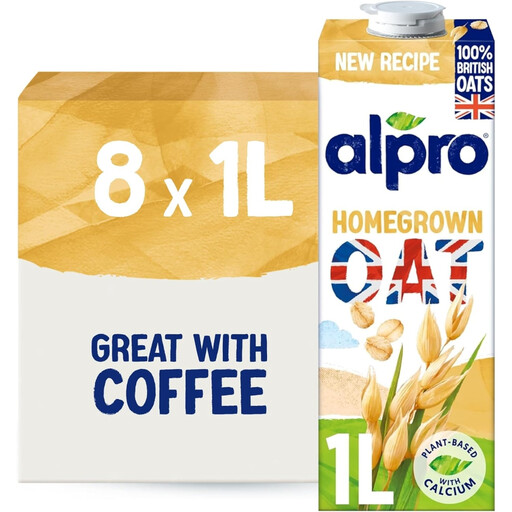 No image available
For a cake recipe calling for milk, this eight-carton regular oat drink is an alternative to a barista formulation. Alpro lists 1.5 g fat per 100 ml for Oat Original; the Joybuy listing also identifies oats as a cereal containing gluten, so check the pack against the needs of everyone eating the cake.
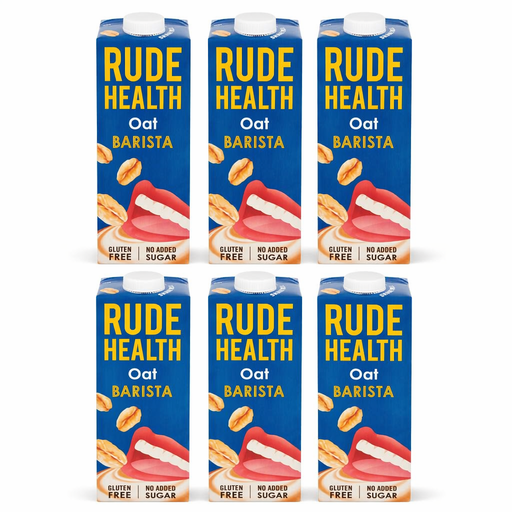 No image available
Consider this single-carton barista option if you also want an oat drink for coffee. Its barista designation does not predict cake results; if gluten control is required, check for a gluten-free statement covering the finished drink on the exact pack.
If the recipe simply calls for milk, an unflavoured oat drink is a practical starting point: Oatly’s UK guidance says to use its oat drink where a recipe says milk. Follow any separate recipe instructions for cream, fat or other dairy ingredients rather than assuming the same substitution covers them.
Its barista designation does not establish a better cake. These drinks are positioned for coffee, and their ingredients can differ from regular versions: Alpro lists 3.0 g fat per 100 ml for Barista Oat and 1.5 g per 100 ml for Oat Original. Choose by the recipe and the carton’s ingredients, not by coffee claims.
A dairy-free claim alone does not establish either suitability. Look for an explicit gluten-free claim where gluten control is needed, and check wheat-related information on the exact pack. The Food Standards Agency defines ‘gluten free’ as no more than 20 mg/kg gluten; M&S states that its Only 3 Ingredients Oat Drink is not suitable for coeliacs or people with a wheat allergy.
No. The Food Standards Agency says oats remain an allergen even when a product is gluten free or very low gluten. A gluten-free label is therefore not a reason to use an oat drink in a cake for someone with an oat allergy.