Households keeping a breakfast carton in the cupboard
If oat drink mainly goes on cereal, muesli, fruit or porridge, compare unopened storage, fortification and how quickly you can finish a carton after opening.


For a continental breakfast built around cereal or fruit, start with a long-life oat drink that suits pouring; if it regularly replaces dairy, check the carton for calcium, iodine and added vitamins. If foamed coffee is the main use, a barista drink is the more relevant option, but compare its nutrition label and opened-carton instructions rather than assuming it also meets your everyday needs. Check the exact product for gluten-related suitability and other allergen warnings.
If oat drink mainly goes on cereal, muesli, fruit or porridge, compare unopened storage, fortification and how quickly you can finish a carton after opening.
If a latte or cappuccino is part of breakfast, look at products specifically described for coffee and frothing. Check their nutrition panels separately from standard pouring drinks; a barista label alone does not establish better performance.
If gluten-free suitability matters, look for an explicit claim on the finished drink rather than relying on dairy-free or vegan wording. The Food Standards Agency notes that oats remain an allergen even in foods labelled gluten-free.
Decide whether you will mostly pour the drink over breakfast food or use it for foamed coffee. Then compare the exact cartons on the label details that matter to your household.
| Priority | What to check | Your needs |
|---|---|---|
| Fortification | Read the nutrient list for calcium, iodine and added vitamins. The UK government’s SACN and COT assessment says nutrient content varies considerably between plant-based drinks. | If oat drink regularly takes the place of dairy at breakfast, I want to know what the particular carton contains, not assume every oat drink has the same nutrients. |
| Breakfast use | Check whether the product is described for everyday pouring or specifically for coffee and frothing. For hot drinks, read preparation guidance: Sainsbury’s warns that its standard long-life oat drink can separate in very hot drinks. | Cereal is my main use, but I may also add a splash to coffee. If I make foamed coffee regularly, a coffee-focused carton becomes more relevant. |
| Nutrition label | Compare sugars, fat, energy and protein using the same stated measurement basis, such as per 100ml. Check the actual sugars figure rather than treating a no-added-sugars claim as a zero-sugars figure. | For a drink I pour most mornings, I would rather compare the figures on the cartons than choose by a variant name alone. |
| Gluten and allergens | Look for a finished-product gluten-free claim where needed, and read the allergen and manufacturing statements. The Food Standards Agency says oats must still be identified as an allergen in gluten-free food. | I need the exact carton to fit my dietary requirements; dairy-free wording does not answer a gluten or oat-allergy question. |
| Storage | Separate unopened storage from instructions after opening. Tesco says to refrigerate its Long Life Oat Original and use it within five days; Sainsbury’s gives three days for its Long Life Oat Drink. | If I use only a little at breakfast, I need a carton size and opened-use period I can manage. |
Dairy-free and vegan descriptions do not establish gluten-free suitability. The Food Standards Agency sets a specific threshold for a gluten-free claim, and oats remain an allergen even when that claim applies.
If you need a gluten-free product, check the claim and allergen wording on the exact finished drink. M&S states that its Only 3 Ingredients Oat Drink is not suitable for people with coeliac disease; Minor Figures makes a gluten-free claim for its Barista Oat.
A coffee-focused description tells you the intended use, not how its nutrition compares with a standard oat drink. M&S describes its Barista Oat Drink as formulated for coffee, but that is not an independent comparison of frothing performance.
If you mainly use oat drink on cereal, compare the per-100ml nutrition figures of the specific standard and barista cartons before deciding whether coffee-focused preparation matters to you.
Long-life storage applies before opening. Tesco specifies refrigeration and use within five days of opening for its Long Life Oat Original, while Sainsbury’s specifies three days for its Long Life Oat Drink.
Check the opened-use instructions when choosing carton size or a multipack.
A carton left unfinished beyond its label-specified opened-use period may have to be discarded.
M&S lists water, oats and sea salt in its Only 3 Ingredients Oat Drink and states that it is not fortified. The UK government’s SACN and COT assessment says plant-based drinks vary considerably in nutrient content.
If oat drink regularly replaces dairy in your breakfast, check the nutrients listed on the individual product rather than using ingredient count as a substitute for that information. M&S does not recommend its three-ingredient drink as a dairy replacement for children under 36 months.
These brand examples show different label and use considerations; a brand name alone does not establish that every drink in its range has the same ingredients or storage instructions.
Tesco Long Life Oat Original is a UHT option for general breakfast pouring.
Sainsbury’s Long Life Oat Drink is a fortified UHT pouring drink.
Oatly has standard long-life oat drinks as well as coffee-focused barista products.
Alpro offers standard long-life oat drink alongside coffee-oriented variants.
M&S offers a coffee-focused Barista Oat Drink and a separate three-ingredient oat drink.
Minor Figures Barista Oat is aimed at coffee preparation.
These options include long-life drinks for cereal or breakfast coffee, plus a barista drink described for both uses. Check the individual carton’s storage and dietary information before choosing.
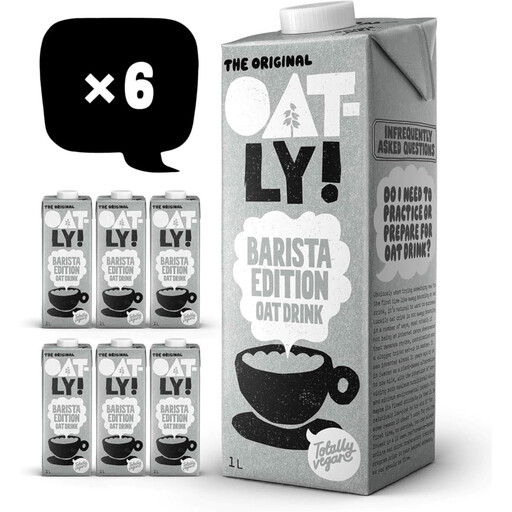 No image available
A barista-labelled long-life option described for both cereal and coffee, in six 1L cartons. Its product information specifies refrigeration and use within seven days after opening; check the exact pack for gluten-related suitability if needed.
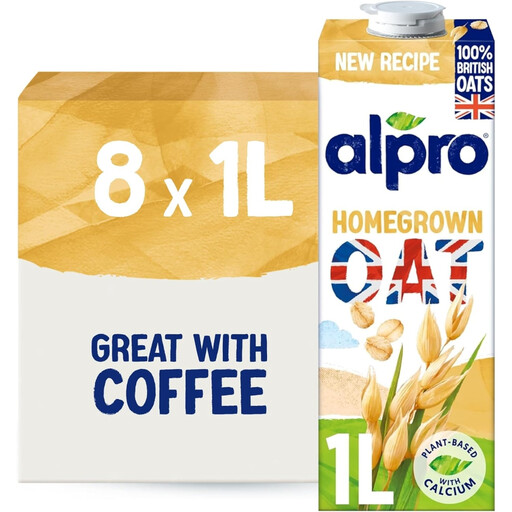 No image available
A standard long-life oat drink for general breakfast pouring, supplied as eight 1L cartons. Joybuy’s product instructions say to store unopened cartons in a cool, dry place, then refrigerate between +1°C and +7°C and use within five days of opening.
 No image available
A long-life eight-carton option for cereal and other everyday uses. If the No Sugars variant interests you, check the current carton’s nutrition panel before relying on the sugar wording. Its product information specifies refrigeration and use within five days after opening.
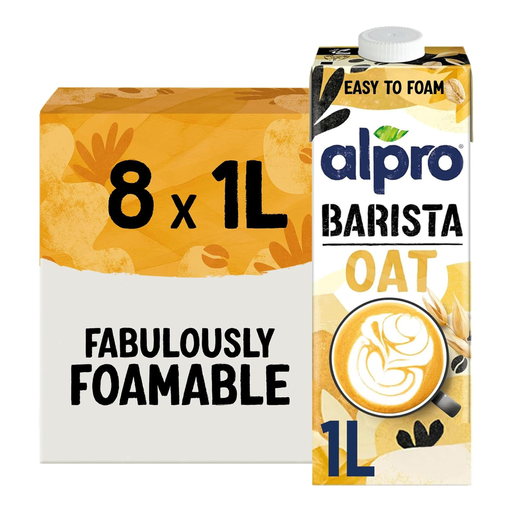 No image available
A long-life eight-carton pack described for coffee, including lattes and cappuccinos. The foam description is a product claim rather than a comparison test. Check the carton’s nutrition and allergen information if you also plan to use it on cereal.
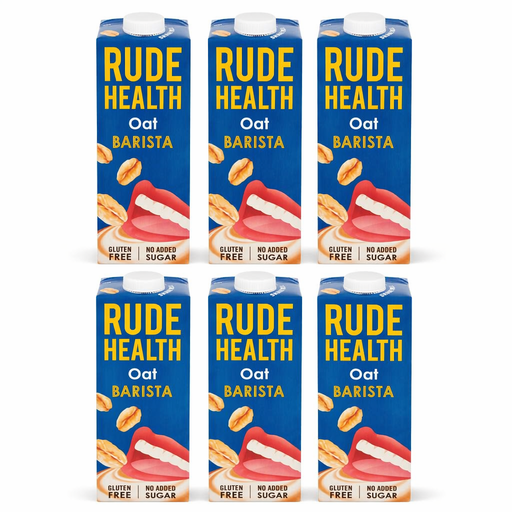 No image available
A 1L barista oat drink described for cereal and coffee. If cupboard storage or a gluten-free drink is essential, check the finished product’s unopened-storage and gluten-free labelling: an ingredient described as gluten-free oats does not establish a gluten-free claim for the drink.
No: follow the opened-carton refrigeration instructions, even when the unopened drink can be kept in a cupboard. Tesco specifies five days after opening for its Long Life Oat Original; Sainsbury’s specifies three days for its Long Life Oat Drink.
No. Check the finished product for an explicit gluten-free claim rather than relying on vegan or dairy-free wording. The Food Standards Agency says a gluten-free claim means no more than 20 mg/kg gluten in the food as sold, while oats must still be identified as an allergen. M&S says its Only 3 Ingredients Oat Drink is not suitable for coeliacs; Minor Figures makes a gluten-free claim for its Barista Oat.
It is worth checking the individual drink’s nutrient label. The UK government’s SACN and COT assessment says plant-based drinks vary considerably in nutrient content and recommends fortification with nutrients including calcium, iodine, riboflavin and vitamin B12 at levels comparable with semi-skimmed cows’ milk. Do not assume a short ingredient list indicates the same nutrient content.
Not necessarily; choose according to how you prepare the coffee. If froth is important, a drink specifically formulated for coffee is a relevant option, although that description does not prove it outperforms another product. Sainsbury’s warns that its standard long-life oat drink can separate in very hot drinks, so read the preparation instructions on the carton you choose.
Not on ingredient count alone. M&S states that its Only 3 Ingredients Oat Drink is not fortified and does not recommend it as a dairy replacement for children under 36 months. If the drink regularly replaces dairy at breakfast, compare the nutrients and other label details of the actual products.