What matters when choosing?
Start with how the household will use the drink, then check the exact carton for nutrients, allergens and storage instructions.
| Priority | What to check | Your needs |
|---|
| Fortification |
Compare the nutrition and ingredient panels for calcium, iodine, vitamins B12 and D, and other listed nutrients. The UK government’s SACN and COT assessment notes variation between plant-based drinks and advises fortification with vitamin A, riboflavin, vitamin B12, calcium and iodine at levels comparable with semi-skimmed cows’ milk. |
When oat drink regularly replaces dairy at home, I want to know what the carton contains rather than assume every variety has the same added nutrients. |
| Allergens and gluten |
Read the complete allergen statement and any suitability warnings. For coeliac requirements, check for an explicit gluten-free claim on the individual product; the Food Standards Agency says oats must still be identified as an allergen in gluten-free food. |
A dairy-free label is not enough for someone in my household with a milk allergy, coeliac disease or another food allergy. |
| Coffee use |
Look for a stated barista or foamable formulation if frothing matters. Check preparation guidance for standard drinks: Sainsbury's says its Oat Drink can separate unless a hot drink is allowed to cool slightly. |
If I make cappuccinos regularly, coffee texture matters; for an occasional cup of tea, I may not need a separate barista carton. |
| Storage |
Check whether unopened cartons are long-life or must be chilled, then read the instructions for storage after opening. Oatly says its Chilled Semi oat drink cannot be stored at room temperature before opening. |
Cupboard space makes long-life cartons useful for my weekly shop, but a chilled carton works if I have fridge space for it. |
| Ingredients |
Compare the exact ingredient list with its fortification information. M&S lists water, oats and salt in its Only 3 Ingredients Oat Drink and states that the product is not fortified. |
I may prefer a shorter ingredient list, but I do not want to mistake that preference for a particular nutrient profile. |
Brand and retailer references
These examples show why the precise product matters more than the brand name alone.
Oatly
Oatly has distinct chilled everyday and long-life barista oat drinks.
- Oatly lists calcium, iodine, vitamins D2, B12 and riboflavin for its Chilled Semi drink.
- Chilled Semi must be kept cold before opening. Tesco describes Oatly Barista Edition as foamable, but that description does not apply to every Oatly carton.
Alpro
Alpro Oat Original is an everyday oat drink with product-specific ingredient and nutrition information.
- Alpro lists 10.5% oats, added calcium, iodine, vitamins B2 and D2, and no added sugars for Oat Original 1L.
- The Oat Original details should not be applied to other Alpro oat varieties without checking their cartons.
Minor Figures
Minor Figures lists both everyday and coffee-focused oat drinks.
- Its Everyday Oat product page identifies the drink as gluten-free and lists calcium, vitamin D, riboflavin, vitamin B12 and iodine.
- Check the label of the particular Minor Figures product for its ingredients and allergy suitability; an Everyday Oat statement does not cover the whole range.
Tesco
Tesco lists standard and long-life own-label oat drinks for everyday use.
- Tesco lists calcium, iodine, vitamin B12, riboflavin and vitamin D fortification for its Oat Drink and Long Life Oat Original.
- Tesco Long Life Oat Original carries a “may contain peanuts and nuts” statement.
Sainsbury's
Sainsbury's lists a standard fortified Oat Drink and a separately formulated 1+ Years product.
- Its standard Oat Drink lists added calcium, iodine, vitamin D and vitamin B12.
- Sainsbury's advises cooling hot drinks slightly before adding the standard product and says it is not suitable for customers with a soya allergy because of manufacturing methods.
M&S
M&S lists differently formulated minimal-ingredient and barista oat drinks.
- Only 3 Ingredients Oat Drink contains water, oats and salt; M&S describes its separate Barista Oat Drink as formulated for coffee.
- The three-ingredient drink is unfortified and not recommended by M&S as a dairy replacement for children under 36 months. M&S says its Barista Oat Drink is unsuitable for coeliacs or people with a milk allergy.
Oat drinks on Joybuy
These long-life multipacks cover everyday oat drinks and barista variants for a weekly shop. Check the current carton for the nutrients, allergens and preparation details that matter to your household.
 No image available
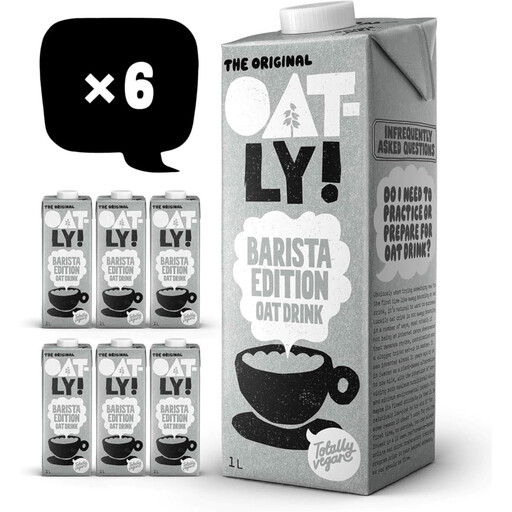
Oatly Long Life Barista Oat Drink 6 x 1L
For households buying a barista oat drink for regular coffee use, this is a long-life 6 x 1L pack. Check the carton’s allergy wording and gluten-free status if either affects your choice.
 No image available
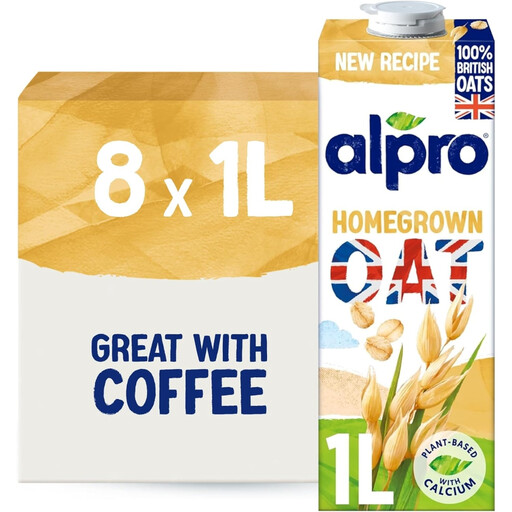
Alpro Oat Original Long Life Drink 8 x 1L
For everyday oat-drink use across the week, this long-life Original variant comes as an 8 x 1L pack. Alpro lists calcium and iodine for Oat Original; check the current carton for its full nutrient panel and allergy wording.
 No image available
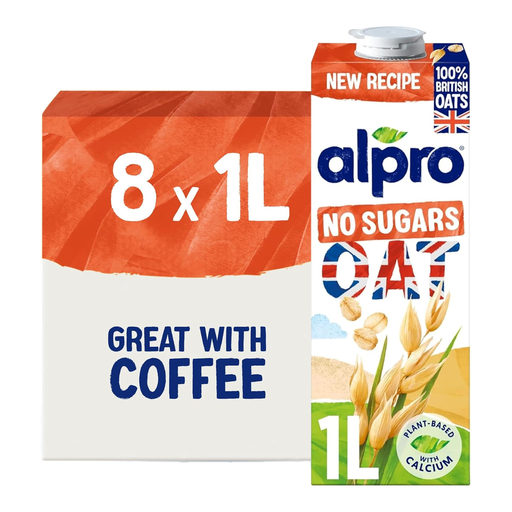
Alpro Oat No Sugars Long Life Drink 8 x 1L
For an everyday long-life oat drink, this No Sugars variant comes as an 8 x 1L pack. If sugar content determines your choice, compare the current nutrition panel rather than relying on the variant name alone; check its allergy and gluten-free wording too.
 No image available
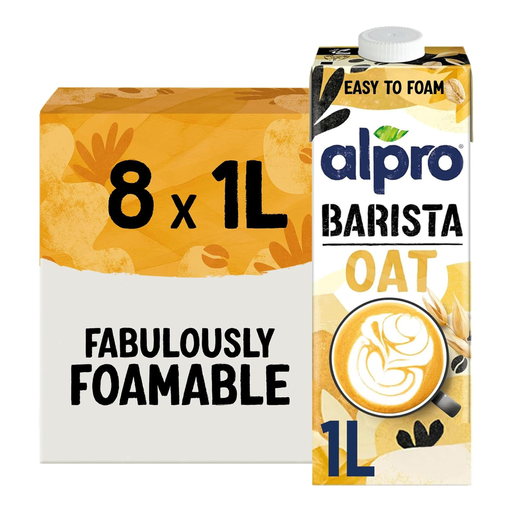
Alpro Barista Oat Long Life Drink 8 x 1L
For a household that regularly makes coffee with a barista oat drink, this is a long-life 8 x 1L pack. If it will also replace dairy in everyday meals, check the current carton for calcium, iodine and vitamin B12, alongside its allergy wording.
Common questions
Does dairy-free oat drink always suit someone with a milk allergy?
No. Check the exact product’s ingredients and allergy suitability wording. M&S, for example, says its Barista Oat Drink is not suitable for people with a milk allergy, despite being a plant-based drink.
Is every oat drink suitable for someone with coeliac disease?
No. Look for an explicit gluten-free claim on the individual carton. The Food Standards Agency states that food labelled gluten-free must contain no more than 20 mg/kg gluten and that oats remain an allergen; Coeliac UK notes that some people are sensitive even to gluten-free oats.
What should I compare when oat drink regularly replaces dairy?
Compare the nutrient panels of the exact cartons, particularly their listed fortification. The UK government’s SACN and COT assessment advises fortification of plant-based drinks with vitamin A, riboflavin, vitamin B12, calcium and iodine at levels comparable with semi-skimmed cows’ milk. Fortification varies, and M&S states that its three-ingredient oat drink is unfortified.
Can an oat drink be a young child’s main milk drink?
Age and the particular product matter. NELFT NHS Foundation Trust guidance says plant-based drinks should not replace breast milk or formula as the main milk drink before a child turns one. M&S says its unfortified three-ingredient oat drink is not recommended as a dairy replacement for children under 36 months; check age-specific product wording rather than applying an adult weekly-shop choice.
Why might an everyday oat drink separate in coffee?
Preparation instructions differ between products. Sainsbury's says to let a hot drink cool slightly before adding its standard Oat Drink because separation can occur. If foaming is a regular requirement, check a dedicated barista carton’s description rather than assuming an everyday variety is formulated for it.


