What matters when choosing?
Start with the child’s allergen requirements, then compare fortification and how the household will use an opened carton.
| Priority | What to check | Your needs |
|---|
| Allergen suitability |
Read the current ingredients and allergen statement, including any product-specific cross-contact warning. The Food Standards Agency identifies oats as an allergen even when they are gluten free. |
I need a drink that fits the child’s particular allergy, not merely one described as dairy-free. |
| Gluten-free status |
Look for an explicit gluten-free claim on the finished drink and check whether oats are tolerated. Coeliac UK warns that standard oats can be contaminated with wheat, barley or rye. |
For a gluten-free lunch, I cannot rely on ‘organic’ or ‘made with oats’ as a substitute for a gluten-free label. |
| Fortification |
Compare calcium and iodine on the nutrition label after checking allergens. Kingston and Richmond NHS Foundation Trust advises fortified dairy substitutes when a child cannot consume dairy. |
If oat drink regularly replaces dairy, I want to know what the particular carton contributes, rather than choosing by the length of its ingredient list. |
| After-opening use |
Check the carton’s refrigeration and consume-within instructions, and choose a pack size that fits how often it will be used. |
For occasional lunches, I want to be able to use an opened carton within its stated period. |
Brand and product-line references
These examples show why the exact drink and its current label matter more than a brand-wide ‘free-from’ assumption.
Alpro
Alpro’s UK Oat No Sugars Drink is presented as dairy-free and naturally lactose-free.
- Alpro lists calcium and vitamin D for Oat No Sugars.
- It contains oats; the dairy-free description is not a gluten-free or oat-allergy claim.
Oatly
Oatly offers both fortified and short-ingredient-list oat drinks; the formulation depends on the product.
- Oatly lists calcium, iodine, vitamin D2, riboflavin and B12 for Oat Drink Semi.
- Oatly says it does not promise a completely gluten-free drink in the UK and EU. Check the particular product rather than applying one description to the range.
Minor Figures
Minor Figures presents Barista Oat primarily for coffee preparation.
- The brand describes this particular drink as gluten free and dairy-free.
- It still contains oats; check its other allergen information and nutrition label if considering it for a child’s regular lunch drink.
Tesco
Tesco Long Life Oat Original is an own-label fortified oat drink.
- Tesco lists added calcium, iodine, vitamin B12, riboflavin and vitamin D2.
- Tesco states that this product may contain peanuts and nuts.
Sainsbury’s
Sainsbury’s Oat Drink is an own-label option whose suitability statements warrant a close read.
- Its product information addresses use by children, so the age-related wording can be checked against the intended use.
- Sainsbury’s says the drink is unsuitable for customers with a soya allergy because of manufacturing methods and is not suitable as a main milk-drink alternative for children under three.
M&S
M&S has distinct oat formulations, including Plant Kitchen Whole Oat Drink and Only 3 Ingredients Oat Drink.
- M&S lists water, oats and salt for Only 3 Ingredients Oat Drink.
- M&S labels Plant Kitchen Whole Oat Drink unsuitable for people with coeliac disease or a milk or wheat allergy. A short ingredient list on a different drink does not establish fortification.
Oat drinks on Joybuy
These oat-drink options include multipacks and a single barista carton. Compare each current carton’s allergens and nutrition information against the lunch use you have in mind; their inclusion does not make them interchangeable for every dietary requirement.
 No image available
Oatly No Sugars Oat Drink, 6 × 1L
For lunches where a no-sugars oat drink is wanted, check the current carton’s allergen statement and nutrition information. It contains oats; confirm any required gluten-free status on the finished product rather than assuming it from the name.
View on Joybuy
 No image available
Alpro Oat Original Long Life Drink, 8 × 1L
The long-life multipack may suit a household that uses oat drink regularly. Check the exact carton for allergen declarations, fortification amounts and instructions after opening; ‘original’ does not indicate gluten-free suitability.
View on Joybuy
 No image available
Alpro Oat No Sugars Long Life Drink, 8 × 1L
Consider this multipack when the No Sugars variant fits the household’s preferences and usage rate. Alpro describes Oat No Sugars as dairy-free, but it contains oats; check the current carton for any other relevant allergen warnings.
View on Joybuy
 No image available
Oatly Long Life Barista, 6 × 1L
A barista-labelled oat drink may also be considered for food preparation, but check the carton before using it as a child’s regular drink. The product information cautions against using it as a complete milk substitute for infants or young children.
View on Joybuy
 No image available
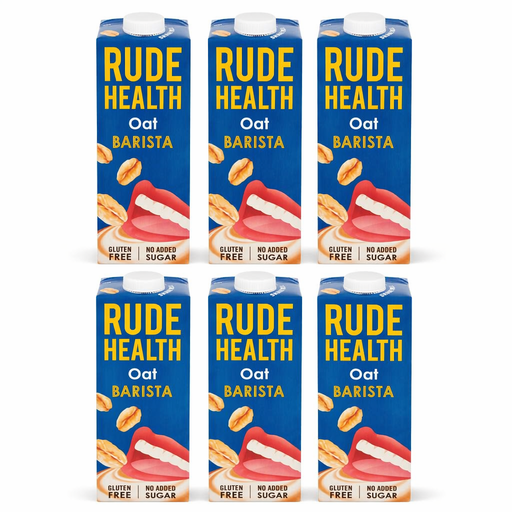
Rude Health Barista Oat, 1L
If gluten-free status matters, check for a claim on the finished carton; oats remain unsuitable for someone with an oat allergy. For regular dairy replacement, compare its calcium and iodine information rather than assuming a barista drink is fortified.
View on Joybuy
Questions about oat drinks
Is a dairy-free oat drink suitable for a child with a milk allergy?
Not automatically: check the exact product’s milk-allergy statement. M&S labels its Plant Kitchen Whole Oat Drink unsuitable for people with a milk allergy, despite its plant-based positioning.
Is every oat drink gluten free?
No. For a gluten-free diet, choose a drink explicitly labelled gluten free and check that oats are tolerated. Coeliac UK warns that standard oats can be contaminated with wheat, barley or rye; a gluten-free drink still contains oats.
What matters if oat drink regularly replaces dairy?
Check allergen suitability first, then look for calcium and iodine fortification on the current carton. Kingston and Richmond NHS Foundation Trust advises fortified dairy substitutes when a child cannot consume dairy.
Can oat drink be a child’s main milk drink before age three?
Do not assume a particular oat drink is suitable for that use. Sainsbury’s says its Oat Drink is not suitable as a main milk-drink alternative for children under three; where dairy is excluded because of an allergy, follow the child’s individual clinical or dietetic advice.
How should an oat drink be stored for lunches?
Follow the individual carton’s instructions, especially after opening. A long-life description concerns unopened storage; check whether the opened drink must be refrigerated and when it must be consumed.


