What should you check?
Start with the fat declaration for your usual use, then check fortification, vegan status and any allergen requirements on the exact carton.
| Priority | What to check | Your needs |
|---|
| Fat |
Compare total fat per 100ml or per 100g, keeping the stated units visible. Check saturated fat and the amount you normally use. |
I want a carton with a fat declaration that fits how often and how much I use it, rather than choosing by ‘no sugars’ wording. |
| Fortification |
Check whether calcium, iodine, vitamin D and B12 are added. Do not assume a short ingredient list includes them. |
If oat drink regularly replaces dairy for me, added nutrients matter alongside its fat content. NHS vegan-diet guidance recommends considering fortified dairy alternatives. |
| Vegan certification |
Distinguish ‘suitable for vegans’ from a named certification mark. Check the current pack or the certifier’s record for the exact product. |
I need third-party certification, not just a vegan-suitability statement. The Vegan Society describes its Vegan Trademark as a standard covering ingredients and other production criteria. |
| Sugars |
Read sugars and fat separately on the nutrition panel. Compare declarations using their stated per-100ml or per-100g units. |
‘No sugars’ interests me, but I still want to know how much fat that particular drink declares. |
| Coffee use |
Check whether the product is intended for frothing or coffee, then compare its fat declaration with an everyday option. |
For a drink mainly used in coffee, I may value a barista formulation; for other uses, I would compare everyday cartons as well. |
| Allergens |
Read the current gluten, wheat and milk-allergy statements on the exact product. Do not infer allergen suitability from a vegan claim. |
If coeliac suitability or an allergy warning affects my choice, I need the statement for the carton I am buying. |
Joybuy oat-drink options
These oat drinks include everyday, no-sugars and coffee-focused cartons. Compare the exact product’s nutrition and vegan labelling against the priorities above before choosing.
 No image available
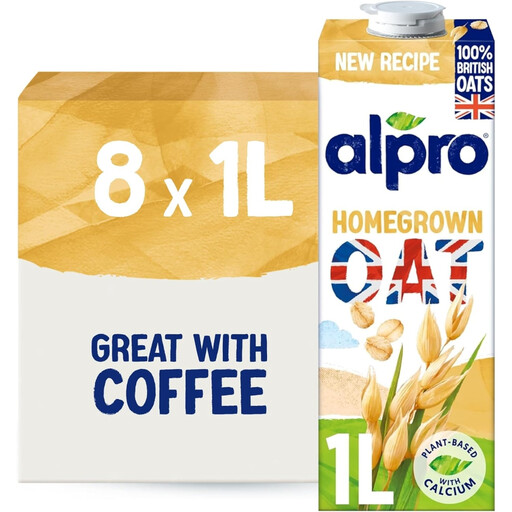
Alpro Barista Oat Long Life Drink, 8 × 1L
A coffee-focused option when a drink intended for foaming matters to you. Compare its current fat panel with an everyday carton, and check the exact pack if vegan certification or gluten information affects your choice.
View on Joybuy
 No image available
Alpro Oat Original Long Life Drink, 8 × 1L
An everyday oat-drink option for cereal or hot drinks. If you use it regularly instead of dairy, check the current carton’s fortification as well as its fat and sugars; confirm any required vegan mark and allergen information on that pack.
View on Joybuy
 No image available
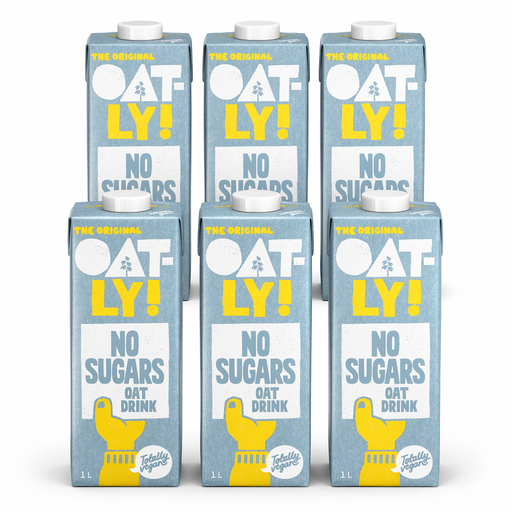
Oatly No Sugars Oat Drink, 6 × 1L
A No Sugars option for everyday oat-drink use, but that wording is not a fat comparison. Check the exact carton’s fat declaration and vegan-suitability information before relying on it for those requirements.
View on Joybuy
 No image available
Alpro Oat No Sugars Long Life Drink, 8 × 1L
An everyday No Sugars option with a vegan-suitability statement. Check the fat value on the exact current carton before comparing it with other drinks, and read its allergen information or certification mark if either is essential.
View on Joybuy
 No image available
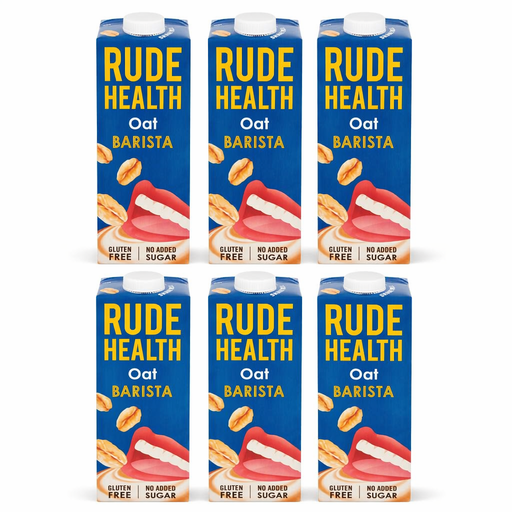
Rude Health Barista Oat, 1L
A barista oat drink to consider when coffee preparation is the main use. If minimising fat or obtaining added nutrients takes priority, compare its current nutrition and ingredient panels with an everyday carton; check the exact pack for any required vegan certification.
View on Joybuy
Frequently asked questions
Does ‘no sugars’ mean an oat drink is lower in fat?
No. ‘No sugars’ describes sugars, not the drink’s fat declaration. For example, Sainsbury’s lists 1.5g fat per 100g for Alpro Oat No Sugars, while Marks & Spencer lists 0.5g per 100g for its Only 3 Ingredients Oat Drink. Check both nutrients on the exact carton.
Should I choose a fortified oat drink if I use it instead of dairy?
Fortification is worth checking when oat drink regularly replaces dairy in your diet. NHS guidance on vegan diets recommends fortified dairy alternatives and identifies calcium, iodine, vitamin D and B12 as nutrients to consider. Marks & Spencer states that its Only 3 Ingredients Oat Drink is not fortified, so a low fat figure alone does not answer this question.
Does ‘suitable for vegans’ mean vegan-certified?
No: a suitability statement does not itself show that a product carries third-party certification. If you require The Vegan Society’s Vegan Trademark, check for the mark on the exact current pack or confirm the product with the certifier.
Are all vegan oat drinks suitable for someone with coeliac disease or a wheat allergy?
No. Allergen and suitability statements are product-specific: Marks & Spencer labels its Plant Kitchen Whole Oat Drink unsuitable for coeliacs and for people with a wheat allergy. Read the current statement on the exact carton rather than relying on its vegan description.


