For a baby under one, an oat drink can be used in food from around six months, but breast milk or infant formula should remain the main drink until 12 months, according to Frimley Health and NELFT NHS guidance. From age one, a fortified oat drink may be considered as part of a varied diet; check calcium, iodine, energy, protein and the exact product’s allergy advice before choosing one.
Who is this for?
Parents starting baby-led weaning
If your baby is around six months old, the key distinction is between mixing an oat drink into food and offering it instead of breast milk or infant formula as the main drink. Frimley Health and NELFT NHS guidance permits the former, not the latter, before age one.
Parents choosing a dairy-free drink after age one
Compare the exact carton’s calcium and iodine fortification alongside its energy and protein information. An age-appropriate choice also depends on the child’s wider diet and any product-specific restrictions.
Families managing food allergies
Read the ingredient list and allergy advice for the particular drink, rather than relying on the word ‘oat’ or a vegan label. Follow your child’s existing clinical advice for a diagnosed allergy.
What should you check?
Start with your child’s age and the drink’s intended use, then compare labels on the same per-100ml basis.
| Priority | What to check | Your needs |
|---|
| Age and use |
From around six months, check whether the drink is being mixed into food. Frimley Health and NELFT NHS guidance says breast milk or infant formula remains the main drink until 12 months. |
I’m making porridge or sauces for a baby under one, not replacing their milk feeds. |
| Fortification |
Look for calcium and iodine on the exact product label. For dairy-free children, Black Country NHS guidance advises at least 120mg calcium per 100ml as well as iodine fortification. |
If I’m choosing a dairy-free drink for a child aged one or over, I want to compare what each carton contains rather than assume all oat drinks are alike. |
| Energy and protein |
Compare energy and protein per 100ml, particularly if the child’s diet is restricted. A ‘no sugars’ or barista label does not establish whether a drink meets an individual child’s needs. |
Where growth or feeding is a concern, I need advice about my child’s overall diet rather than choosing by one label claim. |
| Allergens |
Read ingredients and allergy advisories on the current carton. The Food Standards Agency says oats remain an allergen even when labelled gluten-free; individual drinks can carry further restrictions. |
For a child with an allergy, I need to check the particular product against the allergens they must avoid. |
Common mistakes
-
Using an oat drink as a baby’s main milk before age one
Cartoned oat drinks are not interchangeable with breast milk or infant formula for an infant, even when fortified.
Frimley Health and NELFT NHS guidance allows plant drinks in food from around six months, while breast milk or infant formula remains the main drink until 12 months.
-
Choosing by ‘dairy-free’ or ‘no sugars’ alone
Those descriptions do not tell you how much calcium, iodine, energy or protein the particular drink provides.
Check fortification first, then compare nutrition figures per 100ml. Black Country NHS guidance for dairy-free children specifies calcium of at least 120mg per 100ml and iodine fortification.
-
Assuming every oat drink suits the same allergies
Product warnings differ: Marks & Spencer labels its Semi Oat Drink unsuitable for people with milk or wheat allergy or coeliac disease, while Sainsbury’s labels its Oat Drink unsuitable for people with soya allergy.
Read the current carton’s ingredients and allergy advice, and follow the child’s care plan for a diagnosed allergy.
-
Treating a barista or whole style as automatically preferable
A style name does not determine whether its energy, protein or fortification fits a child’s diet.
For a child aged one or over, compare the actual label values. Seek individual clinical or dietetic advice where growth or multiple food restrictions are concerns.
Brand and product references
These product examples illustrate why the formulation and allergy wording on the exact carton matter more than a brand name alone.
Oatly
Oatly Whole Oat Drink is one fortified product to compare when considering an oat drink for food preparation or for a child aged one or over.
- The Joybuy UK listing for Whole Oat Drink states 61kcal, 1.1g protein, 120mg calcium and 22.5µg iodine per 100ml.
- Those figures describe Whole Oat Drink, not every Oatly variety; an oat drink must not replace an infant’s main milk before age one.
Alpro
Alpro Oat No Sugars is an example for comparing sugar content with fortification and other nutrition figures.
- Alpro lists 0g sugars, 44kcal, 0.8g protein, 120mg calcium and 22.6µg iodine per 100ml for this drink.
- ‘No Sugars’ does not make it a replacement for breast milk or infant formula before age one.
Minor Figures
Minor Figures Everyday Oat is a product to examine if gluten-free oats and fortification are relevant to your selection.
- The brand’s ingredient list identifies gluten-free oats, calcium carbonate, iodine and added vitamins.
- Gluten-free does not remove the need to check oat allergy and other advice on the carton.
Tesco
Tesco Long Life Oat Original provides an own-label example for comparing fortification and allergy advice.
- Tesco lists 120mg calcium, 22.5µg iodine and 0.2g protein per 100ml.
- Its listing says it may contain peanuts and nuts; check the current pack if those allergens matter to your child.
Sainsbury’s
Sainsbury’s Oat Drink shows why a product’s age guidance needs reading alongside general advice about plant drinks.
- Sainsbury’s says this drink can form part of a balanced diet from age one.
- The same product page says it is not suitable as a main milk drink alternative for children under three, or for customers with soya allergy because of manufacturing methods.
M&S
M&S Semi Oat Drink is an example where the product’s allergy warning is decisive.
- The product can be assessed by its own label rather than by assumptions about oat drinks as a category.
- Marks & Spencer states that this drink is not suitable for people with milk or wheat allergy or coeliac disease.
Oat drinks on Joybuy
These Oatly oat drinks are options to assess for use in food during weaning or for a child aged one or over. Check the current carton before deciding whether either fits your child’s diet.
 No image available
Oatly Long Life Barista Oat Drink, 6 × 1L
For porridge or sauces from around six months, use an oat drink as an ingredient, not as a baby’s main milk. This listing identifies a six-carton barista variety; check its current fortification and allergy information before use.
View on Joybuy
 No image available
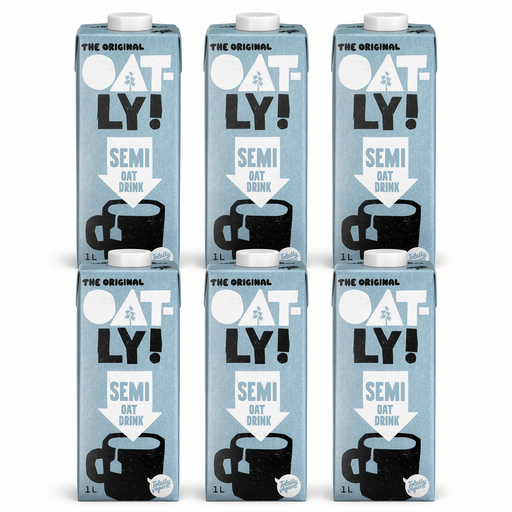
Oatly Semi Oat Drink
For a child aged one or over, compare the carton’s calcium, iodine, energy, protein and allergy information before considering it as a drink. Confirm the pack and individual carton size before buying, as the listing’s descriptions differ.
View on Joybuy
Questions about oat drinks and weaning
Can my baby have an oat drink before turning one?
Yes, in food from around six months, but not instead of breast milk or infant formula as the main drink. Frimley Health and NELFT NHS guidance distinguishes cooking or mixing into food from main-drink use before 12 months.
What should I check when choosing an oat drink after age one?
Check the exact carton for calcium and iodine fortification, then compare energy and protein per 100ml and read its age and allergy advice. For dairy-free children, Black Country NHS guidance specifies at least 120mg calcium per 100ml and iodine fortification.
Is an oat drink automatically suitable for a child with milk allergy?
No. Read the particular product’s allergy statement: Marks & Spencer says its Semi Oat Drink is not suitable for people with milk allergy. Follow the child’s clinical care plan for a diagnosed allergy rather than relying on a vegan or oat-drink description.
Do I still need to check allergens on a gluten-free oat drink?
Yes. The Food Standards Agency says oats must still be emphasised as an allergen even when they are gluten-free. Check the carton for oats and any other ingredients or advisory statements relevant to your child.
How should I introduce foods that could trigger an allergy?
Introduce them one at a time from around six months so that a reaction can be identified, as the NHS advises. If your baby has a diagnosed allergy, follow their existing care plan when considering an oat drink.


