Households preparing familiar meals
If cereal, smoothies, sauces or baking are already part of the routine, check the oat drink’s stated uses, sugars and texture description before changing an accepted recipe.


For familiar meals, choose an oat drink by its stated uses and nutrition label: a no-sugars product suits a household checking sugars, while a whole or barista-style product is worth considering for cooking or baking. Neither label predicts whether a fussy eater will accept the taste or texture. If the drink is for a child, NHS guidance allows unsweetened, calcium-fortified oat drinks from age 1 as part of a balanced diet; oat drink must not replace breast milk or infant formula during the first 12 months.
If cereal, smoothies, sauces or baking are already part of the routine, check the oat drink’s stated uses, sugars and texture description before changing an accepted recipe.
NHS guidance permits unsweetened, calcium-fortified oat drinks from age 1 as part of a balanced diet. If dairy is excluded, check iodine and the rest of the child’s diet too; a toddler label alone does not answer those questions.
Compare sugars per 100ml on the exact pack. Check a gluten-free claim separately from the oat allergen statement: the Food Standards Agency identifies oats as an allergen in their own right.
Start with the meal or drink you plan to make, then check the label for nutrition, age suitability and allergens before deciding how many cartons to buy.
| Priority | What to check | Your needs |
|---|---|---|
| Familiar meals | Check whether the product describes use in cereal, smoothies, cooking or baking. Compare sugars and fat per 100ml; a barista label alone cannot establish how a recipe will turn out. | I want to try oat drink in a meal that is already familiar, without assuming its flavour or texture will be accepted. |
| Fortification | Read the calcium, iodine and protein information on the exact carton. Kingston and Richmond NHS Foundation Trust advises calcium- and iodine-fortified dairy substitutes when a child cannot consume dairy. | If oat drink will be a regular dairy alternative for my child, I need to consider the whole diet, not just the words ‘dairy-free’ on the front. |
| Age | NHS guidance allows unsweetened, calcium-fortified oat drinks from age 1 as part of a balanced diet. In the first 12 months, first infant formula is the suitable alternative to breast milk. | For a young child, I need the drink’s intended age and use to fit their stage of feeding. |
| Oats and gluten | Check the exact product’s gluten-free claim and allergen information separately. The Food Standards Agency says oats remain an allergen even when a product is gluten-free. | Someone avoiding gluten needs the relevant product label; someone with an oat allergy cannot rely on a gluten-free claim. |
| Carton quantity | Confirm how many cartons the listing contains and follow each carton’s storage instructions after opening. Tesco Oat Drink, for example, specifies refrigeration and use within five days of opening. | I would rather try a carton in an accepted meal before committing to several cartons that may not be used. |
Protein and fortification vary between products. Kingston and Richmond NHS Foundation Trust advises calcium- and iodine-fortified substitutes if a child cannot consume dairy.
For regular use in a child’s diet, read the calcium, iodine and protein information on the pack and consider the whole diet. Seek individual clinical or dietetic advice for an allergy, poor growth or a medically restricted diet.
NHS guidance identifies first infant formula as the suitable alternative to breast milk in the first 12 months; an ordinary oat drink does not take its place.
For a child under 12 months, follow NHS feeding guidance or advice from a qualified clinician. Consider an unsweetened, calcium-fortified oat drink only from age 1 as part of a balanced diet.
The Food Standards Agency identifies oat as an allergen in its own right. A gluten-free claim does not remove oats from an oat-based drink.
Check the gluten-free claim if gluten avoidance matters, and check the ingredients and allergen statement separately. Do not choose an oat drink for someone with an oat allergy because it says gluten-free.
A different flavour or texture may not work in a familiar meal, and opened cartons have storage instructions that affect how quickly they can be used.
Try a carton in an already accepted meal, confirm the pack quantity and read the opened-carton instructions before buying several.
Cartons left open beyond their stated use period may go to waste.
These product lines illustrate different label checks; the brand name alone does not establish the nutrition or suitability of another variant.
Oatly has distinct Barista Edition and The Original Whole oat drinks to consider for household recipes.
Alpro’s UK Oat No Sugars product provides a no-sugars option, while its Growing Up range has separate age-specific labelling.
Minor Figures describes Everyday Oat for uses including cereal, tea and smoothies.
Tesco Oat Drink is a supermarket own-brand option whose product description lists added calcium, iodine and vitamins.
These oat drinks offer no-sugars, original and barista-style options for trying in familiar meals and drinks. Compare the exact variant, nutrition label and carton quantity before choosing.
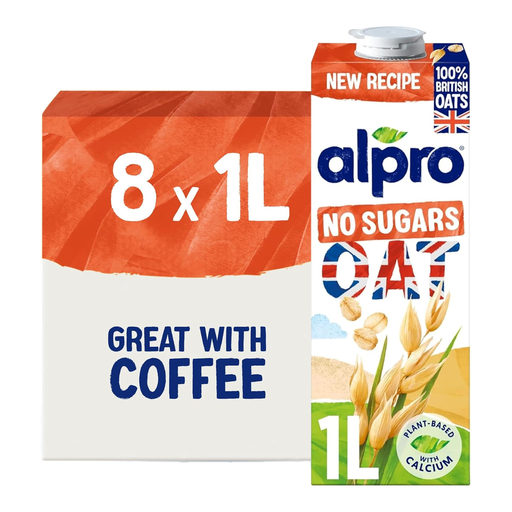 No image available
The listing describes use in cereal and smoothies. It lists 0.0g sugars and 0.9g protein per 100ml and names calcium and iodine; check the current carton for their amounts if the drink will be a regular dairy alternative for a child. Contains oats.
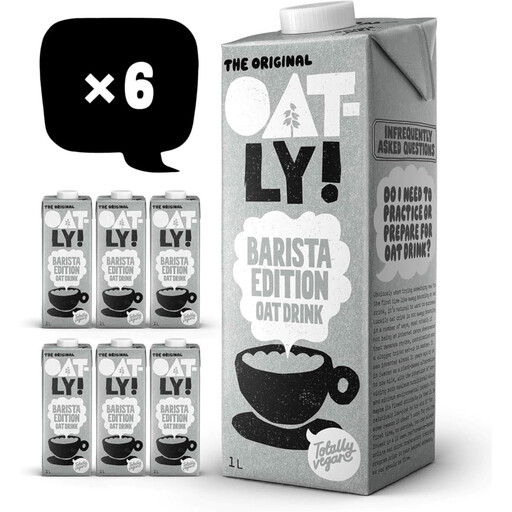 No image available
The listing describes cooking, baking, cereal and smoothie uses and lists 3.0g fat, 3.4g sugars, 120mg calcium and 22.5µg iodine per 100ml. Its title and description give different impressions of carton quantity, so confirm the pack before buying. Contains oats.
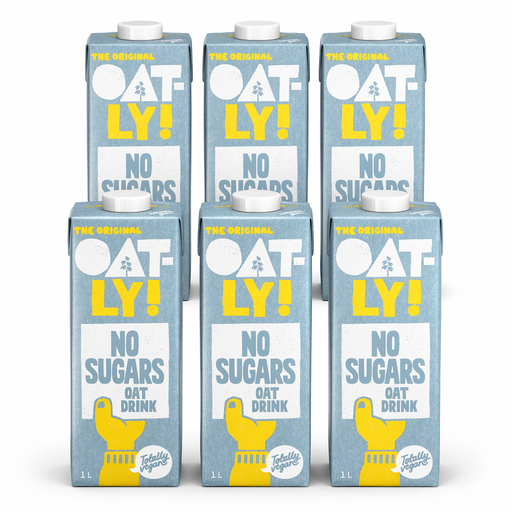 No image available
This option lists 0g sugars and 1g protein per 100ml and names calcium and iodine. Confirm their amounts on the current carton if needed for regular use, and check how many 1L cartons the listing includes. Contains oats.
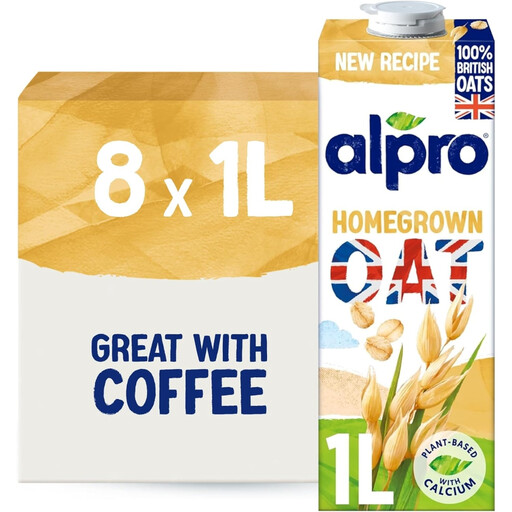 No image available
The listing names cereal, smoothie and hot-drink uses and lists 3.2g sugars and 0.8g protein per 100ml. It names calcium and iodine; check their amounts on the current carton if they matter to your choice. Contains gluten-containing oats.
 No image available
The listing describes cooking and baking uses and lists 3.2g fat, 2.2g sugars and 1.0g protein per 100ml. If choosing it as a regular dairy alternative, check the current carton for calcium and iodine information. Contains oats.
No. NHS guidance states that first infant formula is the suitable alternative to breast milk in the first 12 months; ordinary oat drink must not be used as its replacement.
From age 1, NHS guidance says children can have unsweetened, calcium-fortified oat drinks as part of a balanced diet. If dairy cannot be consumed, Kingston and Richmond NHS Foundation Trust also advises checking iodine fortification; consider the child’s whole diet rather than assuming every oat drink is equivalent.
Choose according to the recipe and label rather than assuming either will be accepted. Alpro UK lists 0g sugars per 100ml for Oat No Sugars, while Tesco lists 2.7g fat and 3.4g sugars per 100ml for Oatly The Original Whole. Try a carton in an accepted meal before buying several.
No. The Food Standards Agency identifies oats as an allergen in their own right. A gluten-free claim addresses gluten, not whether an oat-based drink contains oats.
Follow the instructions on the exact carton and refrigerate it where directed. Tesco Oat Drink specifies use within five days of opening; check other products individually rather than applying that period to every oat drink.