For a child over one who regularly drinks an oat drink instead of cow’s milk, start with an age-appropriate option fortified with calcium and iodine; a toddler-focused drink deserves particular attention for ages 1–3. For occasional teatime use, a standard oat drink may fit, but a no-sugars or barista label does not establish that it suits a young child’s regular dietary needs. If allergies or coeliac disease are involved, check the current carton and the child’s individual arrangements before serving it.
Who is choosing the drink?
Parents replacing a toddler’s usual milk drink
If a child over one will drink oat milk regularly instead of cow’s milk, age suitability and calcium and iodine fortification matter more than flavour alone. Where cow’s milk is excluded for a medical reason, discuss the child’s wider diet with their healthcare professional.
Families serving an occasional teatime drink
For oat drink with cereal, a snack or a cup at teatime, compare the sugars listed per 100 ml and check whether calcium and iodine are added. Occasional use is a different decision from relying on the carton as a young child’s main milk drink.
Families managing allergies or coeliac disease
Check the exact carton against the child’s diagnosed condition and allergy plan. Plant-based branding alone does not settle suitability for milk, oat or wheat allergy, or for coeliac disease; arrangements at school need checking too.
What should you check?
Decide first whether the drink is an occasional addition or a regular replacement for milk. Then compare the carton’s age guidance, nutrition panel and allergen wording for that use.
| Priority |
What to check |
Your needs |
| Age and use |
Read the stated age range. Frimley Healthier Together’s NHS-derived guidance says plant-based alternatives can be used in cooking from six months but not as a main milk drink until after age one. |
If my child will drink this regularly instead of milk, I need an option appropriate for their age and dietary circumstances. |
| Fortification |
Check calcium per 100 ml and whether iodine is added. For plant-based milk alternatives, Frimley Healthier Together’s NHS-derived guidance specifies at least 120 mg calcium per 100 ml, alongside iodine fortification. |
I’m replacing a regular milk drink, so I want to assess the nutrients in the carton rather than choose on flavour or a no-sugars label alone. |
| Sugars |
Compare sugars per 100 ml on the current nutrition panel. Check fortification separately: a no-sugars name does not describe the drink’s full nutrient profile. |
For an occasional teatime cup, I may prefer a less sweet option without assuming it meets a toddler’s regular dietary needs. |
| Allergens |
Read the current allergen and suitability statements for the exact product. Marks & Spencer says its Plant Kitchen Whole Oat Drink is not suitable for people with milk allergy, wheat allergy or coeliac disease. |
If my child has a diagnosed condition, I need the particular carton to fit their allergy plan, including when the drink goes to school. |
| Hot drinks |
Check whether the carton is positioned for tea and coffee or for children’s regular use. Minor Figures describes Barista Oat in terms of coffee texture; that does not establish its suitability as a toddler’s main milk alternative. |
One shared carton may be convenient, but I would choose for my young child’s dietary use before considering how it behaves in an adult’s coffee. |
Mistakes to avoid
-
Treating all oat drinks as interchangeable
A toddler-focused drink and a standard no-sugars drink can have different nutrient profiles. The label on one carton cannot stand in for another when oat drink is used regularly instead of milk.
For a child over one, compare calcium and iodine fortification and the per-100-ml nutrition panel. If the child has a medically restricted diet, seek advice appropriate to that child.
-
Relying on a vegan or dairy-free label for allergy decisions
Suitability statements differ between products. Tesco Groceries lists Oatly The Original Whole Oat Drink as free from milk, while Marks & Spencer says its Plant Kitchen Whole Oat Drink is not suitable for people with milk allergy.
Read the current carton’s allergen and precautionary wording, and follow the child’s individual allergy arrangements at school.
-
Confusing gluten-free with oat-free
A gluten-free oat drink still contains oats. The Food Standards Agency distinguishes oat allergy from gluten intolerance and says oats remain an allergen in their own right.
For coeliac disease, check that the exact product is suitable; for an oat allergy, do not use an oat drink on the strength of a gluten-free claim.
-
Choosing a barista carton for foam alone
A drink positioned for texture in coffee is not necessarily formulated for a young child’s regular dietary use.
If adults and children share a carton, check the child’s age suitability and the drink’s fortification before treating its hot-drink performance as the deciding feature.
Brand and product references
These examples show why the particular product matters more than a brand name alone; check the current carton before choosing for a child.
Alpro
Alpro has both an age-focused Oat Growing Up drink and standard oat drinks, so the intended use affects which carton to consider.
- Tesco Groceries describes Oat Growing Up as an alternative for children where a cow’s-milk-based formula alternative is advised; the stated age guidance should be checked on the carton.
- Oat No Sugars is a standard drink, not a substitute for assessing a toddler’s overall diet when oat drink is used regularly.
Oatly
Oatly The Original Whole Oat Drink is a fortified whole option to compare for use after a child’s first birthday.
- Tesco Groceries lists 120 mg calcium and 22.5 µg iodine per 100 ml for this product and labels it free from milk and soya.
- Those specifications and allergen statements apply to The Original Whole Oat Drink, not automatically to other Oatly variants.
Tesco
Tesco Long Life Oat Original is a standard fortified oat drink rather than a child-specific formulation.
- Tesco Groceries lists added calcium, iodine, vitamin B12, riboflavin and vitamin D2 for this product.
- For a child using it as a regular milk alternative, check the carton’s nutrient amounts and consider the child’s wider diet.
M&S
M&S Plant Kitchen Whole Oat Drink illustrates why fortification and allergy suitability need separate checks.
- Marks & Spencer lists added calcium, iodine and vitamins D and B12 for this product.
- Its product information says it is not suitable for people with milk allergy, wheat allergy or coeliac disease.
Minor Figures
Minor Figures Barista Oat is positioned for coffee preparation rather than as a toddler-focused drink.
- Minor Figures lists 240 mg calcium per 200 ml serving and describes this product as gluten-free.
- Its barista positioning does not establish that it meets a young child’s needs as a regular milk alternative.
Joybuy oat-drink options
These Joybuy options include one age-focused drink and standard oat drinks that could be considered for household teatime use. For a young child’s regular drink, assess the exact carton’s age guidance, fortification and allergen wording before choosing.
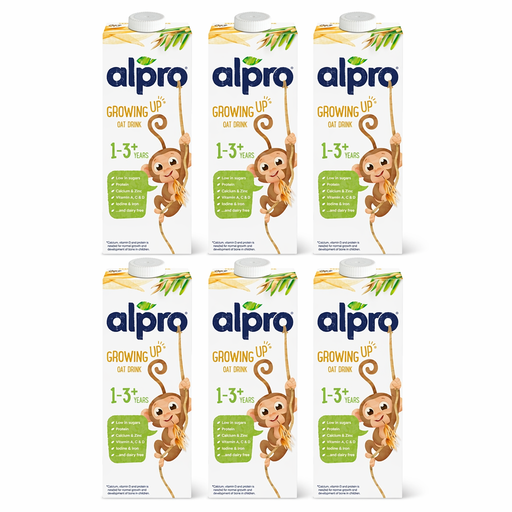 No image available
6 Alpro Oat Growing Up Drink
An age-focused option to consider when a young child regularly uses oat drink instead of milk. Check the current carton’s age guidance, nutrition panel and allergen statements against the child’s needs.
View on Joybuy
 No image available
6 Oatly No Sugars Oat Drink 1L
A standard No Sugars variant to consider for occasional teatime use. If it will be a child’s regular milk alternative, check the current carton’s calcium and iodine amounts, age suitability and allergen wording.
View on Joybuy
 No image available
Alpro Oat No Sugars Long Life Drink 8 x 1L
A standard oat drink for uses including cereal and hot drinks, rather than a toddler-specific option. Check the current carton’s sugars figure before relying on the No Sugars wording, and review its fortification and allergen statements for the child’s intended use.
View on Joybuy
 No image available
Alpro Oat Original Long Life Drink 8 x 1L
A standard household oat drink to consider for teatime uses such as cereal or hot drinks. It is not presented as toddler-specific; for regular use by a young child, check the current nutrition panel, age guidance and allergen wording.
View on Joybuy
Common questions
Can oat drink be a baby’s main milk drink?
No, not before the child is over one year old. Frimley Healthier Together’s NHS-derived guidance says plant-based alternatives may be used in cooking from six months but should not be the main milk drink before age one; seek advice about a baby’s appropriate milk or formula if a replacement is needed.
What matters if a child over one drinks oat milk regularly?
Check age suitability and calcium and iodine fortification. Frimley Healthier Together’s NHS-derived guidance specifies at least 120 mg calcium per 100 ml for a fortified plant-based milk alternative; where cow’s milk is excluded for medical reasons, discuss the child’s overall diet with their healthcare professional.
Does dairy-free mean an oat drink suits a child with milk allergy?
No. Tesco Groceries lists Oatly The Original Whole Oat Drink as free from milk, but Marks & Spencer says its Plant Kitchen Whole Oat Drink is not suitable for people with milk allergy. Check the exact current carton and follow the child’s allergy plan.
Is gluten-free oat drink suitable for someone with an oat allergy?
No: gluten-free does not mean oat-free. The Food Standards Agency explains that oats remain an allergen in their own right, so a gluten-free claim must not be used to judge suitability for an oat allergy.
What should I check before sending oat drink to school?
Check the child’s individual allergy arrangements and the school’s requirements for food and drinks brought from home. The Department for Education’s 2026 school allergy guidance says food brought from home should be considered when schools plan allergy safety.


