Parents replacing dairy for a school-aged child
If the drink will be used often at breakfast or in food prepared for school, check the current milk-allergen wording and calcium fortification. A plant-based description alone answers neither question.


Choose an oat drink by its current allergen label and the child’s school allergy arrangements, not by a vegan description alone. If it regularly replaces dairy, check calcium fortification as well as milk-related warnings; an oat drink still contains oats, and gluten-related requirements need a separate check. Before sending a product to school, confirm that the exact carton fits the child’s allergy plan.
The relevant checks change when an oat drink is a regular dairy replacement, when a child has more than one restriction, or when it will be served at school.
If the drink will be used often at breakfast or in food prepared for school, check the current milk-allergen wording and calcium fortification. A plant-based description alone answers neither question.
A child who avoids milk may also need to avoid oats or assess gluten-related labelling. A gluten-free oat drink still contains oats, so the child’s specific restrictions determine which labels matter.
When a drink or food made with it will go to school, check the exact product against the child’s known allergens and the school’s allergy arrangements, including any Individual Healthcare Plan.
Start with the child’s allergens, then compare fortification and how the carton will be stored and used.
| Priority | What to check | Your needs |
|---|---|---|
| Milk and cross-contact | Read the current ingredients, highlighted allergens and any “may contain milk” or milk-allergy warning. Do not use vegan wording as a substitute for those checks: Ocado’s M&S Plant Kitchen Barista Oat Drink listing describes a vegan recipe but says the product is not suitable for people with a milk allergy. | I need the exact carton to fit my child’s milk-allergy requirements, not just a plant-based description. |
| Oats and gluten | Check for oats as an ingredient and assess any gluten-free claim or precautionary cereal warning against the child’s requirements. Food Standards Agency allergen guidance includes oats among cereals containing gluten; a gluten-free claim does not mean oat-free. | If my child cannot have oats, an oat drink will not meet that need. If gluten is the concern, I need to assess the particular product separately. |
| Regular dairy replacement | Compare calcium per 100ml and check for added iodine and vitamins on the current carton. NHS South West London’s guidance for parents and guardians advises prioritising dairy-free alternatives with at least 120mg calcium per 100ml; it notes that many organic or minimal-ingredient alternatives are not fortified. | When oat drink regularly takes dairy’s place at home, I want to compare its stated nutrients rather than assume every oat drink has the same formulation. |
| School and storage | Check the school’s allergy arrangements and share the exact product details where the child’s plan requires it. Follow that carton’s instructions for storage before and after opening. | I need a product the school can identify and manage under my child’s arrangements, with storage instructions that fit how it will be used. |
A vegan recipe can still carry a milk precautionary statement. The M&S Plant Kitchen Barista Oat Drink listing, for example, says it may contain milk and is not suitable for people with a milk allergy.
Read the current allergen and precautionary wording whenever you change products; do not choose a carton that explicitly says it is unsuitable for the child’s milk allergy.
Oatly describes its Semi Oat Drink as fortified, while its Organic Oat Drink lists water, organic oats and salt and is not fortified. That difference matters when the drink regularly replaces dairy.
Compare calcium per 100ml on the carton. NHS South West London’s guidance for dairy-free diets advises prioritising products with at least 120mg calcium per 100ml.
Minor Figures labels its Barista Oat drink gluten free, but lists oats as an ingredient. A separate oat allergy cannot be resolved by a gluten-free claim.
Check milk, oats, gluten-related wording and any other relevant allergens against the child’s individual requirements.
A substitution can affect the allergen information the school or caterer uses for a pupil. The Department for Education’s school food standards allergy guide says substitutions must continue to meet pupils’ special dietary needs.
Before sending a different carton or food made with it, share its current allergen details with the school where the child’s allergy arrangements require this.
These examples show why the exact product matters: formulations and allergen warnings can differ, including within one brand’s range.
Its Semi and Organic oat drinks illustrate the difference between a fortified formulation and a short ingredient list.
Oat Original is a dairy-free option with added calcium, iodine and vitamins listed by retailers.
Barista Oat is a gluten-free-labelled oat drink with a formulation intended for barista use.
Its own-label Oat Drink is listed with added calcium, iodine and vitamins.
Two oat drinks associated with M&S show why a recipe description cannot stand in for the individual allergen statement.
These oat-drink options cover plain, vanilla, barista and no-sugars varieties for households considering a dairy replacement. Check each current carton against the child’s allergens, calcium needs and school arrangements before choosing it for school use.
 No image available
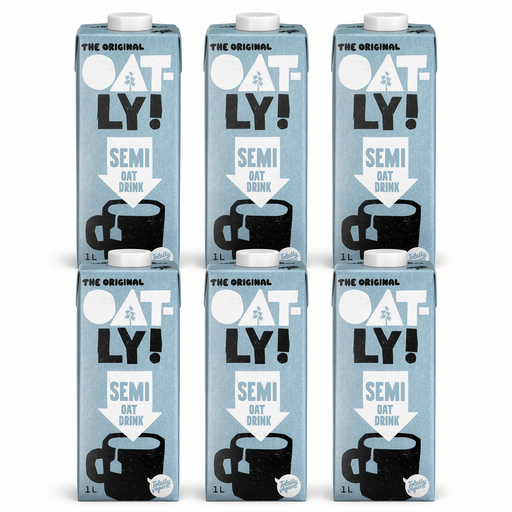
Consider this listing when a plain oat drink is wanted for a regular dairy replacement; Oatly describes its Semi formulation as dairy-free and fortified with calcium, iodine and vitamins D2, B2 and B12. It contains oats. Confirm the carton size and pack format on this listing, then check its current allergen wording and calcium per 100ml against the child’s requirements.
 No image available
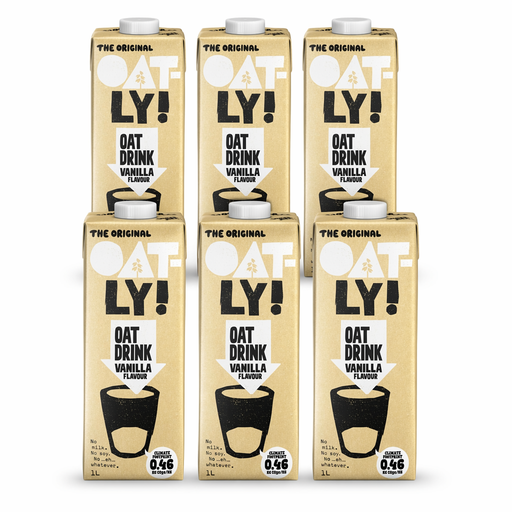
The vanilla variant is an option if that flavour suits the household’s intended use. It remains an oat drink, so it is not an option for a child with an oat allergy. Check the current ingredients, milk-related precautionary wording and fortification on the exact carton before using it as a dairy replacement.
 No image available
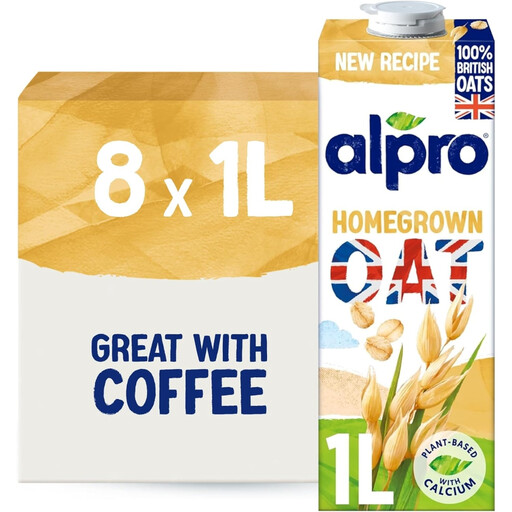
For households considering a multi-carton dairy-free oat drink, Joybuy’s listing identifies this Alpro variant as dairy-free and lists oats and calcium among its ingredients. Oats rule it out for an oat allergy; check the exact carton’s gluten-related wording, milk precautions and calcium per 100ml before using it regularly in place of dairy.
 No image available
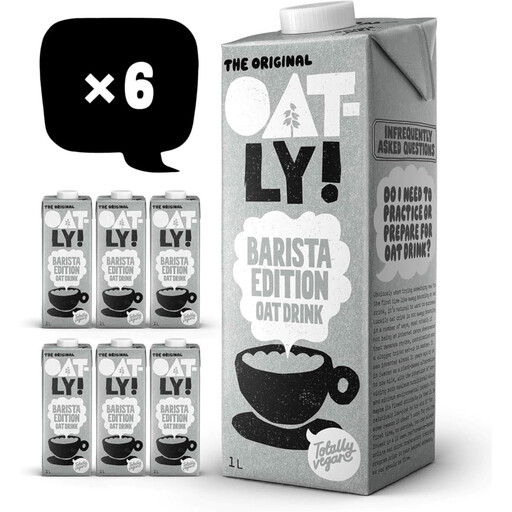
The barista format may suit a household that also wants an oat drink for hot drinks. It still contains oats. If it will be a child’s regular dairy replacement or go to school, check the current carton for milk-related warnings, calcium per 100ml and the child’s required allergen information.
 No image available
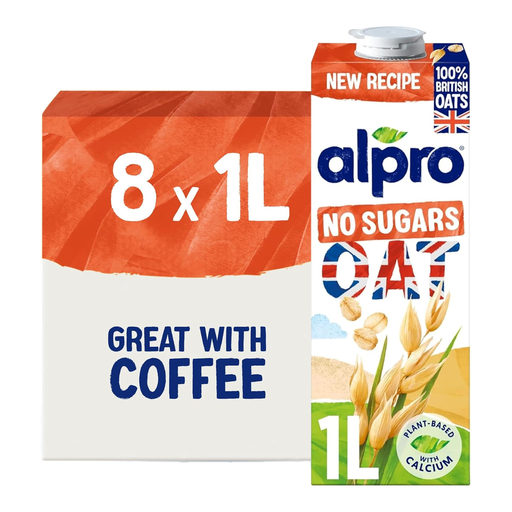
This named No Sugars variant offers a different Alpro formulation to compare with Oat Original; the name alone does not establish its full nutritional profile. It contains oats. Check the exact carton’s sugars and calcium values per 100ml, gluten-related wording and milk precautions against the child’s requirements.
No. Check the current ingredients and precautionary allergen wording. The Ocado listing for M&S Plant Kitchen Barista Oat Drink describes a vegan recipe but also says the drink may contain milk and is not suitable for people with a milk allergy.
No. A gluten-free oat drink can still contain oats, so it is not suitable for someone with an oat allergy. Minor Figures, for example, labels its Barista Oat drink gluten free while listing oats among the ingredients.
Check calcium fortification on the current carton, alongside the child’s allergen requirements. NHS South West London’s guidance for parents and guardians advises prioritising dairy-free alternatives with at least 120mg calcium per 100ml and notes that many organic or minimal-ingredient products are not fortified.
Confirm the exact product and the pupil’s arrangements with the school before making a substitution. For schools in England, the Department for Education’s school food standards allergy guide says food substitutions must continue to meet pupils’ special dietary needs; an oat drink’s plant-based description does not establish that it fits an individual allergy plan.
Follow the instructions on that carton. Tesco Oat Drink and the Asda listing for Alpro Oat Original, for example, instruct customers to refrigerate after opening and use within five days; check the product you actually buy rather than applying one drink’s instructions to another.