Hosts serving dairy-free afternoon tea
If tea, coffee and food are on the menu, ask guests about their dietary requirements before choosing a carton. A drink intended for hot beverages may be convenient, but its allergen label still matters.


Start with each guest’s dietary requirement: lactose intolerance, milk-protein allergy and gluten-related conditions call for different label checks. For an oat drink used regularly instead of dairy milk, check fortification and protein; for the afternoon tea itself, choose a no-sugars option if sweetness matters or a barista drink if you plan to froth coffee. A dairy-free claim alone does not establish suitability for every allergy.
If tea, coffee and food are on the menu, ask guests about their dietary requirements before choosing a carton. A drink intended for hot beverages may be convenient, but its allergen label still matters.
For someone replacing dairy milk day to day, compare fortification and protein rather than assuming oat drinks have the same nutritional profile. University Hospitals Sussex NHS Foundation Trust advises checking plant-based drinks for calcium, vitamin D, vitamin B12 and iodine.
Check the exact product for milk, oats, wheat and gluten-related suitability as relevant. North Bristol NHS Trust distinguishes lactose intolerance from milk-protein allergy, while the Food Standards Agency notes that oats remain an allergen even in food labelled gluten-free.
Establish dietary suitability first, then compare the carton with how the drink will be served and whether it will be used regularly.
| Priority | What to check | Your needs |
|---|---|---|
| Dietary suitability | Read the ingredients and allergen statement for the specific carton. If gluten avoidance is required, check its gluten-free labelling as well as its oat content. | I need to serve a guest with a defined dietary requirement, so a general dairy-free description is not enough. |
| Regular replacement | Compare calcium, vitamin D, vitamin B12, iodine and protein per 100 ml. University Hospitals Sussex NHS Foundation Trust advises checking fortification and identifies oat drinks as relatively low in protein. | For someone drinking it regularly instead of dairy milk, I want to know what the particular carton provides. |
| Sweetness | Compare sugars per 100 ml and check any no-sugars claim against the current carton. Alpro UK lists 0.0 g sugars per 100 ml for Alpro Oat No Sugars. | I would rather not add sugar from the drink to a cup of tea; I will check the version I am buying. |
| Hot drinks | Check whether the maker describes the drink for tea or coffee. Choose a frothing formulation when lattes or cappuccinos are planned; a barista label does not establish allergy suitability. | Ordinary tea is the main event, unless guests also want frothed coffee drinks. |
| Storage | Check whether the unopened carton needs chilling, then follow its refrigeration and use-after-opening instructions. Match the pack quantity to fridge space and expected use. | If I am buying several cartons for one gathering, I need a practical plan for storing and using those I open. |
Lactose intolerance and milk-protein allergy are different. Marks & Spencer labels its Plant Kitchen Barista Oat Drink as unsuitable for people with a milk allergy, despite its plant-based positioning.
Ask the guest which ingredients or conditions matter, then check the exact carton’s ingredients, allergen statement and suitability wording.
Fortification varies: Marks & Spencer explicitly describes its Only 3 Ingredients Oat Drink as unfortified. University Hospitals Sussex NHS Foundation Trust also identifies oat drinks as relatively low in protein.
For regular use, compare named added nutrients and protein per 100 ml. Someone with poor appetite, unintentional weight loss or a prescribed diet should seek individual dietary advice.
Frothing is useful for coffee drinks that need foam, but it need not decide a purchase for plain tea. University Hospitals Sussex NHS Foundation Trust notes that barista dairy-free drinks tend to be higher in calories than standard versions.
Decide whether lattes or cappuccinos will actually be served; otherwise compare an everyday drink with the sweetness and fortification you need.
Storage instructions differ. Oatly says its Chilled Oat Drink Semi cannot be stored at room temperature; Marks & Spencer instructs buyers to keep its Only 3 Ingredients Oat Drink at 0°C to +5°C and use it within three days of opening.
Check each pack’s instructions and buy a quantity you can store and use accordingly.
Cartons left unused beyond their stated period after opening may have to be discarded.
These examples show why the exact oat drink matters more than the brand name alone; inclusion here does not establish that a particular product is stocked by Joybuy.
Alpro UK lists Oat No Sugars as a dairy-free oat drink with added nutrients; other Alpro oat drinks have different nutrition panels.
Oatly describes its Chilled Oat Drink Semi for tea, coffee, hot chocolate, cooking and drinking.
Tesco Oat Drink 1L is an own-label example with listed fortification.
Minor Figures describes Barista Oat for coffee drinks, including lattes and cappuccinos.
Marks & Spencer lists both an unfortified Only 3 Ingredients Oat Drink and a fortified Plant Kitchen Barista Oat Drink.
These cartons cover everyday hot-drink use, no-sugars choices and barista-style coffee drinks for an afternoon tea. Check the exact pack against each guest’s dietary requirements before serving.
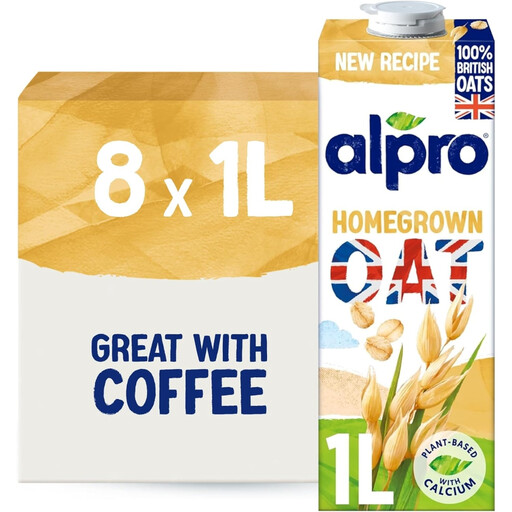 No image available
An everyday oat drink listed for hot beverages. The product information lists calcium, iodine and vitamins B2, B12 and D2, with 0.8 g protein and 3.2 g sugars per 100 ml. It contains oats; check the carton for guests with an oat allergy or gluten-related requirement.
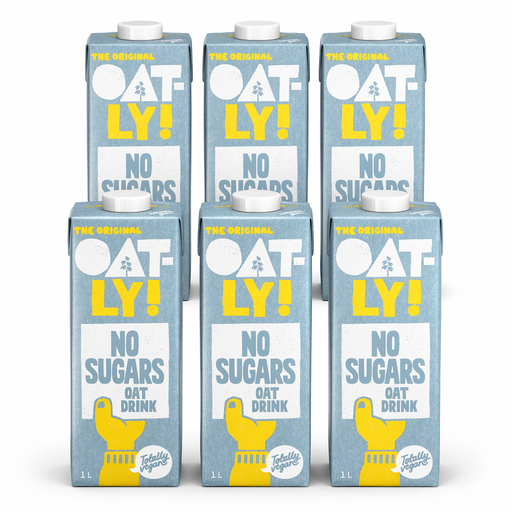 No image available
For a no-sugars choice, its listed panel gives 0 g sugars and 1 g protein per 100 ml; the product information also lists calcium, iodine and vitamins D2, B2 and B12. If use in hot tea matters, check the carton’s intended-use information. It contains oats, so review the allergen label for the guest.
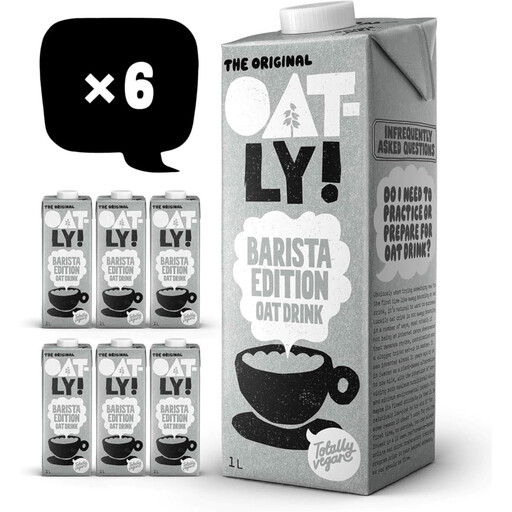 No image available
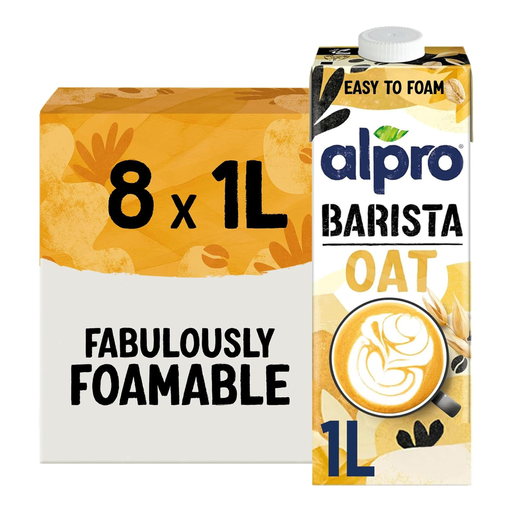
A barista option when the menu includes frothed coffee drinks. Its product information lists calcium, iodine and vitamins D2, B2 and B12, plus 1.1 g protein and 3.4 g sugars per 100 ml. Follow the stated instruction to use within seven days of opening, and check the oat allergen information.
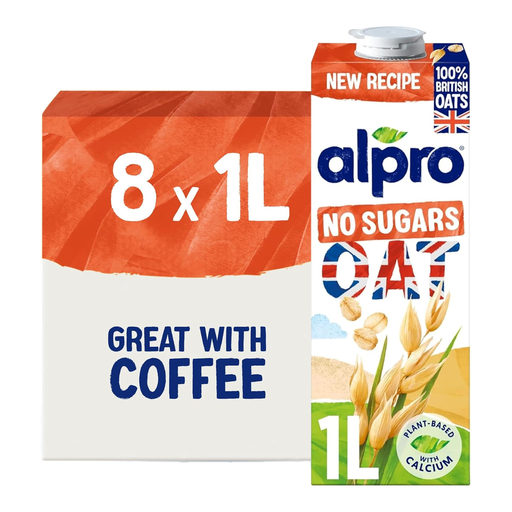 No image available
This oat drink is described for tea and coffee and lists calcium, iodine and vitamins B2, B12 and D2. Its product information gives conflicting sugar wording, so confirm the current carton’s nutrition panel before choosing it for a guest avoiding sugars. Check its oat and gluten-related allergen information too.
 No image available
A coffee-focused option described for frothing. Its product information lists calcium and vitamins B2 and D2, with 0.8 g protein and 3.0 g sugars per 100 ml; those listed nutrients should not be taken as confirmation of other fortification. Refrigerate after opening and check the oat and gluten-related allergen information.
A dairy-free oat drink can be an option for avoiding lactose, provided its exact ingredients meet the guest’s needs. North Bristol NHS Trust explains that lactose intolerance differs from milk-protein allergy; for an allergy, check the product’s milk-allergen statement rather than relying only on a dairy-free description.
No. Check the specific product for gluten-free suitability; Marks & Spencer, for example, labels its Only 3 Ingredients Oat Drink unsuitable for coeliacs. The Food Standards Agency says food labelled gluten-free must contain no more than 20 mg/kg gluten, while oats still need to be identified as an allergen.
Check the carton for calcium, vitamin D, vitamin B12 and iodine, and compare protein per 100 ml. University Hospitals Sussex NHS Foundation Trust advises checking fortification and identifies oat drinks as relatively low in protein. A person with poor appetite, unintentional weight loss or a prescribed diet should seek individual dietary advice rather than treating oat drink as a complete replacement.
Not just for the barista label: consider one when you plan to froth coffee drinks, and check whether an everyday product is described for tea. University Hospitals Sussex NHS Foundation Trust notes that barista dairy-free drinks tend to be higher in calories than standard versions, so compare the nutrition panels if that difference matters to your choice.
Follow the instructions on the particular carton. Oatly says its Chilled Oat Drink Semi must be kept cold, while Marks & Spencer specifies 0°C to +5°C and use within three days of opening for its Only 3 Ingredients Oat Drink. Do not apply either product’s instructions to a different oat drink.