Families making everyday snacks
For cereal, porridge, smoothies and simple recipes, look at how the particular drink is described and whether you want a neutral taste or a creamier texture.


For cereal and smoothies, compare unflavoured oat drinks described as smooth or subtly sweet rather than relying on the word “mild”. If a child over one will regularly use the drink instead of cow’s milk, check its fortification—particularly calcium and iodine—and its allergen information; a short ingredient list does not establish either.
The intended use matters more than a general description of the drink as mild.
For cereal, porridge, smoothies and simple recipes, look at how the particular drink is described and whether you want a neutral taste or a creamier texture.
When a child over one will have an oat drink regularly in place of cow’s milk, fortification and individual dietary advice matter alongside taste. Frimley Healthier Together’s NHS milk-free-diet guidance particularly highlights calcium and iodine.
Check the exact carton for oat, gluten, wheat and milk-related statements relevant to the person drinking it. A general plant-based description does not settle an individual allergy question.
Choose for the snack you are making, then check whether the drink’s nutrients and allergen information fit its regular use in your household.
| Priority | What to check | Your needs |
|---|---|---|
| Taste and use | Look for an unflavoured drink and a product description that fits cereal, porridge or smoothies. Marks & Spencer describes its Semi Oat Drink as smooth and subtly sweet; that is a description of this product, not a taste guarantee. | I want one oat drink that works in everyday breakfasts and snack recipes without choosing a flavoured variety. |
| Fortification | Compare the current carton’s calcium, iodine, vitamin D and vitamin B12 information. The UK Office for Health Improvement & Disparities reported in 2025 that nutrient content varies considerably between plant-based drinks. | If a child over one has this regularly instead of cow’s milk, I need to check what nutrients the particular drink provides. |
| Allergens | Read the individual oat, gluten, wheat and milk statements. The Food Standards Agency explains that oats remain an allergen even when they are gluten-free or very-low-gluten. | Someone in my household has a relevant allergy or coeliac disease, so the exact product’s declaration matters before I serve it. |
| Ingredients | Compare the ingredient list with the intended use. M&S Only 3 Ingredients Oat Drink contains water, oats and sea salt, but Marks & Spencer says it is not fortified and does not recommend it as a dairy replacement for children under 36 months. | A short ingredient list appeals to me for occasional recipes, but I would not treat it as evidence of fortification. |
| Texture | Decide whether a lighter everyday drink or a creamier whole or barista-style drink suits the recipe. Oatly describes its Whole drink as creamy; Minor Figures positions Barista Oat for coffee. | For hot chocolate or baking, I may want a different texture from the drink I choose for cereal. |
The UK Office for Health Improvement & Disparities reports considerable variation in plant-based drinks’ nutrient content. A water-and-oats drink and a fortified drink should not be treated as interchangeable when regular cow’s-milk replacement is the aim.
For a child over one using an alternative regularly, compare calcium and iodine on the carton and follow any individual dietary advice.
The Food Standards Agency states that oats remain an allergen even when they meet gluten-free requirements. Individual products can also carry further suitability warnings.
Read the current allergen declaration for the specific drink and the diagnosed condition; do not rely on a general vegan or gluten-free description.
A drink positioned for coffee or a creamy texture may not match the taste and texture you want with cereal or in a smoothie.
Choose according to the intended use: compare unflavoured everyday drinks for cereal, and consider a barista or whole drink when its richer texture suits the recipe.
These examples illustrate different formulations and uses; a brand name alone does not determine the contents of a particular carton.
Marks & Spencer lists both a three-ingredient oat drink and a fortified Semi Oat Drink.
Oatly positions Oat Drink Whole as a creamy option rather than a specifically light-tasting one.
Alpro is one of the plant-based alternatives named in Frimley Healthier Together’s NHS milk-free-diet guidance.
Minor Figures describes Barista Oat primarily for coffee, with subtle oat sweetness and a foam-oriented texture.
These oat drinks include everyday long-life options and a barista-style option. Compare each carton with the snack you plan to make, particularly if it will be served regularly to a child.
 No image available
An option to compare for cereal or smoothies when you want a subtle oat flavour. The product information lists fortification; check the carton’s nutrient values and its oat and gluten allergen statements before serving.
 No image available
Described for cereal and smoothies, with a smooth profile. Compare the current carton’s sugars declaration and fortification with your needs, and check its oat and gluten allergen statements.
 No image available
A barista-style option when a creamier texture suits the drink or recipe, rather than a lighter cereal drink. Its product description says it is not suitable as a complete milk substitute for infants or young children; check the current carton for allergens and suitability.
 No image available
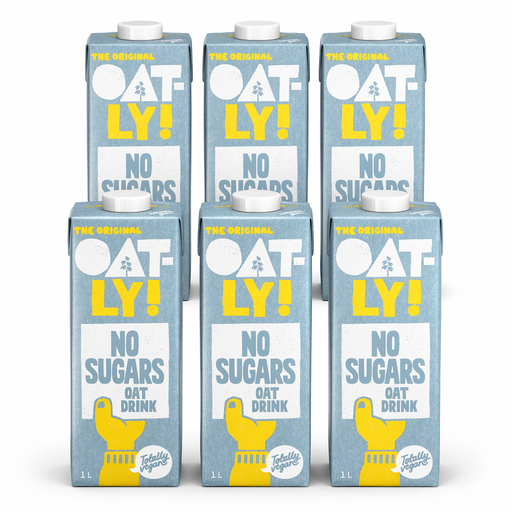
An oat drink to consider for everyday use if its flavour suits your planned snacks. Compare the carton’s nutrient and allergen information, including its oat declaration, before using it as a regular alternative.
No. A taste description does not tell you the drink’s sugars, fortification or allergen information. Compare the exact carton: Marks & Spencer describes its Semi Oat Drink as subtly sweet, while its Only 3 Ingredients drink is not fortified.
For a child over one needing a cow’s-milk-free alternative, Frimley Healthier Together’s NHS guidance advises a fortified plant-based drink, particularly one with at least 120mg calcium per 100ml and iodine. The guidance says not to use it as the main milk drink before age one; follow individual clinical or dietetic advice where a child has diagnosed allergies or growth concerns.
Not on the strength of a gluten-free label alone. The Food Standards Agency says oats remain an allergen even when they are gluten-free or very-low-gluten. Check the current product declaration and follow the person’s individual allergy advice.
Follow the refrigeration and consume-within instructions on the particular carton. Storage directions can differ between oat drinks, so check them when planning snacks across several days.