Packed-lunch planners
If you keep unopened cartons for cereal, smoothies or a drink with lunch, compare sugars and fortification as well as the storage instructions. An oat drink’s name does not tell you its nutrient content.


For a long-life oat drink used regularly in place of dairy, start by checking the carton for calcium, iodine and vitamin fortification, then compare sugars and storage instructions for your lunch routine. Tesco lists Alpro Oat No Sugars as a UHT option with no sugars or sweeteners; fortified alternatives may also suit, but a short ingredient list alone does not establish comparable nutrient content. Check the exact allergen label if oats, gluten or wheat are a concern.
If you keep unopened cartons for cereal, smoothies or a drink with lunch, compare sugars and fortification as well as the storage instructions. An oat drink’s name does not tell you its nutrient content.
If oat drink is an everyday alternative to cows’ milk, check the exact carton for added nutrients. The UK SACN/COT assessment reports considerable variation in the nutrient content of plant-based drinks.
If oats, gluten or wheat affect your choice, read the statement on the specific product. The Food Standards Agency notes that oats remain an allergen even in a food labelled gluten-free.
Choose the storage format that works for lunch, then compare nutrition and allergen labels on the exact cartons you are considering.
| Priority | What to check | Your needs |
|---|---|---|
| Sugars | Compare sugars per 100 ml on the same basis. Check whether a no-added-sugars claim differs from the amount of sugars shown in the nutrition panel. | I want to distinguish a no-sugars drink from one that still lists sugars. Tesco describes Alpro Oat No Sugars as containing no sugars or sweeteners, while its Long Life Oat Original lists 3.8 g sugars per 100 ml. |
| Fortification | Look for calcium, iodine and listed vitamins on the exact carton. The UK SACN/COT assessment identifies vitamin A, riboflavin, B12, calcium and iodine when discussing fortification comparable with semi-skimmed cows’ milk. | If oat drink regularly replaces dairy in my meals, I want to know which nutrients this particular drink contains. A short ingredient list does not answer that question. |
| Storage | Check the unopened-carton conditions, then the refrigeration and use instructions after opening. A long-life label applies to the unopened product under its stated conditions. | I can keep unopened cartons for future lunches, but need fridge space and a realistic plan for using an opened carton. |
| Allergens | Read the product’s gluten-free claim and oat and wheat allergen statements. Do not transfer a suitability statement from another oat drink. | If I need to avoid gluten, wheat or oats, the category name is not enough to make the choice. Marks & Spencer labels its Plant Kitchen Semi Oat Drink as not suitable for coeliacs or people with a wheat allergy. |
The UK SACN/COT assessment reports substantial variation in plant-based-drink nutrients. Marks & Spencer, for example, describes its three-ingredient oat drink as unfortified, unlike its fortified Plant Kitchen Semi drink.
For regular dairy replacement, compare the nutrients declared on each carton rather than relying on oat content or the length of the ingredient list.
The two statements answer different questions: a drink can have no added sugars and still list sugars in its nutrition panel. Tesco lists 3.8 g sugars per 100 ml for Long Life Oat Original, while its Alpro Oat No Sugars listing states no sugars or sweeteners.
If sugars are a deciding factor, compare the current labels on a per-100-ml basis.
The Food Standards Agency says oats remain an allergen even when a food is gluten-free. Marks & Spencer also labels some of its oat drinks as unsuitable for coeliacs or people with a wheat allergy.
Use the gluten-free and allergen statements for the exact product; do not infer suitability from ‘plant-based’ or from another carton.
A carton that can be stored unopened in a cupboard may need refrigeration once opened. Tesco instructs shoppers to refrigerate its Long Life Oat Original and use it within five days after opening.
Check the opened-carton instructions before choosing a multipack or opening a carton for occasional lunches.
These examples illustrate different label and storage choices; the details apply to the named drinks, not every product from each brand.
Alpro Oat No Sugars Long Life Dairy Free Drink is a UHT option for comparing a no-sugars label with fortified oat drinks.
Oatly Oat Drink Semi is a fortified drink that Oatly describes for drinks, cooking and baking.
Tesco Long Life Oat Original 1L is a UHT own-label option with declared fortification.
Minor Figures describes Everyday Oat for cereals, tea, milkshakes and smoothies.
Marks & Spencer offers different choices within its oat-drink range: fortified Plant Kitchen Semi and an unfortified three-ingredient drink.
These oat drinks cover no-sugars, original and barista-labelled options for stocking before lunch. Compare each pack’s nutrition and storage directions; the barista options have a different stated use from drinks chosen for cereal or smoothies.
 No image available
A long-life multipack to consider when a no-sugars label matters for lunch. Tesco’s listing for the named drink describes it as UHT and lists added calcium and iodine. Check the pack’s oat and gluten information if relevant; refrigerate an opened carton and use it within five days.
 No image available
An original long-life option for cereal or smoothies. Its product information lists 3.2 g sugars per 100 ml despite saying no added sugars, so compare the nutrition panel if reducing sugars matters to you. Refrigerate after opening and use within five days; check the oat and gluten wording on the pack.
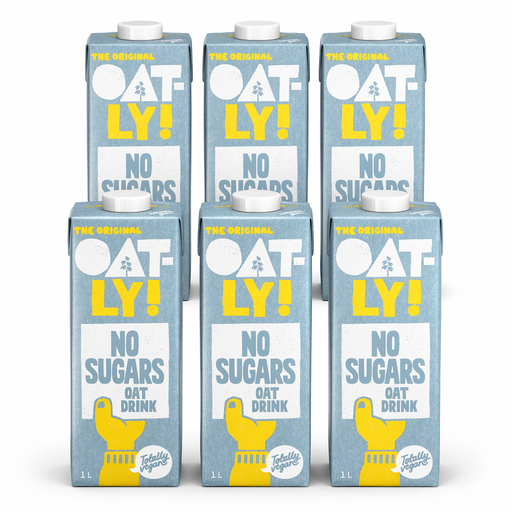 No image available
A no-sugars-labelled multipack for keeping unopened cartons until needed for lunch. Compare its current nutrition panel with other drinks and check its oat allergen statement if relevant. After opening, refrigerate and follow the carton’s use instructions.
 No image available
A barista-labelled long-life option if you also use oat drink in lunch foods or drinks. Check sugars per 100 ml on the carton before comparing it with a no-sugars option. Refrigerate after opening and use within the stated seven days; check the oat allergen statement.
 No image available
A long-life option presented primarily for coffee rather than lunch foods. Its product information lists 3.0 g sugars per 100 ml despite saying no added sugars; compare the panel if sugars matter to your choice. Refrigerate after opening and use within five days, and check the oat and gluten wording.
No: long-life storage instructions concern the unopened carton. Tesco says its Long Life Oat Original should be refrigerated and consumed within five days after opening. Follow the instructions on your particular carton.
No. The Food Standards Agency says oats remain an allergen even when a food is gluten-free. Read the oat allergen statement separately from any gluten-free claim.
Compare the nutrients declared on the exact carton, particularly calcium, iodine and vitamins. The UK SACN/COT assessment says plant-based drinks vary considerably and discusses fortification with vitamin A, riboflavin, B12, calcium and iodine at levels comparable with semi-skimmed cows’ milk; do not assume every oat drink contains all of them.
No. Marks & Spencer describes its Only 3 Ingredients Oat Drink as unfortified, while its Plant Kitchen Semi Oat Drink lists added calcium, iodine and vitamins. Compare the labels if fortification affects your choice.