Home workers making lunchtime lattes
If your lunch break includes steamed coffee or cappuccinos, coffee-use and frothing claims on the exact oat drink matter more than a general description of it as suitable for hot drinks.


For regular lunchtime lattes or cappuccinos, consider an oat drink formulated for coffee; for cereal, tea and cooking, a standard fortified carton may suit more of your routine. A short-ingredient chilled drink is another option, but check whether it is fortified, how soon it must be used after opening and whether its allergen wording meets your needs. A larger pack makes sense only if you can use each opened carton within its own storage instructions.
If your lunch break includes steamed coffee or cappuccinos, coffee-use and frothing claims on the exact oat drink matter more than a general description of it as suitable for hot drinks.
If the same cartons go into cereal, tea, smoothies and cooking, consider their intended uses, unopened storage conditions and how quickly you finish a carton once it is open.
If fortification, coeliac suitability or an oat or other allergy affects your choice, read the statements on the particular product. A vegan label does not answer all of those questions.
Start with how you use oat drink at lunch, then check the carton’s ingredients, storage instructions and allergen wording before deciding on a pack size.
Choose it for: Regular lattes or cappuccinos when frothing is part of your lunch routine.
Bear in mind: A coffee formulation does not establish that every barista drink has the same ingredients or nutrition values.
Choose it for: Cereal, tea, smoothies or cooking when you also want to check for added calcium, iodine or vitamins.
Bear in mind: Some standard cartons give specific preparation advice for hot drinks; they are not necessarily intended for frothing.
Choose it for: A preference for a short ingredient list when you can refrigerate and use the carton promptly.
Bear in mind: M&S says its Only 3 Ingredients Oat Drink is unfortified and must be used within three days of opening; check the instructions for any other product separately.
| Priority | What to check | Your needs |
|---|---|---|
| Lunch-time coffee | Look for an explicit coffee or frothing description. For a standard drink, read any instructions about adding it to hot liquid. | I make lattes at lunch and want a product intended for frothing, rather than assuming any oat drink will behave the same way. |
| Fortification and ingredients | Read the ingredient and nutrition panels for added calcium, iodine and vitamins. Check the particular variant: a short ingredient list does not establish fortification. | For cereal and cooking, I want to know whether the carton is fortified; alternatively, I may prefer fewer ingredients and accept an unfortified option. |
| Pack and storage | Check the number and size of cartons, storage before opening, refrigeration after opening and the stated opened-carton use period. | A multi-pack suits my working week only if we can finish each carton within its own instructions. |
| Allergen wording | Read the exact pack’s oat, gluten and other allergen statements, including any explicit coeliac-suitability claim. The UK Food Standards Agency identifies oats among cereals containing gluten in its allergen guidance. | With coeliac disease or a relevant allergy to consider, I need product-specific wording rather than an assumption based on a vegan or gluten-free label. |
A standard drink may have different hot-drink instructions from a product formulated for coffee. For example, Tesco advises against mixing its Long Life Oat Original with boiling water.
If you regularly make cappuccinos, check the exact product’s frothing description. If you mainly use it in cereal or tea, decide whether that feature matters to you.
M&S states that its Only 3 Ingredients Oat Drink is unfortified. By contrast, Tesco and Sainsbury’s describe added nutrients in their cited standard oat drinks.
Choose according to your ingredient preference, then read the exact carton’s ingredient and nutrition panels for fortification.
A cupboard-stored multi-pack does not extend the use period of a carton once opened. Instructions differ between products.
Work out how many cartons your household will open and finish during a typical working week, and follow each pack’s refrigeration and use instructions.
Cartons left unused beyond their stated opened-carton period can become waste.
They address different questions. Minor Figures describes its cited Barista Oat as gluten free, while M&S states that its cited oat drinks are not suitable for coeliacs.
For coeliac disease or an oat, wheat or other relevant allergy, check the exact product’s allergen declaration and suitability wording rather than transferring a claim from another carton.
These examples show why the variant matters: a brand may offer drinks with different ingredients, intended uses and storage instructions.
Oatly’s 1.5L Barista Edition is a larger single carton aimed at coffee use.
Alpro offers standard Oat Original and a separate No Sugars long-life variant.
Minor Figures presents Barista Oat as a coffee-focused drink sold in a 6 x 1L pack.
Tesco Long Life Oat Original is a fortified 1L carton for everyday use.
Sainsbury’s Oat Drink 1L is a fortified standard drink described for uses including tea, cereal and cooking.
M&S offers both a chilled Only 3 Ingredients Oat Drink and a separate Plant Kitchen Barista Oat Drink.
These cartons cover coffee-focused barista drinks and long-life multi-packs for repeat use at home. Compare the exact variant and opened-carton instructions with your lunchtime routine.
 No image available
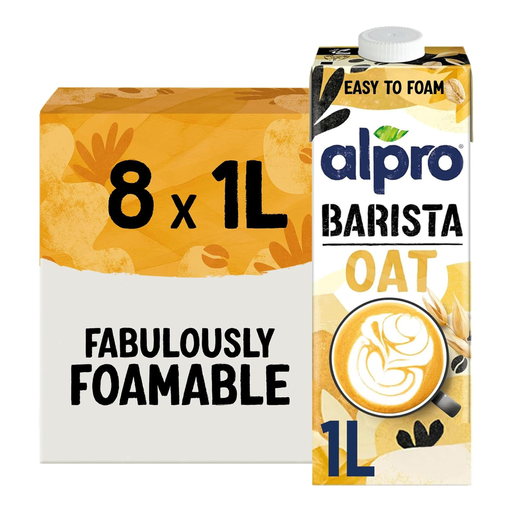
For households making coffee at lunch, this eight-carton barista pack offers a way to keep unopened cartons for repeat use. Its product description discusses coffee and microfoam; refrigerate each carton after opening and follow its five-day use instruction. Check the exact pack’s allergen information if oats or gluten are relevant to you.
 No image available
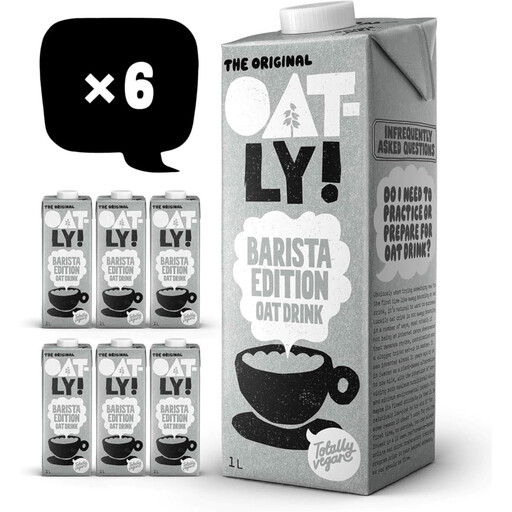
This six-carton barista pack is relevant if frothing oat drink for lunchtime coffee is a regular task. The cited Joybuy product information says to refrigerate after opening and consume within seven days. Check the exact carton’s allergen and coeliac-suitability wording where relevant.
 No image available
This six-carton organic variant is an option for repeat coffee use when its particular ingredient list appeals to you. Do not assume it froths like Oatly’s other Barista products: check the variant’s coffee-use description for the preparation you want. Refrigerate after opening and follow its five-day use instruction.
 No image available
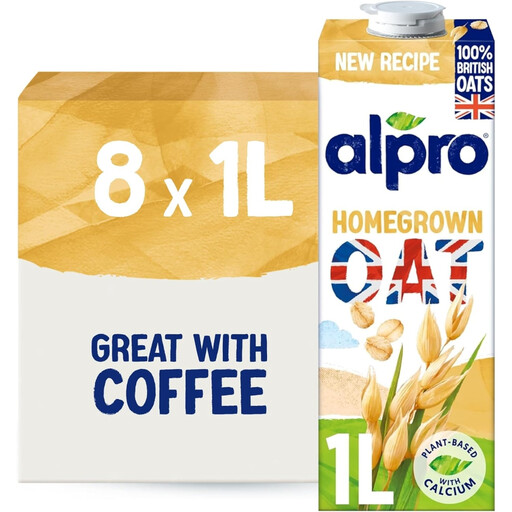
This eight-carton standard oat drink is relevant when lunches involve cereal, smoothies or general hot-drink use rather than coffee frothing. The cited Joybuy listing describes a long-life pack; refrigerate each carton after opening and consume within five days. Check the exact pack for fortification and allergen details.
 No image available
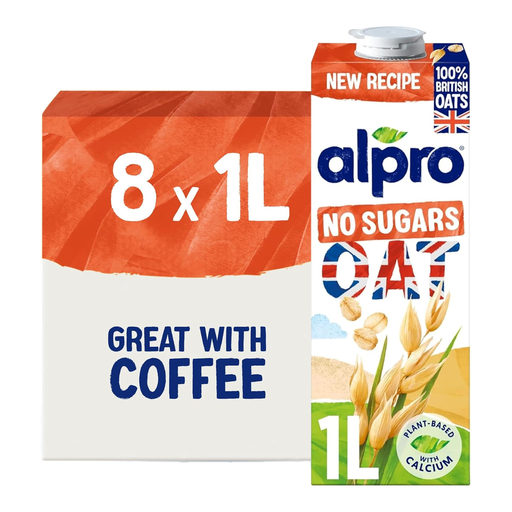
This eight-carton No Sugars variant is a separate choice for repeated cereal, smoothie, tea or coffee use; do not treat its label as describing Alpro Oat Original. It is not presented as a frothing product. Refrigerate after opening and follow its five-day use instruction, checking the exact pack’s nutrition and allergen panels.
Consider one if you regularly make lattes or cappuccinos and want a drink described for frothing. Oatly and M&S position their cited barista products for coffee; if you mainly use oat drink in tea, cereal or cooking, check whether a standard carton meets those uses instead.
No: it depends on how quickly you use each carton after opening. The cited M&S Only 3 Ingredients drink has a three-day opened-carton instruction, Tesco Long Life Oat Original has five days, and the cited Oatly six-carton Joybuy listing has seven days. Follow the instruction on the pack you buy.
No. Tesco and Sainsbury’s list added nutrients for their cited standard drinks, whereas M&S explicitly describes its Only 3 Ingredients Oat Drink as unfortified. Read the particular carton’s ingredient and nutrition panels rather than relying on its brand or a short ingredient list.
No. The UK Food Standards Agency identifies oats among cereals containing gluten in its allergen guidance, and product statements differ: Minor Figures labels its cited Barista Oat gluten free, while M&S says its cited oat drinks are not suitable for coeliacs. A gluten-free claim does not answer an oat-allergy question, so check the exact product’s allergen wording.
Check its pack size, intended use, unopened and opened storage instructions, ingredient and nutrition panels, and allergen or coeliac-suitability statements. For a working-from-home lunch routine, those details help distinguish a coffee-focused drink from an everyday carton and show whether a multi-pack fits how quickly you use it.