Who is the drink for?

Carers preparing a baby’s night bottle

If the baby is under 12 months and needs a milk-free main feed, the choice is not between supermarket oat drinks. University Hospitals Birmingham NHS Foundation Trust says a specialist milk is required if breastfeeding stops before age one; discuss the appropriate feed with the baby’s clinician or dietitian.

Carers of a child over one

An oat drink may be considered as a milk alternative after age one. For a child on a medically managed exclusion diet, check the particular drink’s allergens and fortification against the child’s dietary plan rather than relying on the word ‘oat’ or ‘vegan’.

Adults choosing a night-time drink

An adult, including a breastfeeding parent choosing a drink for themselves, can match the carton to the ingredients they need to avoid. Milk-free, soya-free and gluten-free claims answer different questions, while an oat-containing drink remains relevant to an oat allergy.

What should you check first?

Baby under 12 months

Choose: Breast milk where appropriate, or a specialist infant milk advised for the baby’s needs.

Important boundary: Black Country 0–18 Years NHS says a baby who needs a hypoallergenic formula should continue using it as the main milk drink until 12 months, or as advised by a healthcare professional; retail oat drink is not its replacement.

Child over one

Consider: An oat drink that fits the child’s allergies and dietary plan, checking calcium and iodine fortification for regular use.

Watch for: An oat-based or vegan description does not settle suitability for coeliac disease, wheat allergy or milk allergy; assess the exact product with the child’s dietitian when the diet is medically managed.

Adult drinker

Choose: A carton whose current ingredients and claims match the specific milk, soya or gluten exclusion needed.

Watch for: The Food Standards Agency notes that oats remain an allergen even when described as gluten-free.

Priority What to check Your needs
Age and main feed Establish who will drink it and whether it would replace a baby’s main milk feed. For a baby under 12 months needing a milk-free feed, ask their clinician about the appropriate specialist milk. I’m preparing a baby’s night bottle, so I need an age-appropriate main feed rather than a retail oat drink.
Exact allergens Read the current ingredients, highlighted allergens and any precautionary statement. Look for an explicit gluten-free claim if gluten avoidance is required; gluten-free oats still contain oats. Milk or soya avoidance matters in my household, but I may also need to check gluten, wheat or oats separately.
Fortification For a regular milk alternative after age one, compare calcium and iodine on the exact carton’s nutrition information. Check the child’s wider dietary plan if exclusions are medically managed. For a child over one, I want to know what the drink provides before using it regularly, not assume that all oat drinks have the same fortification.
Carton and pack Check the pack size and the current instructions for refrigeration and use after opening before choosing a multipack. I’d rather choose a pack I can use according to its storage instructions, particularly if I’m trying a drink for the first time.

What can go wrong when choosing?

  • Replacing an infant’s main feed with supermarket oat drink

    A dairy-free label does not make a retail drink an appropriate main milk feed for a baby under 12 months. University Hospitals Birmingham NHS Foundation Trust says a specialist milk is required if breastfeeding stops before age one.

    For a baby who needs a milk-free night feed, continue breastfeeding where appropriate or ask the baby’s clinician or dietitian which specialist infant milk to use.

  • Treating all free-from claims as the same

    A gluten-free oat drink still contains oats. The Food Standards Agency says oats must remain identified as an allergen even when they are gluten-free; milk and soya claims also need checking separately.

    Start with the particular ingredient that must be avoided, then read the current ingredients, relevant free-from claims and any precautionary allergen statement.

  • Assuming a vegan drink has the right nutrient profile

    Products differ in fortification and allergy suitability. For example, Marks & Spencer says its Plant Kitchen Whole Oat Drink is not suitable for people with coeliac disease, milk allergy or wheat allergy, despite its plant-based name.

    For regular use by a child over one, compare the exact drink’s calcium and iodine information and discuss a medically managed exclusion diet with the child’s dietitian.

  • Buying several cartons before checking the details

    A multipack commits you to the same formulation and its opened-carton storage instructions.

    If possible, check a single carton’s current allergen information and storage directions before choosing a larger pack.

    Cartons that cannot be used within their stated storage period may go to waste.

Which brand products illustrate the differences?

These examples concern named products, not every drink made by each brand; check the current carton for the version you buy.

Oatly

Oatly’s UK Whole Oat Drink information identifies it as containing no cow’s milk or soya, a useful distinction when those are the exclusions.

  • Oatly lists oats in Whole Oat Drink and gives calcium and iodine values for its separate Chilled Oat Drink Semi product.
  • Neither detail establishes that every Oatly drink is gluten-free or suitable for an oat allergy.

Alpro

Alpro Oat No Sugars is a product to examine if a no-sugars oat drink and fortification are part of the choice.

  • Sainsbury’s lists added calcium, iodine and vitamins for the chilled Oat No Sugar product.
  • The Joybuy information for Alpro Oat No Sugars Long Life Drink declares cereals containing gluten (oats); do not transfer the chilled product’s details to a different carton.

Minor Figures

Minor Figures describes its Everyday Oat drink as gluten-free and fortified with calcium and vitamins.

  • Its stated gluten-free route may matter where gluten avoidance, rather than oat avoidance, is required.
  • Everyday Oat contains oats, so a gluten-free claim does not make it suitable for an oat allergy.

M&S

M&S Plant Kitchen Whole Oat Drink shows why a plant-based product name is not enough to decide allergy suitability.

  • Marks & Spencer states that this specific drink is not suitable for people with coeliac disease, milk allergy or wheat allergy.

Joybuy oat drink options

These oat drinks are options for an adult choosing a night-time drink. None should replace a baby’s main milk feed before 12 months; for any allergy or a child’s regular milk alternative, decide from the exact carton and the child’s dietary advice.
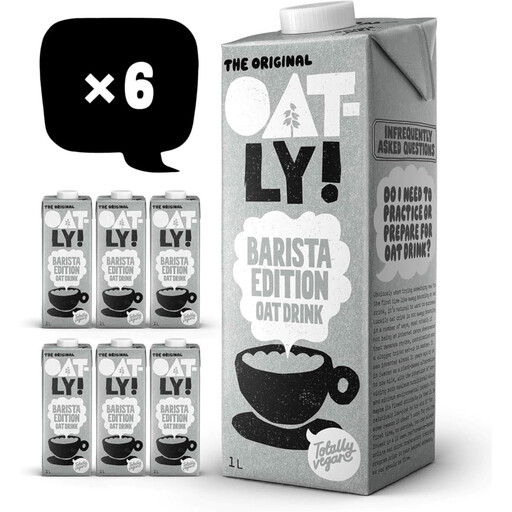
Oatly Long Life Barista Oat Drink 6 x 1 L

Oatly Long Life Barista Oat Drink 6 x 1 L

A multipack to consider for an adult’s oat-based drinks. It contains oats; check the current carton for soya, gluten and precautionary allergen information if those affect your choice.

View on Joybuy

Alpro Oat No Sugars Long Life Drink 8 x 1 L

Alpro Oat No Sugars Long Life Drink 8 x 1 L

For an adult considering a no-sugars oat drink, check the current nutrition panel as well as the allergen information. This product’s information declares gluten-containing oats; check the carton separately if soya avoidance matters.

View on Joybuy
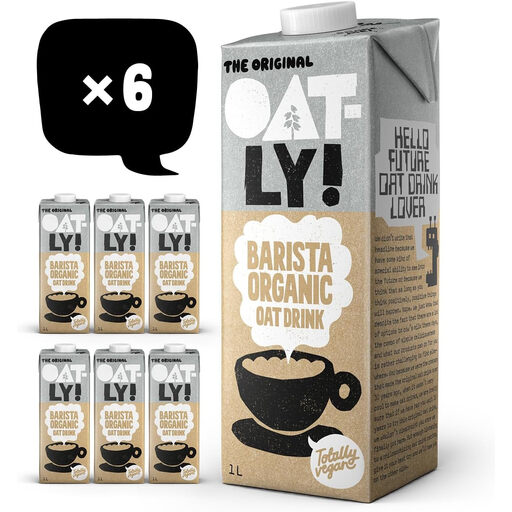
Oatly Organic Barista Oat Drink 6 x 1 L

Oatly Organic Barista Oat Drink 6 x 1 L

An adult considering milk and soya avoidance can check this drink’s current dairy-free and soya-free claims. It contains oats; also check gluten information and the nutrition panel if those are relevant.

View on Joybuy
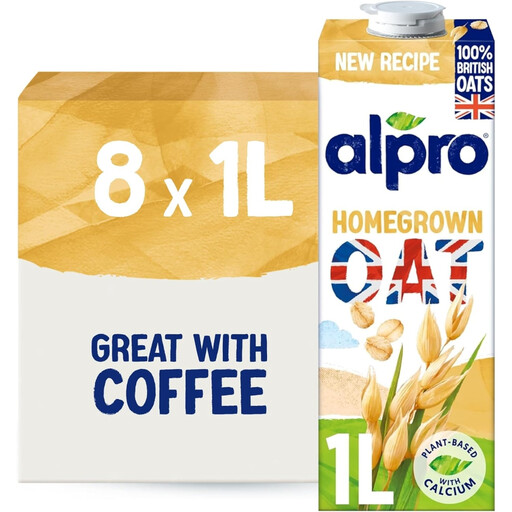
Alpro Oat Original Long Life Drink 8 x 1 L

Alpro Oat Original Long Life Drink 8 x 1 L

This adult oat drink comes in an 8 x 1 L pack. Its product information declares gluten-containing oats; check the current carton for soya warnings and nutrient amounts before using those details to make a dietary choice.

View on Joybuy

Alpro Barista Oat Long Life Drink 8 x 1 L

Alpro Barista Oat Long Life Drink 8 x 1 L

A coffee-oriented oat drink for an adult household. Its product information declares gluten-containing oats; check the current pack for soya information and any fortification needed for your intended use.

View on Joybuy

Common questions

Can I put oat drink in a baby’s night bottle?

Do not use retail oat drink as the main milk feed for a baby under 12 months. University Hospitals Birmingham NHS Foundation Trust says a specialist milk is required if breastfeeding stops before age one; ask the baby’s clinician or dietitian which feed is appropriate when milk avoidance is needed.

Can a child have an oat drink after turning one?

An oat drink may be considered after age one if it fits the child’s allergies and dietary plan. For regular use as a milk alternative, check the exact product’s calcium and iodine fortification and discuss a medically managed exclusion diet with the child’s healthcare professional or dietitian.

Does gluten-free oat drink work for an oat allergy?

No: gluten-free oats are still oats. The Food Standards Agency says oats must remain emphasised as an allergen even when they are gluten-free, so check the ingredients rather than treating a gluten-free claim as an oat-free claim.

Why check a familiar brand’s carton again?

Check the particular carton because ingredients and allergen information can change, and products within one brand can differ. Marks & Spencer advises shoppers to read the product label rather than rely only on online information.

What does ‘may contain’ mean on an oat drink?

It warns of possible unintended allergen presence through cross-contact, rather than naming an intentional ingredient. The Food Standards Agency says precautionary allergen labelling should be used where an unavoidable cross-contamination risk cannot be sufficiently controlled; seek individual clinical allergy advice if the warning affects a severe allergy.