Who needs to check what?
The drink’s role in the child’s diet and the nursery’s allergy arrangements matter more than a dairy-free claim on the front of the carton.
Parents of children over one avoiding cow’s milk
If oat drink will regularly take the place of dairy, compare its calcium and iodine fortification and consider the child’s wider diet. Frimley Healthier Together’s NHS milk-free diet guidance recommends fortified plant-based alternatives, particularly calcium and iodine; it does not treat every oat drink as interchangeable.
Parents managing a milk allergy
Check the exact product’s current allergen and suitability statements against the child’s allergy plan, then give the nursery the product details. M&S Barista Oat Drink, for example, states that it is not suitable for people with milk allergy despite being an oat drink.
Parents managing a gluten-related restriction
Do not assume that an oat drink fits a child’s coeliac, wheat-allergy or other documented dietary plan. UK government allergen guidance includes oats among cereals containing gluten for allergen-information purposes; check the specific carton and the child’s requirements.
What matters when choosing an oat drink?
Start with age and the drink’s dietary role, then check allergens and nutrients on the exact carton. Before packing it, agree with the nursery how the drink should be identified and stored.
| Priority | What to check | Your needs |
|---|
| Age and dietary role |
Check the child’s age and whether the drink is an occasional lunch drink or a regular replacement for dairy. NHS guidance says plant-based alternatives are not a main milk drink before age one. |
If my child is under one, I need to continue breast milk or suitable infant formula as advised. For an older child with a restricted diet, the drink needs to fit their agreed feeding plan. |
| Milk-allergy suitability |
Read the current ingredients, allergen information and any explicit unsuitability statement. Check the exact product against the child’s allergy plan rather than relying on “vegan” or “dairy-free”. |
I need nursery staff to know precisely which drink my child can have, particularly if a substitution could conflict with their allergy plan. |
| Calcium and iodine |
Compare fortification and calcium per 100ml. Frimley Healthier Together’s NHS guidance advises at least 120mg calcium per 100ml and iodine when selecting a plant-based alternative in a milk-free diet. |
When an oat drink regularly replaces dairy, I want to know what the carton contributes rather than choosing by ingredient-list length alone. |
| Gluten and wheat |
Check the product’s gluten-free labelling and any coeliac or wheat-allergy warning against the child’s documented requirements. A drink made with oats is not automatically suitable. |
My child’s gluten or wheat restriction needs its own check, even if the drink has no dairy ingredients. |
| Sugars and dietary fit |
Compare sugars, energy and protein per 100ml on the products being considered, alongside fortification. A no-sugars label does not show whether a drink fits every role in a young child’s diet. |
I may prefer a no-sugars drink at lunch, but I also need to consider whether it is replacing a substantial part of my child’s usual milk intake. |
| Nursery handling |
Confirm the setting’s written allergy, labelling and storage procedures. Check the carton’s instructions after opening and identify any decanted drink clearly. |
I want staff to recognise the exact product and follow my child’s plan when serving and storing it. |
Brand and retailer references
These examples show why the exact product matters: fortification and allergen statements can differ within an oat-drink range.
Oatly
Frimley Healthier Together’s NHS milk-free diet guidance names Oatly Whole and Barista Edition among oat options to consider after age one when an alternative main milk is needed.
- Oatly says its Semi drink contains added calcium, iodine, vitamin D2, riboflavin and vitamin B12, and has 1.5% fat.
- Do not transfer the attributes of Semi, Whole or Barista Edition to another Oatly variant; check the chosen carton for the child’s allergen requirements.
Alpro
The range includes a Growing Up oat drink for ages 1–3+ as well as standard and no-sugars drinks; their intended roles should not be assumed identical.
- Alpro lists 120mg calcium, 22.6µg iodine and 0g sugars per 100ml for Oat No Sugars.
- Alpro also lists 44 kcal and 0.8g protein per 100ml for Oat No Sugars. Consider those figures in the context of the child’s wider diet rather than treating it as interchangeable with a Growing Up product.
Minor Figures
Everyday Oat is presented for uses including cereal and drinks, not solely coffee.
- Minor Figures labels Everyday Oat gluten free and lists added calcium, iodine, vitamin D, riboflavin and vitamin B12.
- Check the current pack and the child’s individual allergy plan; a gluten-free statement does not, by itself, establish suitability for milk allergy.
M&S
Two M&S oat drinks illustrate how different products from the same retailer can serve different dietary purposes.
- M&S lists added calcium, iodine, vitamin B12 and vitamin D for its Barista Oat Drink.
- M&S says Barista Oat Drink is not suitable for people with milk allergy or coeliac disease. Its Only 3 Ingredients Oat Drink is unfortified and not recommended as a dairy replacement under 36 months.
Tesco
Tesco’s oat-drink category lists its own Long Life Oat Original alongside products from Alpro, Oatly and Minor Figures.
- The category gives families several named products to compare by exact carton and format.
- For Tesco Long Life Oat Original, check the individual product’s current calcium, iodine and allergen information before considering it for a child’s milk-free diet.
Sainsbury’s
Sainsbury’s lists chilled and long-life Alpro oat drinks with product-level ingredient and nutrient information.
- Its Alpro Oat No Sugars long-life listing gives calcium and iodine values per 100ml, which can be compared with the current carton.
- A listing for an Alpro product does not establish the composition or suitability of a Sainsbury’s own-label drink; assess each product separately.
Oat drinks to compare on Joybuy
These oat-drink options include a product labelled for ages 1–3 and several general-use drinks. Compare the exact carton with your child’s age, dietary role and allergy plan before choosing one for nursery.
 No image available
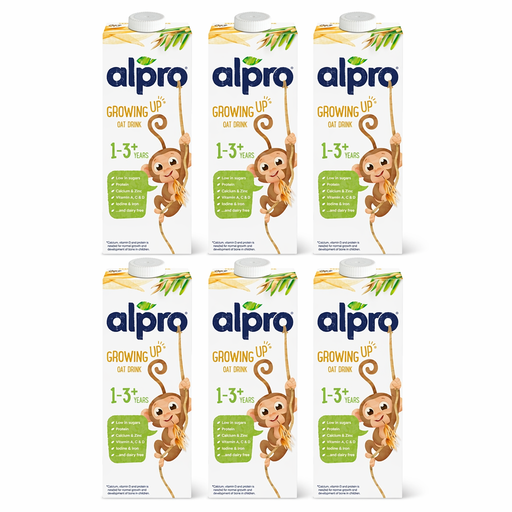
Alpro Oat Growing Up Drink
For a child aged 1–3 whose agreed diet includes an oat-based alternative, this age-labelled drink is worth comparing with other fortified options. The product description lists 120mg calcium per 100ml, iodine among its ingredients and 1.8g protein per 100ml. Check the current carton’s full allergen statement and gluten-related suitability against the child’s plan; it is not a main-milk substitute for a baby under one.
View on Joybuy
 No image available
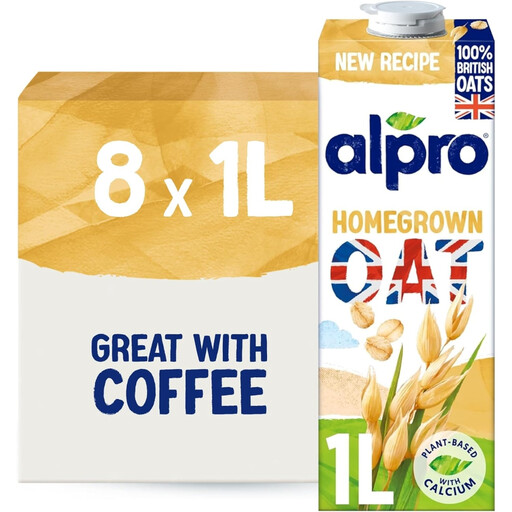
Alpro Oat Original Long Life Drink, 8 × 1L
This long-life, dairy-free oat drink is an option to assess for a child over one whose agreed diet includes oats. Its description lists calcium, iodine and vitamins B2, B12 and D2, alongside 45 kcal and 0.8g protein per 100ml. Check the current carton for nutrient amounts, milk-allergy suitability and gluten-related warnings; the listing is for eight 1L cartons.
View on Joybuy
 No image available
Alpro Oat No Sugars Long Life Drink, 8 × 1L
For a child over one whose agreed diet includes oat drink, this long-life option lists calcium and iodine among its ingredients. Its product information gives conflicting descriptions of sugars, so check the current carton if that distinction matters to you. Confirm the full milk-allergen statement, gluten-related suitability and nutrient values for this eight-carton pack.
View on Joybuy
 No image available
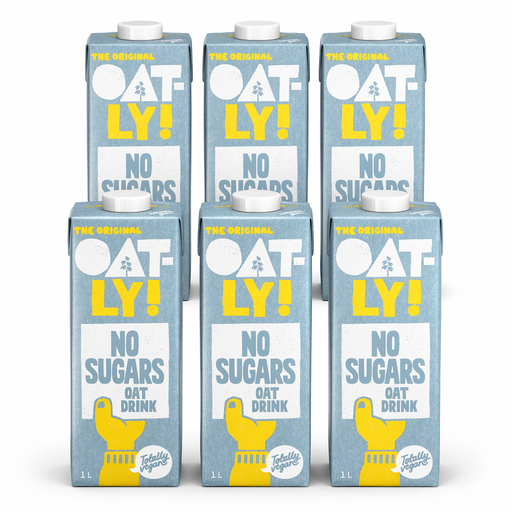
Oatly No Sugars Oat Drink 1L
The product description specifies gluten-free oats, a detail to check against the current carton if the child has a documented gluten-related restriction. Before sending it to nursery, confirm that the exact drink meets the child’s milk-allergy plan. Also check calcium and iodine fortification before treating it as a regular dairy replacement.
View on Joybuy
 No image available
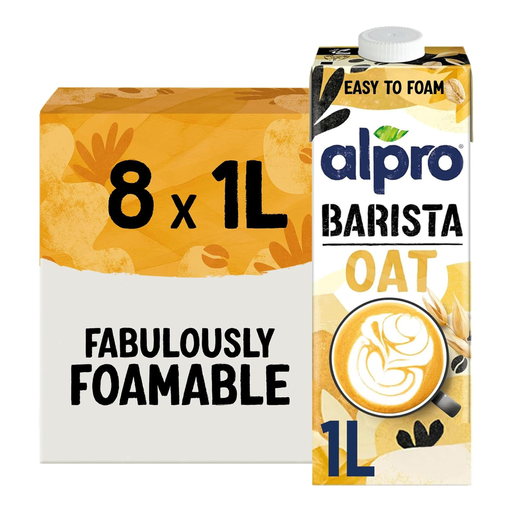
Alpro Barista Oat Long Life Drink, 8 × 1L
This long-life oat drink is described as dairy-free and lists calcium and vitamins B2 and D2. Its nutrition information gives 43 kcal and 0.8g protein per 100ml. If it will regularly replace dairy, check iodine on the current carton, as well as the full milk-allergen statement and any gluten-related warnings; the listing is for eight 1L cartons.
View on Joybuy
Nursery lunch questions
Can oat drink replace formula for a baby under 12 months?
No, not as the baby’s main milk drink. NHS guidance says to continue breast milk or first infant formula until at least age one; a baby with cow’s-milk allergy may need a suitable formula advised by a healthcare professional. Frimley Healthier Together’s NHS guidance distinguishes using a plant-based alternative in cooking from using it as a main milk drink.
What should I check if oat drink regularly replaces dairy after age one?
Check calcium and iodine on the exact carton, alongside the child’s age, allergens and wider diet. Frimley Healthier Together’s NHS milk-free diet guidance advises fortified plant-based alternatives, particularly at least 120mg calcium per 100ml and iodine. Follow the child’s clinician or dietitian plan where their diet is medically restricted.
Does “vegan” mean suitable for a child with milk allergy?
No. Check the current product’s full allergen and suitability statements against the child’s allergy plan. M&S, for example, says its Barista Oat Drink is not suitable for people with milk allergy.
Is every oat drink suitable for coeliac disease or wheat allergy?
No. Check the precise product against the child’s documented dietary requirements: Minor Figures labels Everyday Oat gluten free, while M&S says its Barista and Only 3 Ingredients oat drinks are not suitable for coeliacs. The current carton and any wheat-allergy statement matter too.
What should the nursery know before I send an oat drink?
Give staff the exact product details, its current ingredient and allergen information, and the child’s dietary or allergy plan; follow the setting’s written arrangements for identifying, serving and storing it. England’s Department for Education early-years guidance says settings must take food allergies and intolerances seriously. Confirm the procedure with your own nursery rather than assuming every setting uses the same rules.


