Parents packing lunch for a child aged 1 or over
Choose between a sealed small carton and a larger long-life pack by checking what the nursery accepts, how the drink will be served and what happens to any opened carton.


For a child aged at least 1, choose a nursery-lunch oat drink by checking the setting’s drinks and allergy rules, the carton’s age guidance, fortification and storage instructions—not by relying on “filtered” wording. A sealed child-sized carton avoids handling the remainder of a 1L pack at nursery; a larger long-life carton makes more sense when decanting is permitted and the opened drink can be refrigerated. North East London NHS Foundation Trust advises that plant-based drinks should not replace breast milk or formula as the main milk drink before age 1.
Choose between a sealed small carton and a larger long-life pack by checking what the nursery accepts, how the drink will be served and what happens to any opened carton.
An oat drink still needs its own allergen check. Read the exact carton for oats and any gluten, milk, wheat or soya cautions, then follow the nursery’s allergy arrangements.
Age statements and the child’s wider diet matter more when an oat drink would replace a regular milk drink. For growth concerns, restricted diets or multiple allergies, seek advice from the child’s clinician or paediatric dietitian.
Start with the child’s age and the nursery’s rules, then compare the exact cartons for nutrition, allergens and handling after opening.
| Priority | What to check | Your needs |
|---|---|---|
| Age and use | Read the product’s age statement and any restriction on use as a main milk alternative. North East London NHS Foundation Trust says plant-based drinks should not replace breast milk or formula as the main milk drink before age 1. | I’m choosing an occasional packed drink, or I need to know whether it could form part of my child’s regular milk intake. |
| Fortification | Compare declared calcium per 100ml and check for iodine. Kingston and Richmond NHS Foundation Trust gives 120mg calcium per 100ml as an ideal figure when choosing dairy-free products for a child; consider the drink alongside the whole diet. | With dairy excluded, I want to compare the nutrients on the actual cartons rather than assume all oat drinks are fortified alike. |
| Allergens | Read the ingredients, allergen panel and cross-contact cautions for the exact variant, including oats and any milk, wheat or soya statements. Confirm the nursery’s arrangements before packing it. | My child has an allergy or coeliac-related restriction, so a vegan label alone cannot settle the choice. |
| Pack and storage | Check whether the unopened carton may be kept at room temperature, whether the nursery accepts a sealed carton or decanted drink, and how the product must be stored after opening. | A small sealed pack could suit lunch; with a 1L carton, I need a plan for the remainder. |
| “Filtered” wording | If a carton uses the word “filtered”, check what the maker means by it. Still read the age, nutrition, allergen and storage information separately. | I’m looking for a nursery-suitable drink, not treating a processing word as an answer to those checks. |
North East London NHS Foundation Trust distinguishes drinks used during weaning from a main milk drink before age 1. A drink labelled for children aged 1 or over may also have a separate restriction on use as a main milk alternative.
Check the child’s age, the intended use and the exact product’s wording. Seek clinical or paediatric dietetic advice for growth concerns, restricted diets or multiple allergies.
Allergen statements differ between oat drinks. Marks & Spencer says its Plant Kitchen Whole Oat Drink is unsuitable for people with milk or wheat allergy; a gluten-free oat drink can still contain oats.
Read the current carton and share its allergen information with the nursery as required. Recheck when changing brands or variants.
Long-life describes storage before opening. Tesco Long Life Oat Original, for example, instructs customers to refrigerate it after opening and use it within 5 days.
For a larger pack, follow its own refrigeration and use-within directions rather than leaving the opened remainder in a lunchbox.
Products differ in their declared fortification. When dairy is excluded, that difference matters to a comparison of the drinks available to a child.
Check calcium per 100ml and whether iodine is declared. Kingston and Richmond NHS Foundation Trust advises looking for fortified dairy-free products and considering the child’s wider diet.
These examples show why pack format and label cautions need checking product by product; a brand name does not establish nursery acceptance or allergy suitability.
Oatly describes its 250ml Oat Drink as a lunchbox-friendly carton and lists calcium, iodine, vitamin D, riboflavin and B12.
Its oat-drink range includes long-life household cartons and a separately named Growing Up drink.
Everyday Oat is a 1L oat drink described by Minor Figures as gluten free and fortified.
Tesco Long Life Oat Original is a fortified UHT drink in a 1L carton.
Sainsbury's lists both a standard long-life oat drink and a separate 1+ Years oat drink.
M&S Plant Kitchen Whole Oat Drink is a fortified ambient-carton option.
These Alpro options cover a growing-up variant and larger-format long-life oat drinks. Compare their exact cartons with the child’s needs and the nursery’s rules; none should be assumed to be a sealed child-sized lunch carton.
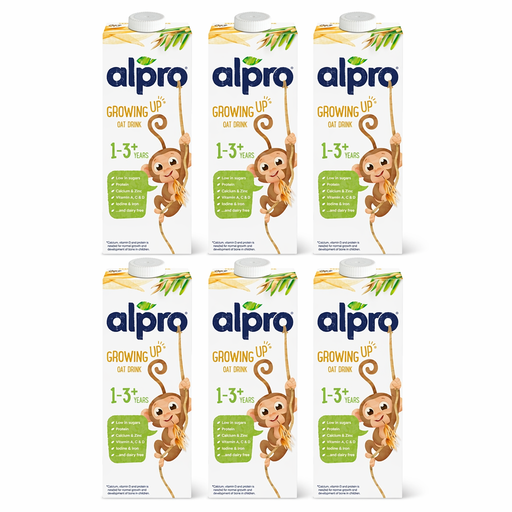 No image available
The growing-up variant is worth checking if an age-labelled drink is needed for a child aged at least 1. Confirm the exact carton’s age and main-milk wording, pack size, allergen information and opened-carton storage before using it for nursery lunch.
 No image available
The 8 x 1L format is a household-carton option rather than a sealed single serving for nursery. Check whether decanting is accepted, follow the opened-carton directions and read the current sugar, age and allergen statements before comparing it with another variant.
 No image available
This 8 x 1L long-life format suits consideration for household use or nursery-approved decanting, not as a sealed single-serve carton. Joybuy’s listing declares calcium, iodine and vitamins B2, B12 and D2; check the carton’s age, allergen and opened-storage instructions for the intended child.
Ask the individual nursery before packing one: its rules may cover drinks brought from home, storage and allergy procedures. In England, Department for Education early-years nutrition guidance applies to providers, but it does not mean every setting accepts every packed oat drink.
No, not as the main milk drink. North East London NHS Foundation Trust says plant-based drinks may be introduced during weaning from 6 months but should not replace breast milk or formula as the main milk drink until age 1.
Check age and main-milk wording, calcium and iodine declarations, allergens and storage directions on the exact carton. When dairy is being replaced, Kingston and Richmond NHS Foundation Trust advises choosing fortified products and gives 120mg calcium per 100ml as an ideal figure to look for; the child’s wider diet still matters.
No. M&S says its Plant Kitchen Whole Oat Drink is unsuitable for people with milk or wheat allergy and for coeliacs, while Minor Figures Everyday Oat is labelled gluten free but contains oats. Use the allergen information on the exact current carton and follow the child’s clinical and nursery arrangements.
Follow the specific carton’s after-opening instructions rather than relying on its long-life description. Tesco Long Life Oat Original, for example, instructs refrigeration after opening and use within 5 days; check how the nursery would store and serve any decanted drink.