Parents packing lunch for a child aged 1 or over
Consider whether the oat drink is an occasional lunch item or a regular part of the child’s milk intake. That distinction matters more than a low-fat claim when you compare cartons.


From age 1, an unsweetened, calcium-fortified oat drink can be part of a nursery lunch alongside a varied diet, but low fat alone is not a reason to choose it, according to NHS guidance. If the drink is a regular milk alternative, or the child has dietary restrictions, check the age statement, nutrition and allergen label against the child’s individual feeding and nursery arrangements.
Consider whether the oat drink is an occasional lunch item or a regular part of the child’s milk intake. That distinction matters more than a low-fat claim when you compare cartons.
Check the child’s established feeding and allergy plan before choosing a carton. A dairy-free description does not establish that a drink meets the child’s nutritional needs or every allergy requirement.
Look beyond the sugar wording to energy, fat, protein and declared fortification per 100ml. A growing-up drink and a lower-fat drink may serve different roles in a child’s diet.
Start with the child’s age and how often the drink will be used, then compare nutrition, allergens and the practical instructions on the exact carton.
| Priority | What to check | Your needs |
|---|---|---|
| Age and dietary role | Check the pack’s age statement. NHS-linked guidance says plant-based drinks must not replace breast milk or formula as the main milk drink before age 1; for an older child, establish whether the carton is an occasional lunch drink or a regular milk alternative. | Is this just one drink with lunch, or will my child rely on it regularly instead of cow’s milk? |
| Fat and energy | Compare energy, fat and protein using the same per-100ml basis. Consider the figures alongside the rest of the child’s diet rather than treating a lower fat value as an automatic advantage. | I’m looking at a lower-fat carton, but I also need to consider what else my child eats and any feeding advice that applies to them. |
| Fortification | Read the nutrition panel for calcium and iodine amounts, particularly if the drink is used regularly. Check whether an unfortified product carries an age-related warning about use as a dairy replacement. | If this will often replace a milk drink, I want to compare the nutrients declared on each carton, not just the length of its ingredient list. |
| Allergens | Check ingredients, allergen declarations and precautionary wording against the child’s plan and the nursery’s arrangements. The Food Standards Agency notes that a gluten-free designation does not remove oat allergen considerations. | I need the exact carton to fit my child’s allergy plan; an oat-based or dairy-free description is not enough on its own. |
| Sugars and storage | Compare the sugar declaration on the current carton rather than relying on the product name alone. Check whether it can be stored unopened at room temperature and follow its instructions after opening. | I’d like to avoid a sweetened drink and make sure the carton can be stored and handled as the nursery requires. |
Young children need fat as part of their diet, according to NHS-linked feeding guidance. A lower-fat drink needs particular consideration when it contributes substantially to daily intake or growth and dietary restrictions are concerns.
Establish the drink’s role first, then compare energy, fat, protein and fortification per 100ml.
Some oat drinks are unfortified. M&S states that its Only 3 Ingredients Oat Drink is not recommended as a dairy replacement for children under 36 months.
If an oat drink will be used regularly, check its age statement and declared calcium and iodine rather than judging it by ingredient count.
Allergen information differs by product. M&S states that its Semi Oat Drink is not suitable for people with milk or wheat allergy, while the Food Standards Agency identifies oats as an allergen in their own right.
Check the current carton, including precautionary wording, against the child’s individual plan and the nursery’s arrangements.
A coffee-focused product is not necessarily formulated for the role the drink will play in a nursery-aged child’s diet.
Compare its full nutrition and allergen label with fortified standard and age-labelled oat drinks before deciding whether it fits the child’s plan.
These named products show why the intended use and the exact label matter more than the brand name alone.
Alpro lists both an Oat No Sugars drink and an Oat Growing Up 1-3+ drink, making their different nutrition panels useful to compare.
Oatly’s semi oat drink and Fibre Low-Cal Edition illustrate different product aims within its range.
M&S lists a fortified Semi Oat Drink and a separate unfortified Only 3 Ingredients Oat Drink.
Minor Figures presents Barista Oat as a drink for coffee use, rather than as a nursery-focused product.
Sainsbury’s lists an Alpro Oat No Sugar chilled drink; this is a retailer listing of an Alpro product, not a description of Sainsbury’s own-label range.
These two oat drinks offer lower-fat options to examine for a nursery lunch. If either will be used as a regular milk alternative, compare its current carton with the child’s feeding and allergy arrangements before choosing.
 No image available
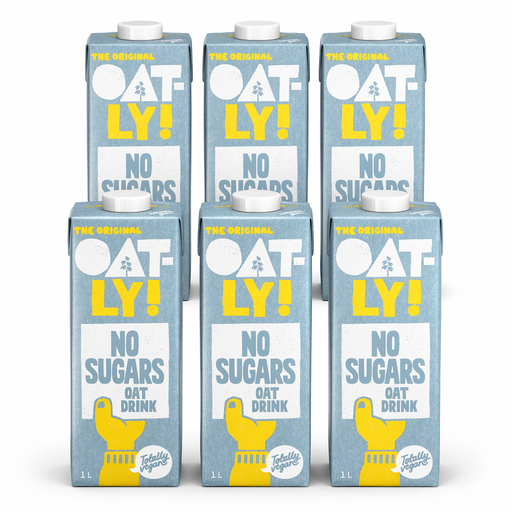
One option to examine when an oat drink is part of lunch rather than a replacement for a main milk feed. Its listed nutrition gives 1.5g fat and 0g sugars per 100ml; the ingredients name calcium and potassium iodide, while the description identifies oats as an allergen. Check the current carton for calcium and iodine amounts and the full allergen wording if it will be used regularly. The listing says to refrigerate after opening and use within five days.
 No image available
Another lower-fat option to compare for lunch: this listing gives 1.2g fat per 100ml and names calcium and iodine ingredients. Check the current carton’s sugar declaration, as the listing gives conflicting descriptions of its sugars. Also check its calcium and iodine amounts and full allergen wording; the listing identifies oats among cereals containing gluten. It describes a long-life drink that can be stored unopened at room temperature, with refrigeration instructions after opening.
No, not as the main milk drink. NHS-linked feeding guidance says plant-based drinks may be introduced in food during weaning, but must not replace breast milk or formula as the main milk drink before age 1.
No. NHS-linked feeding guidance notes that young children need fat in their diet. Consider how much the drink contributes to the child’s intake and any individual growth or dietary concerns before making low fat the deciding factor.
For a child aged 1 or over, check the age statement, ingredients and per-100ml nutrition panel, particularly the declared calcium and iodine. Consider those details alongside the rest of the child’s diet and any individual feeding advice.
No. Check the exact carton’s ingredients, allergen declaration and precautionary wording against the child’s plan and the nursery’s arrangements. The Food Standards Agency notes that oats remain an allergen even where a product is designated gluten-free; M&S also warns that its Semi Oat Drink is not suitable for people with milk or wheat allergy.
Check the specific product rather than assuming an oat drink serves that role. M&S states that its unfortified Only 3 Ingredients Oat Drink is not recommended as a dairy replacement for children under 36 months.