What should you check first?
Decide whether the oat drink is an occasional lunch ingredient or a regular dairy alternative, then check the child’s age, the carton’s nutrients and its allergen wording.
Organic-first oat drink
Consider it when: Organic ingredients are the priority and the drink is not being relied on to provide the nutrients usually sought from a fortified dairy alternative.
Trade-off: The reviewed Oatly Organic and Alpro Organic ingredient information does not list added calcium or iodine; check the exact carton rather than assuming organic means fortified.
Fortified oat drink
Consider it when: A child over one regularly avoids cow’s milk and the drink is intended to contribute to their usual diet.
Trade-off: Fortification does not establish organic status, and an oat drink is not nutritionally identical to cow’s milk. Follow any individual dietetic or allergy plan.
| Priority |
What to check |
Your needs |
| Organic status |
Check the exact carton for its organic claim and ingredient list. Separately read the nutrition panel for added nutrients. |
I prefer organic ingredients, but I do not want to mistake that label for evidence of fortification. |
| Fortification |
Look for added calcium and iodine and check which vitamins are listed. In its guidance for children with cow’s-milk allergy, Black Country NHS specifies at least 120mg calcium per 100ml for a plant-based dairy alternative. |
If my child regularly avoids cow’s milk, I need to know what this particular drink contributes, not just that it is oat-based. |
| Age and use |
Distinguish a recipe ingredient from a main drink. Black Country NHS guidance says a plant-based alternative should not replace breast milk or infant formula as the main drink before age one. |
For a child under one, I need to keep the main-drink advice separate from questions about using an ingredient in food. |
| Allergen information |
Read the current ingredients and precautionary wording for the exact product, including oat and gluten information. Give the nursery the details required by the child’s agreed dietary plan. |
A dairy-free description alone does not answer every allergy question for the child or the setting. |
Brand and product-line references
These examples illustrate different labels and formulations; a brand name alone does not establish what is in a particular carton.
Oatly
Oatly’s Organic Oat Drink is an organic-ingredient example, distinct from the Organic Barista pack in the Joybuy selection below.
- Oatly lists water, 10% organic oats and sea salt for its Organic Oat Drink and describes it as made without milk or soy.
- Do not assume that its organic formulation provides the fortification needed for a regular dairy alternative; check the carton and the child’s wider diet.
Alpro
Alpro’s Organic Oat and Oat Original illustrate why the product line matters more than the brand when comparing organic status with fortification.
- Alpro lists 120mg calcium and 22.5µg iodine per 100ml, plus vitamins B2 and D2, for Oat Original.
- Its Organic Oat ingredient list does not name those added nutrients. Check the precise variant rather than transferring Oat Original’s figures to it.
Minor Figures
Minor Figures describes its Organic Barista Oat as a coffee-oriented organic oat drink.
- The product description identifies an organic barista formulation.
- Minor Figures states that this product may contain gluten. Check its current nutrient and allergen information before considering it for a nursery lunch.
Sainsbury's
Sainsbury's Oat Drink is a fortified own-label example, rather than an established organic choice.
- The Sainsbury's product information lists 120mg calcium and 22.5µg iodine per 100ml, with vitamins D and B12.
- Check the exact carton for its current formulation, organic status and allergen wording.
M&S
M&S Plant Kitchen Whole Oat Drink is another named oat-drink option to assess by its own carton.
- Check the product’s ingredient and nutrition panels against the role it would play in the child’s lunch.
- Do not infer organic certification, fortification amounts or allergy suitability from the Plant Kitchen name.
Oat drinks on Joybuy
These packs include an organic-labelled oat drink and other Alpro oat drinks. For a nursery lunch, compare the exact carton’s fortification, age-appropriate use and allergen wording rather than treating every pack as interchangeable.
 No image available
Alpro Oat Original Long Life Drink, 8 × 1L
For a child over one who regularly needs a dairy alternative, check this Oat Original pack against the child’s dietary plan. Alpro’s Oat Original 1L product information lists 120mg calcium and 22.5µg iodine per 100ml, plus vitamins B2 and D2; confirm the current carton’s formulation and allergen wording before sending it to nursery.
View on Joybuy
 No image available
Alpro Oat No Sugars Long Life Drink, 8 × 1L
If considering this pack for regular dairy-free lunches after age one, check its current calcium and iodine values per 100ml and its allergen statement. Read the carton’s sugar information rather than drawing a conclusion about its nutrition from the product name alone.
View on Joybuy
 No image available
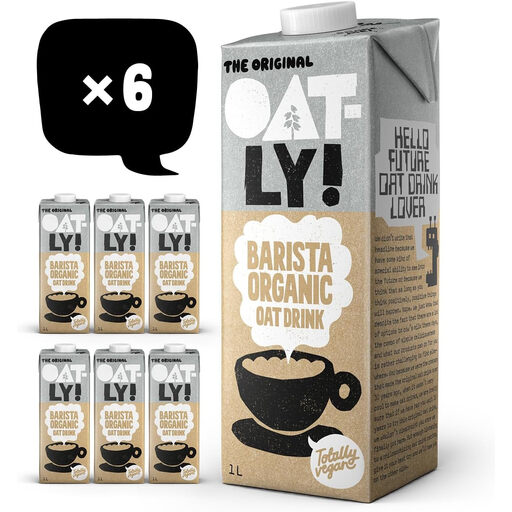
Oatly Organic Barista Oat Drink, 6 × 1L
This organic-labelled barista pack is an option to assess when organic ingredients are the priority. Its name does not establish calcium, iodine or vitamin fortification: check the current carton if the drink would regularly replace dairy, and review its allergen wording with the nursery.
View on Joybuy
 No image available
Alpro Barista Oat Long Life Drink, 8 × 1L
This barista-labelled oat drink has a different stated use from an everyday nursery drink. If considering it for regular dairy-free use after age one, check the exact carton’s calcium and iodine figures and allergen statement against the child’s dietary plan.
View on Joybuy
Nursery-lunch questions
Can oat drink replace breast milk or infant formula before age one?
No. Black Country NHS guidance says breast milk or infant formula should remain the main drink up to one year; it distinguishes this from using a plant-based alternative in cooking from around six months. Follow the child’s clinician or dietitian if they use prescribed formula or have a medical feeding plan.
Does an oat drink always contain milk?
No. The reviewed Oatly Organic and Alpro Organic product information describes those specific drinks as dairy-free. Check the current ingredients and precautionary allergen statement of the exact carton going to nursery rather than applying that description to every oat drink.
Why check fortification if an oat drink is organic?
Organic status does not establish added calcium or iodine. When a child over one regularly avoids dairy, Black Country NHS guidance recommends a fortified plant-based alternative and specifies at least 120mg calcium per 100ml in its cow’s-milk-allergy guidance. Compare that guidance with the exact carton and the child’s wider dietary plan.
What information should I give a nursery in England?
Give the setting the exact product’s current ingredients and allergen information, along with any diagnosed allergy, intolerance or agreed dietary plan. Department for Education guidance for early-years providers in England says settings must obtain, record and act on children’s special dietary requirements before they attend.
Is gluten-free oat drink suitable for someone with an oat allergy?
Not automatically. The Food Standards Agency distinguishes oats from gluten: oats still matter as an allergen even if a product is labelled gluten-free. Check the exact product and follow the child’s allergy plan.


