Choose an organic oat drink for lunch when its organic status and ingredients matter more to you than added nutrients: Oatly Organic Oat Drink and Plenish Organic Oat Drink both list water, organic oats and salt. If you use oat drink regularly instead of dairy and need the drink itself to provide added calcium, iodine or vitamins, compare fortified cartons too, even if they are not organic. Check gluten-free labelling separately where required; it does not remove the oat allergen.
Who is choosing an oat drink?
Organic-first lunch shoppers
If you want oat drink with cereal, in a smoothie or hot drink, or for cooking, compare organic status and the ingredient list. A short list may suit your preference, but it does not tell you whether nutrients have been added.
People regularly replacing dairy
If oat drink frequently takes the place of dairy, look beyond the organic claim. Compare cartons for added calcium, iodine, vitamin D and B12 according to what you need the drink to contribute.
Shoppers who need gluten-free labelling
Look for an explicit gluten-free claim on the particular carton rather than assuming all oat drinks qualify. The Food Standards Agency distinguishes gluten-free oats from oat allergy: oats remain an allergen.
What should you check first?
Decide whether organic ingredients or added nutrients are the stronger requirement for your lunch use, then check the particular carton for allergens and the details that matter to you.
| Priority |
What to check |
Your needs |
| Organic ingredients |
Look for an organic label, then read the ingredients for oats, oils and other additions. UK government guidance says food labelled organic must meet organic production rules, including a requirement that at least 95% of its agricultural ingredients are organic. |
I want an organic drink for cereal, a smoothie or cooking, and I care which ingredients make up the carton. |
| Added nutrients |
Check the carton for added calcium, iodine, vitamin D and B12 rather than treating organic status as a nutrition claim. The British Dietetic Association advocates iodine fortification in staple UK milk alternatives; Marks & Spencer lists these four nutrients in its non-organic Plant Kitchen Whole Oat Drink. |
If oat drink regularly replaces dairy for me, I want to know whether the drink itself contributes the added nutrients I am looking for. |
| Gluten and oats |
Confirm an explicit gluten-free label if you require one, and read the oat-allergen declaration. The Food Standards Agency says gluten-free food must contain no more than 20 mg/kg gluten; that limit does not make oats suitable for someone with an oat allergy. |
I need to distinguish a gluten-free oat drink from one that contains no oats, because those are different requirements. |
| Nutrition panel |
Compare protein, sugars, fat and energy using the same quantity, such as per 100 ml. Oatly lists 1.1 g protein per 100 ml for its Organic Oat Drink; that figure describes that product, not every organic oat drink or Oatly's barista variant. |
I want to know what the drink contributes alongside lunch rather than assuming it serves the same purpose as the rest of the meal. |
| Main use |
Choose a carton intended for your usual use, whether drinking, cooking or making coffee. Check the storage instructions for that specific product once it is opened. |
A barista drink appeals to me for coffee with lunch, while an everyday carton may make more sense for cereal or cooking. |
Which assumptions can cause problems?
-
Assuming organic means fortified
An organic claim describes how a product is produced and labelled; it does not establish that calcium, iodine or vitamins have been added. The British Dietetic Association highlights iodine fortification as a consideration for plant-based milk alternatives.
If oat drink regularly replaces dairy and you need added nutrients from the drink, read its nutrition and ingredients information before choosing between organic and fortified options.
-
Confusing gluten-free with oat-free
A gluten-free oat drink still contains oats. The Food Standards Agency identifies oats as an allergen even when a food meets the gluten-free limit.
For an oat allergy, avoid oat drinks. If you require a gluten-free product, check that the current carton carries that specific claim.
-
Choosing a barista drink for a different purpose
Minor Figures positions its Organic Barista Oat for coffee and lists 0.7 g protein per 200 ml; it also states that the product may contain gluten. Its coffee-focused positioning does not answer separate nutrition or allergen requirements.
Choose a barista variant for its intended hot-drink use, then check its nutrition panel and allergen statement independently.
-
Using an online listing instead of the carton
Allergen declarations, nutrient additions and instructions after opening are product-specific. A listing for one Oatly organic drink does not establish the instructions for another Oatly variant.
Read the current carton before purchase and use, particularly when gluten-free status, allergens or added nutrients affect your choice.
Brand and product-line references
These examples refer to particular UK product lines, not every drink made by each brand; their inclusion does not indicate Joybuy availability.
Oatly
Oatly Organic Oat Drink is a general-use organic carton with water, organic oats and sea salt in its listed ingredients.
- Oatly lists organic oats at 10% and protein at 1.1 g per 100 ml for this product.
- Check its added-nutrient information separately if the drink is replacing dairy regularly. These figures do not describe Oatly Organic Barista Oat Drink.
Alpro
Sainsbury's lists Alpro Organic Oat No Sugars as a long-life organic oat drink.
- The retailer lists 0 g sugars and 34 kcal per 100 ml for this variant.
- Check the current carton for its full ingredients, allergens and any added nutrients relevant to your choice.
Minor Figures
Minor Figures positions its Organic Barista Oat for coffee preparation.
- The manufacturer lists organic oats and organic rapeseed oil among its ingredients.
- The manufacturer states that it may contain gluten and lists 0.7 g protein per 200 ml serving.
Plenish
Plenish Organic Oat Drink is an option for shoppers seeking an organic drink with a short listed formulation.
- Sainsbury's lists water, organic gluten-free oats at 10% and sea salt.
- Its gluten-free oat ingredients do not make it suitable for someone with an oat allergy; check the current pack for all allergen information.
Rude Health
The Rude Health oat drink listed by Sainsbury's is an organic, gluten-free-labelled option with oil in its formulation.
- The listed ingredients include organic gluten-free oats at 11% and organic cold-pressed sunflower oil.
- If you prefer a water-oats-salt ingredient list, compare this carton with simpler formulations.
M&S Plant Kitchen
Whole Oat Drink is a non-organic reference for shoppers comparing added nutrients with an organic preference.
- Marks & Spencer lists added calcium, iodine, vitamin D and vitamin B12.
- Marks & Spencer states that this product is not suitable for people with coeliac disease or a milk allergy.
Joybuy oat-drink options
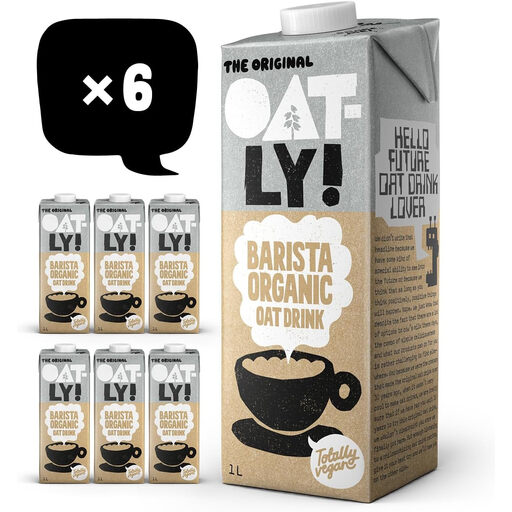
This organic barista oat drink is an option for a hot drink alongside lunch; assess its carton separately if your main use is cooking or you need particular allergen or added-nutrient information.
 No image available
Oatly Organic Barista Oat Drink 6 × 1 L
An organic barista oat drink for a hot drink alongside lunch, supplied as six 1 L cartons. If you require gluten-free labelling or added calcium, iodine, vitamin D or B12, check those details on the current carton.
View on Joybuy
Questions about organic oat drinks
Does organic oat drink have the same nutrients as dairy milk?
Organic status does not establish a drink's nutrient content or whether nutrients have been added. If oat drink regularly replaces dairy and you need it to contribute calcium, iodine, vitamin D or B12, check the individual carton; the British Dietetic Association advocates iodine fortification in staple UK milk alternatives.
How do I check an organic claim on a UK oat drink?
Look for the organic designation on the product and check its labelling rather than relying on the word “plant-based”. UK government guidance says food labelled organic must meet organic production rules and contain at least 95% organic agricultural ingredients.
Can someone who needs gluten-free food choose any organic oat drink?
No. Check that the particular carton is labelled gluten-free. The Food Standards Agency says gluten-free food must contain no more than 20 mg/kg gluten; an organic claim is a different requirement.
Is a gluten-free oat drink suitable for someone with an oat allergy?
No. Gluten-free labelling concerns gluten content, not the removal of oats. The Food Standards Agency says oats remain an allergen in gluten-free foods.
How should I keep long-life oat drink after opening?
Follow the instructions on the particular carton. For example, Sainsbury's listing for Oatly Organic Oat Drink 1 L says to refrigerate it after opening and use it within approximately five days; do not apply that period to other products or variants without checking their labels.


