For back-to-school breakfasts, compare oat drinks per 100ml rather than assuming they have the same fat or sugar content. Tesco Oat Drink declares 1.2g fat and 3.2g sugars per 100ml, while Alpro UK lists 1.5g fat and 0g sugars for Alpro Oat No Sugars. If a child aged 1 to 3 needs a plant drink as their main milk replacement, follow individual dietary advice rather than choosing on fat alone: NHS dietetic guidance places fortified oat drinks second among the options it discusses because of their lower protein content and sugars arising from oat processing.
Who is choosing an oat drink?
Households planning school breakfasts
If oat drink is going into cereal, porridge or smoothies, compare fat and sugars on the same per-100ml basis. Check the carton’s fortification and allergen statement too, particularly if it will be used regularly.
Families managing a child’s milk-free diet
Check the exact product for milk, wheat, soya and oat or gluten warnings against the child’s needs. For a child aged 1 to 3 using a plant drink as their main milk replacement, NHS dietetic guidance makes nutrition and individual suitability more important than a low-fat preference.
Households comparing fat and sugars
Alpro UK lists 1.5g fat and 0g sugars per 100ml for Alpro Oat No Sugars. That combination may matter more to you than selecting solely by the lowest fat figure; compare the nutrition panel on the pack you intend to buy.
What should you compare?
Start with the per-100ml nutrition panel, then consider the drink’s role in the child’s diet and the exact carton’s allergen information.
| Priority | What to check | Your needs |
|---|
| Fat and sugars |
Compare total fat and sugars per 100ml, not different serving sizes. Tesco lists 1.2g fat and 3.2g sugars; Sainsbury's lists 1.3g fat and 4.2g sugars; Alpro UK lists 1.5g fat and 0g sugars for Oat No Sugars. |
I want a lower-fat drink for breakfast, but I also care whether the option I choose contains declared sugars. |
| Protein and use |
Check protein and energy per 100ml if a plant drink will replace milk regularly. For children aged 1 to 3 with cow's-milk protein allergy, NHS dietetic guidance describes fortified oat drinks as a second-choice option because of lower protein content and sugars arising from oat processing. |
If this will be a young child’s main milk drink, I need advice suited to that child’s diet—not just the lowest fat figure. |
| Fortification |
Look for declared calcium, iodine, vitamin D and vitamin B12 on the exact pack. NHS dietetic guidance identifies these nutrients when choosing a fortified plant-based milk alternative for a child with cow's-milk protein allergy. |
I want to know what the drink contributes when it takes the place of dairy in regular meals or drinks. |
| Allergens |
Read the current ingredients and allergy statement for oats or gluten, milk, wheat and soya. M&S says its Semi Oat Drink is unsuitable for people with milk allergy, wheat allergy or coeliac disease; Sainsbury's gives a soya-allergy warning for its Long Life Oat Drink. |
Where an allergy or coeliac disease matters, I need a decision about the specific carton, not oat drinks as a category. |
What is easy to overlook?
-
Assuming plant-based means suitable for every allergy
Suitability varies by product and condition. M&S says its Semi Oat Drink is unsuitable for people with milk allergy, wheat allergy or coeliac disease, while Sainsbury's warns that its Long Life Oat Drink is unsuitable for customers with soya allergy because of manufacturing methods.
Check the current carton against the child’s individual allergy needs and follow the school’s arrangements for food and drinks.
-
Choosing by fat alone
A lower fat figure does not establish a lower sugar figure. Tesco lists 1.2g fat and 3.2g sugars per 100ml for its Oat Drink; Alpro UK lists 1.5g fat and 0g sugars for Oat No Sugars.
Compare fat, sugars and protein using the same per-100ml basis before deciding which difference matters to your household.
-
Making a low-fat drink a young child’s default milk replacement
For children aged 1 to 3 with cow's-milk protein allergy, NHS dietetic guidance places fortified oat drinks second among the options it discusses because of lower protein content and sugars arising from oat processing. A fat figure cannot establish whether a drink meets an individual child’s dietary needs.
If a plant drink will be the child’s main milk replacement, seek individual dietary advice and check its protein, energy and fortification.
-
Using an online listing instead of the carton
The pack being served is the relevant place to check ingredients, nutrition and allergen warnings, particularly for an allergy or medically restricted diet.
Use listings to narrow your choices, then read the current carton before serving the drink or sending it to school.
Brand and product-line references
These examples refer to the named products, not every oat drink made by each brand. Their labels illustrate why fat, sugars and allergy information need separate checks.
Tesco
Tesco Oat Drink 1L is an own-label option for comparing declared fat and sugars.
- Tesco Groceries lists 1.2g fat, 3.2g sugars and 0.3g protein per 100ml.
- Its allergen information identifies cereals containing gluten; check the exact pack where this matters.
Sainsbury's
Sainsbury's Oat Drink 1L is another own-label product with a per-100ml nutrition panel.
- Sainsbury's lists 1.3g fat, 4.2g sugars and 0.7g protein per 100ml, alongside calcium, iodine and vitamin D values.
- The separate Sainsbury's Long Life Oat Drink page warns that product is unsuitable for customers with soya allergy due to manufacturing methods and unsuitable as a main milk drink alternative for children under 3. Check which product you have.
Alpro
Alpro Oat No Sugars offers a different balance of declared fat and sugars from the own-label examples above.
- Alpro UK lists 1.5g fat, 0g sugars, 0.8g protein, 120mg calcium and 22.6µg iodine per 100ml for Oat No Sugars.
- Its declared fat figure is higher than those of the named Tesco and Sainsbury's products; check the exact variant and pack rather than applying these figures to another Alpro listing.
Oatly
Oatly describes its Oat Drink Semi as suitable for drinking, cooking and hot drinks.
- Oatly states 1.5% fat and lists added calcium, iodine, vitamin D2, riboflavin and vitamin B12 for this product.
- Use the exact pack’s nutrition panel for a per-100ml sugar and protein comparison with other drinks.
M&S
M&S Semi Oat Drink shows why a plant-based description cannot replace a product-specific allergy check.
- M&S lists 1.5g fat, 3.3g sugars and 0.2g protein per 100g for Semi Oat Drink.
- M&S says this product is unsuitable for people with milk allergy, wheat allergy or coeliac disease.
Minor Figures
Minor Figures describes Everyday Oat as a fortified, gluten-free drink for uses including cereal and tea.
- Its published 200ml serving lists 4.3g fat and 2.1g protein.
- Compare serving sizes before setting those figures alongside another product’s per-100ml panel, and check the exact pack for individual dietary needs.
Oat drinks on Joybuy
These oat-drink listings include options for everyday breakfasts and a barista-style option for hot drinks. Check the exact pack when comparing nutrition: the Joybuy panel for its Alpro Oat No Sugars listing gives a different fat figure from the Alpro UK product page discussed above.
 Image unavailable
Alpro Oat No Sugars Long Life Drink, 8 × 1L
For breakfasts where both fat and declared sugars matter, Joybuy’s panel for this listing gives 1.2g fat, 0g sugars and 0.9g protein per 100ml. Its allergen information identifies oats as a cereal containing gluten. Check the current carton against the child’s dietary needs; do not substitute figures from Alpro UK’s differently stated product panel.
View on Joybuy
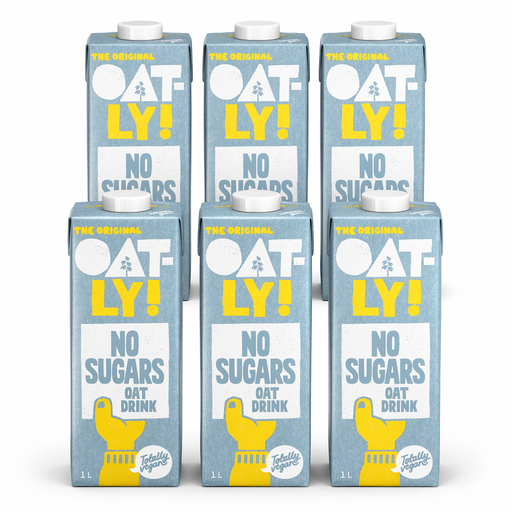 Image unavailable
Oatly No Sugars Oat Drink, 6 × 1L
A no-sugars variant to consider for cereal or drinks. Compare its current per-100ml fat, sugars and fortification details with the other packs you are considering, and check the oat-allergen information for the child concerned.
View on Joybuy
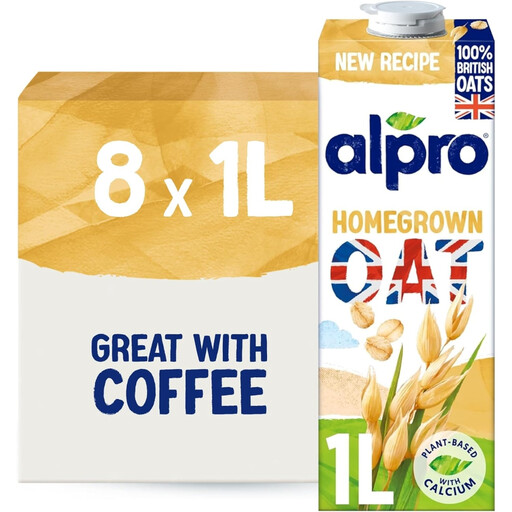 Image unavailable
Alpro Oat Original Long Life Drink, 8 × 1L
An original oat-drink variant for everyday use. If choosing between this and a no-sugars product, compare the current cartons’ sugars as well as fat per 100ml. Check the allergy statement before serving it to a child with specific dietary restrictions.
View on Joybuy
 Image unavailable
Alpro Barista Oat Long Life Drink, 8 × 1L
A barista-labelled variant to consider when hot drinks are part of the household’s routine. If it will also be used for school breakfasts, compare its per-100ml sugars and fat with an everyday oat drink; a no-added-sugars statement is not the same as 0g sugars.
View on Joybuy
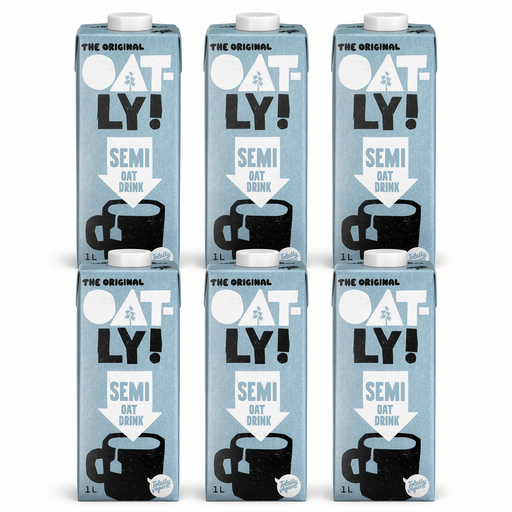 Image unavailable
Oatly Semi Oat Drink, listing marked 6 × 1L
A semi-labelled oat-drink listing to compare for everyday drinks. Confirm the variant and pack before buying: the listing title indicates six 1L cartons, while its description refers to a mini barista product. Check the current carton’s nutrition and oat-allergen information as well.
Purchase link unavailable
Oat drink questions
Does an oat drink automatically contain milk?
No, but a dairy-free or plant-based description does not establish suitability for every person with milk allergy. M&S says its Semi Oat Drink is unsuitable for people with milk allergy. Check the exact carton and follow the child’s allergy arrangements at school.
Can a lower-fat oat drink be a child’s main milk replacement?
Do not decide on fat alone for a child aged 1 to 3. NHS dietetic guidance for children with cow's-milk protein allergy places fortified oat drinks second among the options it discusses because of lower protein content and sugars arising from oat processing. Seek individual dietary advice if a plant drink will replace the child’s main milk drink.
What if a child has coeliac disease, wheat allergy or soya allergy?
Check the exact product’s current allergen statement. M&S says its Semi Oat Drink is unsuitable for people with wheat allergy or coeliac disease, while Sainsbury's says its Long Life Oat Drink is unsuitable for customers with soya allergy because of manufacturing methods. Neither warning establishes the suitability of a different oat drink.
What should I compare besides fat?
Compare sugars and protein on the same per-100ml basis, then consider what role the drink has in the diet. For a fortified plant-based milk alternative for a child with cow's-milk protein allergy, NHS dietetic guidance identifies calcium, iodine, vitamin D and vitamin B12 as nutrients to check.


