Families planning dairy-free lunches
If the drink is for a glass, cereal or cooking, check that the particular carton suits that use. Unopened storage and the instructions after opening also matter when lunches are prepared across several days.


For school-holiday lunches, choose an oat drink for how you will use it, then check the exact carton’s allergen information, fortification and storage instructions. If it will regularly replace dairy for a child, age and individual dietary needs matter; vegan or dairy-free wording alone does not establish suitability for a child with milk allergy or coeliac disease.
If the drink is for a glass, cereal or cooking, check that the particular carton suits that use. Unopened storage and the instructions after opening also matter when lunches are prepared across several days.
For a child with diagnosed cow’s-milk-protein allergy, check ingredients and precautionary allergen statements rather than relying on vegan wording. If the drink will replace dairy regularly, discuss the choice with the child’s dietitian or clinician.
Check the exact carton’s gluten claim and allergen information. An oat base does not, by itself, establish suitability for someone with coeliac disease or a cereal allergy.
Start with the child’s allergen requirements, then compare nutrition if the drink is replacing dairy regularly. Finally, check whether the carton’s storage instructions fit your lunch routine.
| Priority | What to check | Your needs |
|---|---|---|
| Allergens | Read the exact carton’s ingredients and precautionary statements. If gluten matters, check its own gluten-free claim and allergen information; the Food Standards Agency says vegan labelling is not a substitute for allergen labelling. | I’m buying for a child with an allergy, so a dairy-free or vegan claim cannot be my only check. |
| Fortification | Compare stated calcium, iodine and vitamin fortification with an unfortified option. Ashford and St Peter’s Hospitals NHS Foundation Trust identifies calcium and iodine as relevant in its guidance on milk alternatives for children with diagnosed cow’s-milk-protein allergy. | If this will regularly replace dairy for my child, I need to consider their age, overall diet and any professional advice—not assume that all oat drinks provide the same nutrients. |
| Storage | Check where the unopened carton may be kept, whether it needs refrigeration after opening and its stated use-within period. Follow the instructions for that product rather than another oat drink. | A cupboard-stored carton could suit our lunch planning, but I also need room in the fridge once it is open. |
| Intended use | Check whether the particular variant is described for drinking, cereal or cooking. A barista variant may be positioned chiefly for coffee; a flavoured variant may call for a separate look at its ingredients and nutrition label. | For lunch, I want a drink that fits how we will actually serve it, rather than choosing by the word “oat” alone. |
Vegan wording does not rule out allergen cross-contact. The Food Standards Agency says it should not be used in place of allergen labelling.
Read the current pack’s ingredients and precautionary statements, and follow the child’s allergy plan where one applies.
Plant-based wording does not establish gluten-free or coeliac suitability. Individual oat-drink labels can also carry restrictions relevant to wheat allergy.
Where a gluten-free product is required, check the claim and allergen information on the exact carton before serving.
A short ingredient list does not tell you whether a drink is fortified. Marks & Spencer says its Only 3 Ingredients Oat Drink is unfortified and is not recommended as a dairy replacement for children under 36 months.
If the drink will replace dairy regularly, compare the nutrition labels and seek individual dietetic advice for a child with diagnosed cow’s-milk-protein allergy.
Long-life storage instructions change after opening. Joybuy’s Alpro Oat Original Long Life listing, for example, says to refrigerate the opened carton and use it within five days.
Note when you open the carton and follow its own refrigeration and use-within instructions.
These product-line details can help narrow your checks; a brand name alone does not establish that a particular carton suits a child’s needs.
Its UK range includes everyday oat-drink variants as well as drinks positioned for coffee.
Its oat-drink range includes Original, No Sugars and Barista variants with different intended uses.
Barista Oat (Regenerative) is positioned primarily for coffee preparation.
Its oat-drink selection includes own-label and branded options.
Its oat drinks include both a short-ingredient-list option and a fortified Plant Kitchen variant.
These long-life oat-drink packs include everyday, flavoured and coffee-focused variants. Compare the exact carton’s allergen, nutrition and storage information before choosing one for a child’s lunch.
 No image available
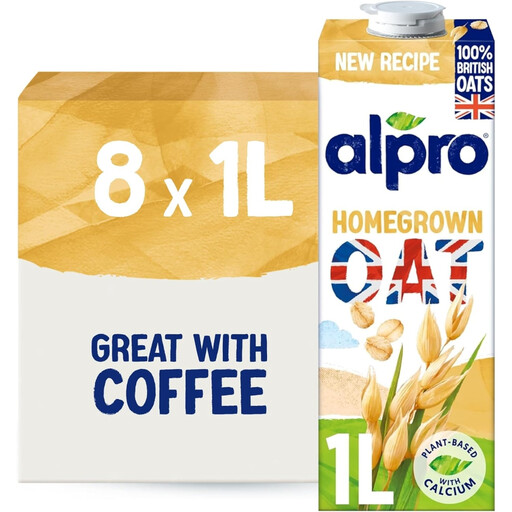
An Original variant to consider for everyday drinking or cereal. Its listing describes calcium, iodine and vitamins B2, B12 and D2, and says to refrigerate after opening and use within five days. It declares oats containing gluten; check the current carton’s full allergen information.
 No image available
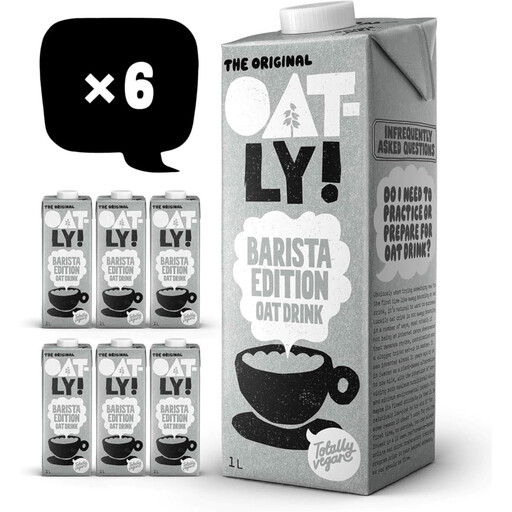
A barista variant to consider when the household also wants an oat drink for coffee. Check its own carton for lunch uses, allergens and opened-carton instructions. Do not treat an oat drink as a complete milk replacement for an infant or young child.
 No image available
A long-life variant labelled No Sugars. Check the current carton’s per 100ml nutrition panel when comparing sugars, as well as its allergen information and instructions for storage after opening.
 No image available
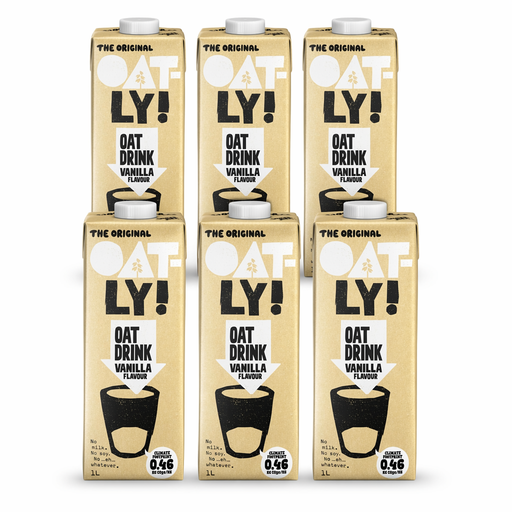
A vanilla-flavoured option to consider for a drink or cereal. Compare its ingredients and per 100ml nutrition with an unflavoured variant, and follow the exact carton’s unopened and opened storage instructions.
 No image available
A coffee-focused variant rather than an automatic substitute for an everyday lunch drink. If it will also be served to a child, compare its current nutrition, allergen and storage statements with the child’s needs.
No. The Food Standards Agency says vegan labelling should not be used in place of allergen labelling because of potential cross-contact. Check the exact carton’s ingredients and precautionary statements, and follow the child’s allergy plan or clinician’s advice.
No. Check the individual product’s gluten-free claim and allergen information rather than assuming an oat drink is suitable. Marks & Spencer, for example, labels its Only 3 Ingredients Oat Drink as unsuitable for coeliacs.
Check the exact product’s fortification and full nutrition information, alongside the child’s age and dietary needs. Ashford and St Peter’s Hospitals NHS Foundation Trust highlights calcium and iodine in guidance for children with diagnosed cow’s-milk-protein allergy; seek individual dietetic advice when choosing a replacement for such a child.
No—follow the carton’s instructions once it is open, even if it could be stored unopened at room temperature. Joybuy’s Alpro Oat Original Long Life listing says to refrigerate after opening and use within five days; another variant may have different instructions.
Do not assume so from the short ingredient list. Marks & Spencer says its Only 3 Ingredients Oat Drink is unfortified and is not recommended as a dairy replacement for children under 36 months. For a child who needs a milk-free replacement, discuss the appropriate product with a qualified clinician or dietitian.