People using oat drink every day
If you pour it into cereal, tea or smoothies, the amount used across the day matters alongside the carton’s nutrition panel. Compare energy and sugars per 100ml, then consider the serving you usually pour.


For everyday use, compare oat drinks per 100ml and by the amount you actually pour; a no-sugars label or a barista name does not settle the calorie comparison. If you need roughly six UK pints, plan for about 3.4 litres and check carton sizes and storage instructions rather than treating a six-litre case as the same quantity.
If you pour it into cereal, tea or smoothies, the amount used across the day matters alongside the carton’s nutrition panel. Compare energy and sugars per 100ml, then consider the serving you usually pour.
Six UK pints is approximately 3.4 litres. If one large container is not essential, compare carton quantities and check where they must be stored before and after opening.
A coffee-focused drink may suit your intended use, but compare its nutrition panel with an everyday oat drink if you also use it in cereal or other drinks.
Start with the nutrition panel for the amount you use, then check whether the carton’s format and storage instructions fit a roughly 3.4-litre household purchase.
| Priority | What to check | Your needs |
|---|---|---|
| Energy and portions | Compare kcal per 100ml, then calculate the amount in your usual pour. The NHS notes that a labelled portion may differ from yours. | I use oat drink more than once a day, so the amount going into each coffee, bowl or smoothie matters to me. |
| Sugars | Read the sugars figure per 100ml alongside energy. Alpro UK lists 0g sugars but 44 kcal per 100ml for its Oat No Sugars drink; the two measures answer different questions. | If I am choosing a no-sugars option, I still want to compare its calories with the particular alternative I would buy. |
| Fibre and fortification | Check fibre per 100ml and whether calcium, iodine, vitamin D and vitamin B12 are listed. The UK SACN/COT assessment says nutrient content and fortification vary considerably between plant-based drinks. | When oat drink is a frequent replacement for dairy in my shopping, I want to know what the specific carton contains. |
| Coffee use | Check whether the drink is intended for coffee and compare its nutrition panel with your everyday option. Follow the carton’s hot-drink instructions. | I make lattes or cappuccinos, but I do not want the barista label to stand in for a nutrition comparison. |
| Quantity and storage | Check total litres, not just the number of cartons. Six 1-litre cartons contain 6 litres, whereas six UK pints is approximately 3.4 litres; check instructions for opened cartons. | I need enough for the household without buying more than we can store and use as directed. |
| Allergens and suitability | Read the exact pack’s allergen and suitability statements. Marks & Spencer says its Only 3 Ingredients Oat Drink is not suitable for coeliacs or people with a wheat allergy. | If anyone in my household has an allergy or needs a drink for a young child, I need to check the specific product rather than the oat-drink category. |
Barista describes an intended coffee use, not an energy target. Marks & Spencer lists 65 kcal per 100g for its Plant Kitchen Barista Oat Drink, while Oatly lists 20 kcal per 100ml for its Fibre Low-Cal Edition; the panels use different weight and volume bases, so those figures are not a direct per-100ml comparison.
Compare products on the same stated basis where possible, and account for the amount you pour into each drink.
Minor Figures lists its Barista Oat case as 6 × 1 litre. That is 6 litres, not the approximately 3.4 litres in six UK pints.
Check the total volume and decide whether a larger reserve fits your storage space and likely use.
The UK SACN/COT assessment says plant-based drinks vary considerably in nutrient content and fortification. Marks & Spencer identifies its Only 3 Ingredients Oat Drink as unfortified.
If fortification matters to your choice, check the current carton for the nutrients you want to compare.
Suitability and use instructions can differ between cartons. Marks & Spencer states that its Only 3 Ingredients Oat Drink is not suitable for coeliacs or people with a wheat allergy; Tesco also gives product-specific hot-drink guidance for its oat drink.
Read the exact pack’s allergen, age-suitability and preparation information before use.
These named products show why the style of oat drink and its label matter; a brand name alone does not describe every product in its range.
Its Fibre Low-Cal Edition is a distinct formulation for shoppers comparing energy and fibre.
Its UK Oat No Sugars drink is a 1-litre option for comparing declared sugars and fortification.
Its Barista Oat is a coffee-focused option also listed as a 6 × 1-litre case.
Its Long Life Oat Original provides an example of a fortified 1-litre carton.
Its 1-litre Oat Drink is another named fortified option to compare by the label.
Its Only 3 Ingredients and Plant Kitchen Barista oat drinks illustrate two different formulations within one range.
These options include no-sugars and coffee-focused oat drinks, with several multi-carton packs. Compare each pack’s total volume with a roughly 3.4-litre household need, then check its current nutrition and storage information.
 No image available
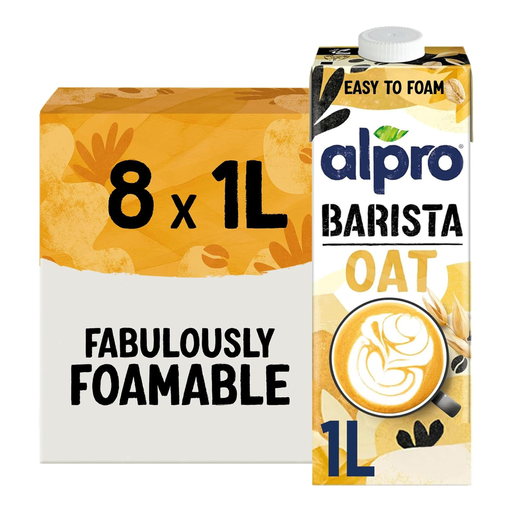
Consider this coffee-focused option if you want a multi-carton purchase. The named pack totals 8 litres, so check that the quantity suits your use and storage; compare the current nutrition panel by the amount you pour.
 No image available
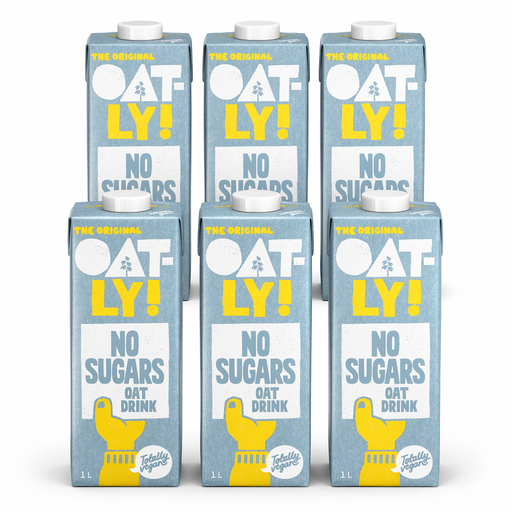
This no-sugars variant is worth comparing if declared sugars are a priority. The named pack totals 8 litres, considerably more than six UK pints; check the current carton’s energy figure before comparing it with another drink.
 No image available
If you are buying by the litre, check what the leading “6” in this title denotes before calculating the total quantity. Compare the current nutrition panel and opened-carton instructions with your intended everyday use.
 No image available
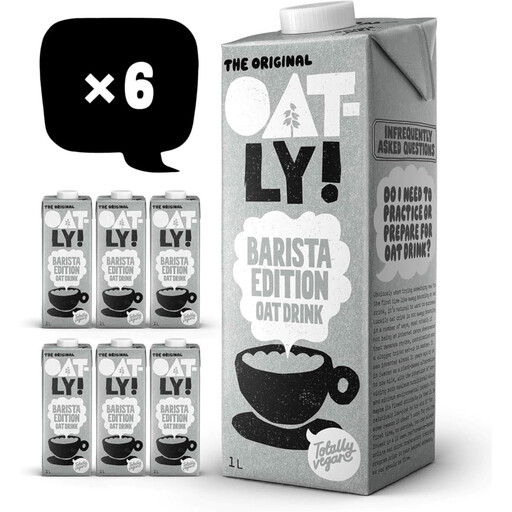
This barista variant is an option for households regularly making coffee with oat drink. Its named 6 × 1L case contains 6 litres, not six UK pints; check the current energy panel and storage instructions before buying that quantity.
No. Compare both figures per 100ml and consider your usual serving. Alpro UK lists 0g sugars and 44 kcal per 100ml for Oat No Sugars, while Oatly lists 20 kcal per 100ml for its distinct Fibre Low-Cal Edition.
No. Six UK pints is approximately 3.4 litres, while six 1-litre cartons contain 6 litres. If the household needs roughly 3.4 litres, check the total volume of the cartons you choose and their storage instructions.
No. The UK SACN/COT assessment says nutrient content and fortification vary considerably between plant-based drinks. Check the individual label: Marks & Spencer identifies its Only 3 Ingredients Oat Drink as unfortified, while its Plant Kitchen Barista product lists added calcium, iodine and vitamins.
No; suitability must be checked on the exact product. Marks & Spencer says its Only 3 Ingredients Oat Drink is not suitable for coeliacs or people with a wheat allergy. Do not apply one carton’s allergen statement to another.
Follow each carton’s before- and after-opening instructions. Tesco says to refrigerate its Long Life Oat Original after opening and use it within five days; Marks & Spencer says to use its Only 3 Ingredients Oat Drink within three days of opening. Check how many cartons you are likely to have open at once.