Families stocking a snack cupboard
An oat drink stored unopened at room temperature can be useful for cereal, baking or smoothies during school holidays. Check the individual carton’s storage directions before and after opening.


For school-holiday snacks, choose a long-life oat drink whose unopened storage instructions suit your cupboard, then check what the carton requires after opening. If it will replace dairy for a child aged one or over, NHS guidance points towards an unsweetened, calcium-fortified alternative; the child’s wider diet and any gluten or oat-allergy requirements also affect the choice.
An oat drink stored unopened at room temperature can be useful for cereal, baking or smoothies during school holidays. Check the individual carton’s storage directions before and after opening.
Fortification matters when an oat drink is taking the place of dairy, rather than being used occasionally in a recipe. NHS guidance recommends unsweetened, calcium-fortified alternatives from age one; Kingston and Richmond NHS Foundation Trust also highlights iodine for children who cannot consume dairy.
Check the exact carton’s ingredients and gluten-free statement against the child’s needs. The Food Standards Agency distinguishes gluten-free status from oat allergy: oat must still be identified as an allergen in a gluten-free oat product.
Start with how the drink will be used: an occasional recipe ingredient and a regular dairy replacement call for different label checks.
| Priority | What to check | Your needs |
|---|---|---|
| Fortification | For a child aged one or over who does not consume dairy, look for an unsweetened, calcium-fortified alternative, as advised by the NHS. Check iodine and other listed nutrients, plus energy and protein, in the context of the child’s wider diet. | If oat drink regularly replaces dairy in my child’s snacks, I need more than a familiar flavour or a short ingredient list. Kingston and Richmond NHS Foundation Trust highlights calcium and iodine fortification when a child cannot consume dairy. |
| Cupboard storage | Confirm that the exact carton permits room-temperature storage before opening. Read its separate refrigeration and use-within instructions for after opening. | I want to keep unopened cartons ready for cereal, smoothies or baking without using fridge space until I open one. |
| Allergens and gluten | Read the current ingredient and allergen statements. Where gluten-free suitability is required, look for an explicit claim; do not treat that claim as confirmation of suitability for an oat allergy. | For a child with coeliac disease, gluten intolerance or an oat allergy, I need the particular carton to match their requirements. The Food Standards Agency says oat remains an allergen even in a gluten-free oat product. |
| Ingredients | Compare the ingredient list with the fortification statement. Oatly says its Organic oat drink is not fortified, and M&S says the same of its three-ingredient oat drink. | I may prefer a simpler ingredient list for occasional use, but I would check for added nutrients separately if the drink is replacing dairy for a child. |
Fortification varies, and an oat drink’s ingredient list alone does not establish how it fits into a child’s overall diet.
For a child aged one or over who cannot consume dairy, follow NHS guidance on unsweetened, calcium-fortified alternatives. Check the carton’s iodine, energy and protein information alongside the child’s wider diet.
Oatly states that its Organic oat drink is not fortified. M&S says its three-ingredient oat drink is unfortified and is not recommended as a dairy replacement for children under 36 months.
Choose by the use you have in mind, and check the nutrient listing rather than inferring fortification from the product name.
The Food Standards Agency says oat must still be emphasised as an allergen in gluten-free oat products.
Check for a gluten-free claim where needed. For an oat allergy, follow the child’s allergy plan rather than choosing an oat drink on the basis of a gluten-free claim.
Room-temperature storage before opening does not establish how an oat drink should be kept afterwards.
Follow the exact carton’s refrigeration and use-within directions once it has been opened.
Oatly describes its Whole and Organic oat drinks as suitable for room-temperature storage before opening.
Tesco lists Alpro Oat Original Long Life among its oat drinks for cupboard stocking.
Tesco lists its own Long Life Oat Original alongside branded long-life drinks.
M&S provides a useful contrast between fortified and unfortified oat drinks; storage suitability must be checked for each product.
Minor Figures is another oat-drink brand to assess by its specific carton rather than by brand name alone.
These long-life oat drinks offer carton formats for stocking a school-holiday snack cupboard. If a child will use one in place of dairy, compare the current carton’s fortification, ingredients and allergen information before choosing.
 No image available
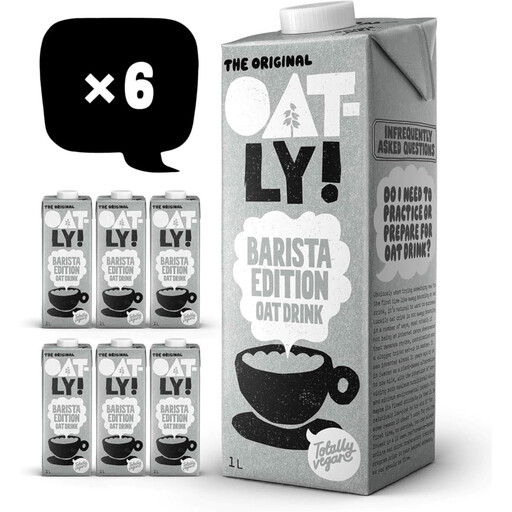
Six long-life cartons offer a format for cupboard stocking. The listing describes calcium, iodine and vitamins; if the drink will replace dairy for a child, check the current carton and consider the child’s wider diet. Refrigerate after opening and follow the carton’s use-within instructions.
 No image available
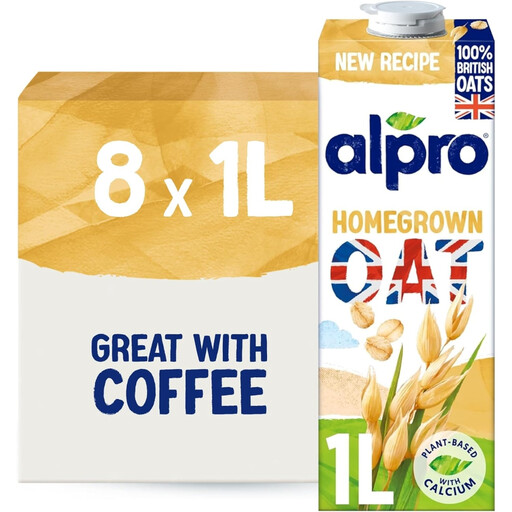
Eight long-life cartons suit keeping oat drink available for cereal, smoothies or hot drinks. The listing includes calcium, iodine and vitamins, and gives protein as 0.8g per 100ml; assess it within a child’s wider diet if it replaces dairy. Check the carton for allergens and after-opening storage.
 No image available
This eight-carton long-life pack is an option for cupboard stocking. Its product information lists calcium, iodine and vitamins, but gives conflicting descriptions of its sugar content; check the current carton if that distinction matters to you. Check its allergen and after-opening storage instructions too.
 No image available
This long-life eight-carton pack is described chiefly for coffee and barista use, a narrower use than general snack preparation. The listing names calcium and vitamins B2 and D. Check the current carton’s allergens and storage directions before serving it.
From age one, the NHS says children can have unsweetened, calcium-fortified alternatives, including oat drinks, as part of a balanced diet. Oat drink should not be used as the main milk drink for a baby under 12 months.
Yes. Kingston and Richmond NHS Foundation Trust says dairy substitutes fortified with calcium and iodine are necessary when a child cannot consume dairy. Check the specific carton and consider the child’s wider diet, particularly if their diet is restricted.
Do not assume it can. Oatly says its Whole oat drink can be stored at room temperature before opening; once any carton is opened, follow that product’s refrigeration and use-within instructions.
No. Check the exact carton for a gluten-free claim where one is needed. The Food Standards Agency also says oat must remain identified as an allergen in gluten-free oat products, so a gluten-free claim does not establish suitability for someone with an oat allergy.