Parents of children aged 1–3 replacing dairy
If oat drink will go on cereal, into porridge or be served as a drink, compare fortification, protein and energy rather than relying on a plant-based label alone.


For a child aged 1 or over, an unsweetened, calcium-fortified oat drink can be considered at breakfast as part of a varied diet. If it replaces dairy, compare its iodine, protein and energy information and check the exact pack for allergens: dairy-free does not mean suitable for a child who must avoid oats. According to the NHS, oat drink must not replace breast milk or first infant formula in the first 12 months.
If oat drink will go on cereal, into porridge or be served as a drink, compare fortification, protein and energy rather than relying on a plant-based label alone.
Check the exact product’s ingredients and allergy statements. The British Dietetic Association Food Allergy Specialist Group advises that food allergies should be diagnosed by a healthcare professional; a dairy-free label is not an individual allergy plan.
Oat drink contains oats even when it contains no dairy. The Food Standards Agency distinguishes an allergic reaction to oats from gluten intolerance, so a gluten-free claim does not settle oat-allergy suitability.
Start with the child’s age and allergy requirements, then compare the nutrition information if the drink will replace dairy regularly.
| Priority | What to check | Your needs |
|---|---|---|
| Age | Check whether the drink is intended for the child’s age and how it will be used. The NHS says first infant formula is the only suitable alternative to breast milk in the first 12 months. | For a child under 1, I must not use oat drink as their main milk. From age 1, I want to consider it within a varied diet. |
| Fortification and nutrition | For a dairy alternative, read the calcium and iodine information alongside protein and energy per 100ml. An NHS dietetic resource on cow's-milk protein allergy advises checking for at least 1g protein per 100ml in an oat-based choice. | If this drink will replace dairy at breakfast, I want to compare what the labelled products provide, not choose by flavour or a short ingredient list alone. |
| Allergens | Read the current ingredients, emphasised allergens and any product-specific suitability or precautionary statements. Dairy-free and gluten-free claims answer different questions from whether a child can have oats. | My child may need to avoid more than cow's milk, so I need the exact pack’s information rather than an assumption about all oat drinks. |
| Sugars | Compare the ingredients and sugars value per 100ml, including any unsweetened or no-added-sugars claim. Do not assume every sugar shown in an oat drink’s nutrition panel was added as an ingredient. | I want to compare drinks in the context of the whole breakfast, without treating a front-of-pack claim as the full nutrition picture. |
Oat drink does not replace breast milk or first infant formula in the first 12 months, according to the NHS.
Keep the child’s main milk appropriate to their age; discuss any specialist alternative with their healthcare professional.
A short ingredient list does not establish that a drink supplies the nutrients being compared. Marks & Spencer says its Only 3 Ingredients Oat Drink is unfortified and not recommended as a dairy replacement for children under 36 months.
For a child aged 1 or over whose oat drink replaces dairy, check the current pack’s fortification and nutrition information before choosing it.
Oat drinks contain oats, while individual products can carry further warnings: Marks & Spencer says its Barista Oat Drink is not suitable for those with a milk allergy.
Read the exact pack each time. For a suspected or diagnosed food allergy, follow the child’s clinical advice rather than using a free-from claim as a substitute.
A barista label describes a use case, not whether the drink fits a toddler’s dairy-replacement needs. Fortification, protein and allergy statements differ by product.
Compare the nutrition panel and age and allergen information with a toddler-targeted option before deciding.
These examples show why the product line and exact label matter more than the brand name alone.
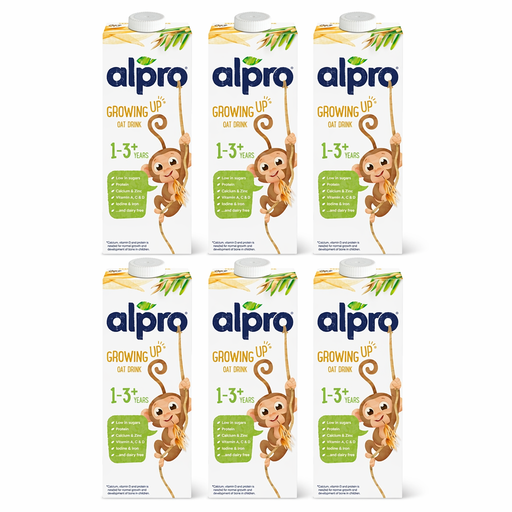
Alpro Oat Growing Up is labelled for children aged 1–3 years.
Oatly Oat Drink Whole is a fortified oat-drink option to compare for breakfast from age 1.
Tesco lists an own-label oat drink as well as named oat-drink ranges.
M&S lists both a minimal-ingredient oat drink and a separate barista product, with different suitability statements.
Minor Figures Barista Oat is positioned for coffee rather than specifically for toddlers.
These oat-drink options include one labelled for ages 1–3 and one No Sugars variant. Compare their current packs against the child’s age, nutrition and allergy needs; they are not interchangeable merely because both contain oats.
 No image available
This toddler-labelled drink is an option to compare when a child aged 1–3 who can have oats needs a dairy alternative at breakfast. Check the current pack’s nutrition, ingredients and allergy statements before use.
 No image available
For a breakfast where a No Sugars oat drink is being considered, compare this variant’s current protein, fortification and age guidance with the child’s needs. It contains oats; check the exact pack’s allergy statements.
No. According to the NHS, first infant formula is the only suitable alternative to breast milk in the first 12 months. Using an ingredient in food is a different question from replacing a baby’s main milk.
Start with an unsweetened, calcium-fortified option and compare iodine, protein and energy on the current label. An NHS dietetic resource for children aged 1 or over with cow's-milk protein allergy advises checking that an oat-based alternative contains at least 1g protein per 100ml.
Not automatically. Check the exact product’s ingredients and any milk-allergy or precautionary statements; products can differ. The British Dietetic Association Food Allergy Specialist Group advises having food allergies properly diagnosed by a healthcare professional.
No: gluten-free does not mean oat-free. The Food Standards Agency notes that oats themselves can cause an allergic reaction, so check for oats in the ingredients regardless of a gluten-free claim.