What should you check?
Start with the quantity you normally pour, then compare cartons on the same per-100ml basis. Where a label uses per-100g values, keep that unit clear rather than treating it as an identical volume measure.
| Priority |
What to check |
Your needs |
| Energy and portions |
Read energy per 100ml and consider the amount used in each coffee, bowl or recipe. Compare like-for-like label units. |
I use more than a splash, so the quantity I pour matters as much as the number on the panel. |
| Sugars and fortification |
Check declared sugars separately from energy. If oat drink replaces dairy milk, look for calcium and any added iodine or vitamins; the NHS identifies unsweetened, calcium-fortified plant drinks as dairy alternatives. |
I want to limit declared sugars without assuming that a no-sugars label also tells me about calories, protein or added nutrients. |
| Coffee use |
Check whether the carton is intended for frothing, then compare its energy and fat figures with an everyday option using the same label unit. Marks & Spencer lists 65 kcal and 3.3g fat per 100g for its Barista oat drink, versus 42 kcal and 1.5g fat per 100g for its Semi drink. |
Frothing is important for my coffee, but I also want to account for the amount used in each drink. |
| Allergens |
Read the exact carton’s allergen and suitability statements, including any gluten-free claim. The Food Standards Agency notes that oats remain an allergen even in a product described as gluten free. |
If I need to avoid a particular allergen or have coeliac disease, dairy-free wording alone does not answer whether this carton is suitable. |
Brand and product-line references
These examples show why the variant matters more than the brand name alone; they do not indicate which products are available in the Joybuy selection below.
Oatly
Oatly offers oat drinks with different sugar, fat and fortification profiles.
- Sainsbury's lists Oatly No Sugars at 44 kcal and less than 0.1g sugars per 100ml, with calcium and iodine.
- Oatly lists 58 kcal and 2.7g fat per 100ml for its Whole drink; Oatly also says its Organic drink is not fortified.
Alpro
Alpro’s Oat No Sugars is a fortified option for comparing sugar and energy on the label.
- Alpro lists 44 kcal and 0g sugars per 100ml for Oat No Sugars.
- The same Alpro label lists 0.8g protein per 100ml; check protein separately if it matters to your choice.
Minor Figures
Minor Figures presents Everyday Oat for uses including cereal, tea and smoothies.
- Minor Figures describes Everyday Oat as fortified.
- Its stated 200ml serving contains 99 kcal and 4.3g fat, so compare serving sizes as well as label units.
Tesco
Tesco’s own-brand Oat Drink is an everyday fortified option rather than a no-sugars variant.
- Tesco lists 48 kcal per 100ml for its Oat Drink.
- The same Tesco listing gives 3.2g sugars per 100ml; check the current carton if limiting declared sugars.
M&S
Marks & Spencer has distinct minimal-ingredient, Semi and Barista oat drinks.
- Marks & Spencer lists 33 kcal per 100g for Only 3 Ingredients and 42 kcal per 100g for its fortified Semi drink.
- Only 3 Ingredients is not fortified; its Barista drink lists 65 kcal and 3.3g fat per 100g.
Oat drinks on Joybuy
These options include cartons named No Sugars and cartons intended for coffee use. Check each current carton’s nutrition and allergen labels against the quantity you normally use; the name alone does not settle those questions.
 No image available
Alpro Oat No Sugars Long Life Drink, 8 × 1L
For regular use where declared sugars are a priority, compare the carton’s per-100ml energy and sugars with the amount you pour. Check calcium and the allergen statement if you use it as a dairy alternative.
View on Joybuy
 No image available
Oatly No Sugars Oat Drink, 6 × 1L
If limiting sugars is your reason for considering this multipack, confirm the current carton’s declared sugars and energy per 100ml. Check its fortification and allergen information separately.
View on Joybuy
 No image available
Alpro Barista Oat Long Life Drink, 8 × 1L
A coffee-oriented option when frothing matters. Compare its declared sugars and energy with an everyday carton for the quantity used; barista does not mean no sugars.
View on Joybuy
 No image available
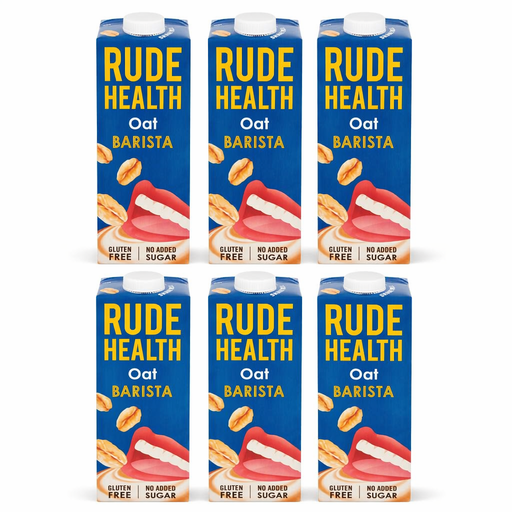
Rude Health Barista Oat, 1L
A barista-labelled carton to consider when coffee preparation is the priority. Compare its per-100ml energy and sugars with other cartons, and check added calcium if you use oat drink as a dairy alternative.
View on Joybuy
Questions about choosing oat drink
Can oat drink fit into a weight-management eating pattern?
It can be considered alongside the rest of what you eat and drink; the carton alone does not determine weight change. The NHS describes calorie counting as a way to track energy from food and drink, so compare the label with the amount you actually use.
Does “no sugars” mean fewer calories?
Not necessarily: check both figures on the exact carton. Alpro lists 44 kcal and 0g sugars per 100ml for its Oat No Sugars drink; sugar content alone does not tell you the energy value of another product.
Should I choose the lowest-calorie oat drink?
Energy is one consideration, but fortification may also matter if the drink replaces dairy milk. Marks & Spencer lists 33 kcal per 100g for Only 3 Ingredients and states that it is not fortified; the NHS identifies unsweetened, calcium-fortified plant drinks as dairy alternatives.
Can I choose a barista oat drink for everyday coffee?
Yes, if its coffee preparation features matter to you and its nutrition panel fits the quantity you use. Marks & Spencer lists 65 kcal and 3.3g fat per 100g for its Barista drink, compared with 42 kcal and 1.5g fat per 100g for its Semi drink.
Is every dairy-free oat drink suitable for someone with coeliac disease or a wheat allergy?
No: read the exact carton’s ingredients and suitability statement. Some Marks & Spencer oat drinks state that they are not suitable for coeliacs, and the Food Standards Agency notes that oats remain an allergen even in gluten-free products.


