
24/7 Customer Support

Free returns

Same-day & Next-day Delivery

Quality Guaranteed

Unlock Your Welcome Offers: FREE Delivery | Up to 80% OFF | Free 30-day JoyPlus trial
Download the APP
For many UK households, oat flakes and cereal offer a quick way to prepare breakfast before work, school or the morning commute. However, attractive packaging and phrases such as “nutritious”, “reduced sugar” or “wholegrain” do not always tell you how a product will fit your routine.
The important questions are practical ones: How much oat is actually included? Does the product contain added sugar, milk, gluten or common allergens? Is it genuinely quick to prepare, and will the portion size suit your appetite?
A product may show oats prominently on the front while containing a relatively modest proportion of oat flakes. Check the quantitative ingredient declaration, which states the percentage of key ingredients. For example, the products below range from 10% to 30% oat flakes, so they are not interchangeable.
If you specifically want wholegrain oats, also check whether the ingredients list says “100% wholegrain oat flakes” or describes a broader cereal blend containing wheat, maize, soya, barley and other ingredients.
“Reduced sugar” is a comparison claim, not a guarantee that the food contains no sugar. Review the nutrition panel for carbohydrates and sugars per 100g and per serving. Some instant oatmeal products also include separate glucose sachets. These are optional additions, but they still contribute carbohydrate and should not automatically be treated as part of a low-sugar breakfast.
Instant oat flakes and cereal sachets are convenient, but many recipes contain wheat, gluten, soya, milk, barley, sesame or nuts. Read the allergen statement every time, particularly when buying for children, older relatives or anyone with a food allergy.
Also distinguish between “instant” and raw grains. Yellow millet and rice require cooking; they cannot be prepared safely by simply adding hot water.
Ingredients are listed by weight, from highest to lowest. A plain oat product such as Flahavan’s Organic Porridge Oats lists 100% organic wholegrain oat flakes, while flavoured products may combine oats with cereal powders, creamer, starch, fruit, vegetables or seeds.
For a dietary fibre breakfast, compare the fibre value on the nutrition panel rather than relying only on front-of-pack language. Flahavan’s product lists 8.3g of fibre per 100g and 3.3g per stated 40g serving. Other products may not provide a fibre figure in the supplied nutrition information, so avoid assuming that a higher oat percentage automatically equals a particular fibre intake.
Single-serve oatmeal sachets can help with portion control and reduce measuring during busy mornings. Several Family Whole products contain 20 sachets of 35g each, with preparation instructions calling for approximately 150–175ml of boiling water.
This is useful for offices, university accommodation and travel, but consider whether a 35g portion is enough for you. Adding milk, yoghurt, fruit or nuts can change the texture and nutritional profile.
Compare the nutrition panel per 100g, especially when choosing between instant oatmeal flavours. The red date and raisin oatmeal lists 28g of sugars per 100g, while the savoury oatmeal lists 7.8g. The savoury option also lists 1.1g of salt per 100g.
For UK shoppers, check the full ingredients and allergen declaration rather than relying on terms such as “plant-based” or “reduced sugar”. A product can be suitable for a vegetarian-style breakfast while still containing soya, gluten, milk or sesame.
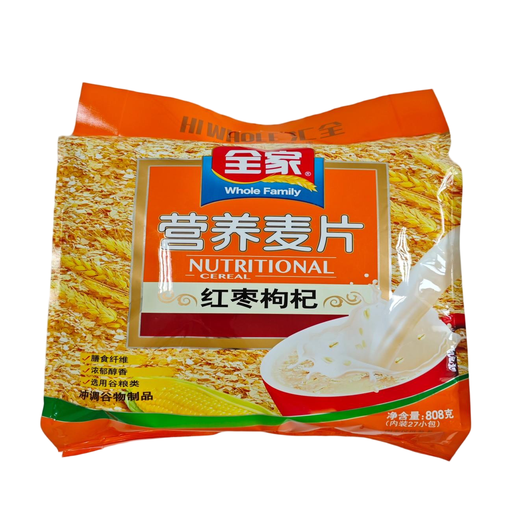
Why This Fits Their Persona: The 27 individual sachets provide a straightforward option for households wanting a quick breakfast cereal with a mild red date and goji berry flavour.
The label specifies 15% oat flakes and 33% composite grains, making the blend clearer than a vague “multigrain” description.
27 sachets; approximately 150ml of boiling water per serving; includes red date powder and goji berry powder.

Why This Fits Their Persona: Suitable for shoppers prioritising a short ingredient list and traditional porridge preparation rather than flavoured instant cereal.
The ingredients state 100% organic wholegrain oat flakes, avoiding uncertainty about the proportion of mixed cereals.
1kg pack; 100% organic wholegrain oat flakes; listed fibre of 8.3g per 100g.
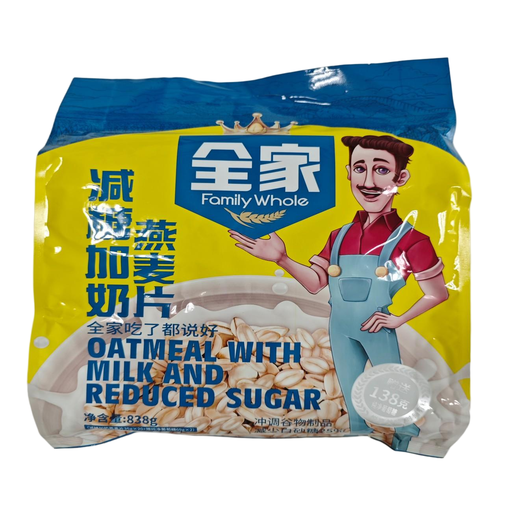
Why This Fits Their Persona: A practical choice for frequent users who want individually portioned milk oatmeal with a higher stated oat-flake percentage.
It clearly states 30% oat flakes and 17g sugars per 100g, allowing a more informed comparison than “reduced sugar” alone.
20 x 35g oatmeal sachets; 5% whole milk powder; approximately 175ml of boiling water per serving.
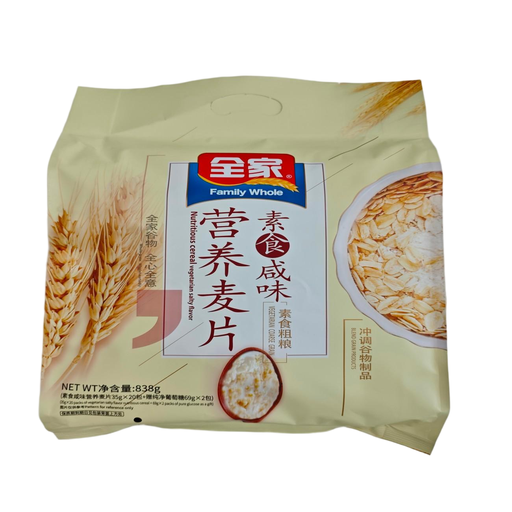
Why This Fits Their Persona: This savoury oatmeal suits adults who prefer a lightly salted breakfast instead of fruit-forward or sweet cereal flavours.
The product identifies 28% oat flakes and lists 1.1g of salt per 100g, helping savoury-food shoppers assess the recipe before buying.
20 x 35g sachets; 175ml preparation guide; contains oat flakes, cereals and soya milk powder.
We have compiled a complete, real-time list of products that fully satisfy these strict selection criteria and UK safety regulations.
For a smoother texture, use the water volume stated on the packaging and stir thoroughly. You can prepare sweet flavours with fresh berries, sliced banana or yoghurt, while savoury oatmeal can be paired with spring onion, vegetables or a small amount of sesame. Check the label before adding ingredients if you are managing allergens.
Products containing glucose sachets give you an optional flavour adjustment, but the glucose is not required for preparation. Store opened cereal in an airtight container in a cool, dry place, and follow the best-before information on the packaging.
Yes, products labelled instant can generally be prepared with boiling water according to the packet directions. Single-serve sachets are convenient for work or travel. Plain porridge oats may require heating or longer soaking, depending on the cut and preparation method.
The cost depends on pack price, portion size and what you add. Sachets can reduce waste and preparation time, while larger bags of plain oats usually provide more flexibility. Compare the price per 100g or per serving rather than the headline pack price.
Keep unopened products in a cool, dry place and follow the date printed on the packaging. Once opened, reseal the bag or transfer the cereal to an airtight container. Prepared oatmeal should be consumed promptly and should not be left at room temperature for extended periods.