Everyday dairy-free bakers
If you make cakes, muffins, pancakes or quick breads, an unflavoured oat drink gives you a starting point for replacing the milk in a familiar recipe.


For everyday cakes, muffins and pancakes, start with an unflavoured oat drink at the milk volume stated in the recipe. King Arthur Baking says non-dairy milk can replace dairy milk in most baking recipes, although structure, flavour and browning may change. Whole-style or barista drinks are alternatives to trial when you want a richer formulation, not a guarantee of a particular result; check the exact carton for allergen suitability.
If you make cakes, muffins, pancakes or quick breads, an unflavoured oat drink gives you a starting point for replacing the milk in a familiar recipe.
If you are making buns, richer cakes or creamy batters, you may want to compare standard, whole-style and barista formulations before trying one in your recipe.
If gluten, oats, wheat, milk or soya affect your household, check the ingredients and suitability statements on the exact carton rather than relying on the words “oat drink”.
Start with the bake: a straightforward milk substitution calls for different checks from a delicate sponge or yeast bread where changes to crumb and structure matter more.
| Priority | What to check | Your needs |
|---|---|---|
| Recipe fit | Start with an unflavoured drink at the recipe’s stated milk volume. King Arthur Baking advises that non-dairy substitutions work in most baking recipes, but protein, fat and sugar can affect structure, flavour and browning. | For routine muffins or pancakes, I want a straightforward starting point. If the crumb or rise is crucial, I would make a trial bake first. |
| Richness | Compare fat values on the same per-100-ml basis and check for added oil. Alpro UK lists 1.5 g fat per 100 ml for Oat Original and 3.0 g per 100 ml for Barista Oat; those figures alone do not predict baking results. | I am making a richer batter and want to try a different formulation, rather than assume that a coffee-focused barista drink will improve the bake. |
| Flavour and ingredients | Check whether the drink is unflavoured and read its ingredient list. Oatly lists sugar and flavouring in its Barista Vanilla drink, so it is not interchangeable with an unflavoured option in every recipe. | A neutral cake or savoury bake calls for a flavour that will not change what I intended; for another recipe, I might deliberately choose a flavoured drink. |
| Allergen suitability | Read the exact pack’s ingredients, gluten-free claim and precautionary statements. The Food Standards Agency notes that oats remain an allergen even when a food is labelled gluten-free; retailer product warnings also differ between oat drinks. | I need the particular carton, as well as the other baking ingredients, to meet my household’s requirements. |
| Storage after opening | Follow the carton’s refrigeration and use-by-opening directions. Tesco states five days after opening for its Oat Drink, while Sainsbury’s states three days for its Long Life Oat Drink. | If I bake occasionally, I want a pack size and opening period that suit when I will use the drink. |
King Arthur Baking found that its oat-milk yeast loaf rose taller than the dairy version but was more crumbly when sliced. Ingredients that affect structure and browning can matter more in some recipes than others.
Try an unflavoured drink at the stated milk volume for a routine bake; make a small trial before relying on a substitution for a delicate sponge or yeast bread.
Alpro and Minor Figures present their barista drinks primarily for coffee. An oil-containing formulation offers a different ingredient profile, but its coffee positioning does not establish how a cake or loaf will turn out.
Choose one if you want to trial that formulation or will also use it for coffee; compare the ingredients with your recipe rather than relying on the label alone.
Oats are an allergen, and individual oat drinks can carry different warnings. Marks & Spencer labels its cited Barista Oat Drink unsuitable for coeliacs and people with a milk allergy; its Only 3 Ingredients Oat Drink carries coeliac and wheat-allergy warnings.
For an allergy or a gluten-free requirement, check the current carton’s claims, allergen information and precautionary statements before using it.
Oatly lists sugar and flavouring in its Barista Vanilla oat drink. Those ingredients may change the intended flavour or sweetness of a neutral bake.
Use an unflavoured drink when you want to preserve the recipe’s flavour; choose vanilla only when it is an intentional part of the bake.
These brand examples illustrate formulations and label checks; each point applies to the named product, not every drink in the range.
Its Whole oat drink is presented by Oatly for cooking and baking.
Its Oat Original and Barista Oat provide different formulations for everyday use and coffee.
Its Barista Oat is positioned primarily as a coffee drink.
Its Oat Drink is a standard oat-drink option to consider for routine recipes.
Its Long Life Oat Drink offers another standard oat-drink formulation.
Its oat-drink range includes a minimal-ingredient option and a separate barista product.
These options include standard unflavoured drinks for everyday substitutions and barista drinks to trial when you want a different formulation. Coffee-focused names do not establish how they will perform in your recipe.
 No image available
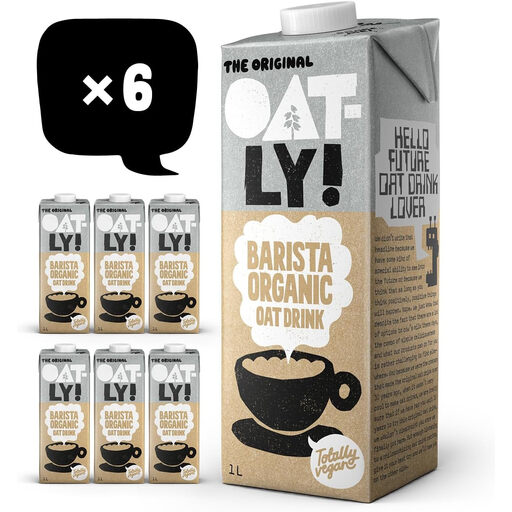
A barista oat drink to trial in a bake where you want a different formulation; the six-carton pack is relevant if you will use it across several recipes.
For a texture-sensitive bake, try the substitution first. Check the exact carton’s allergen and gluten-free statements if they matter to your household.
 No image available
This long-life barista option suits someone who also uses oat drink for coffee and wants to trial it in baking.
Its name does not guarantee a dairy-like crumb. Follow the carton’s opening and storage directions, and check allergen suitability on the pack.
 No image available
An Oat Original option for trying an unflavoured substitution in routine cakes, muffins or pancakes; the pack contains eight 1-litre cartons.
Trial it first where the bake’s texture is important, and check the exact carton’s allergen information.
 No image available
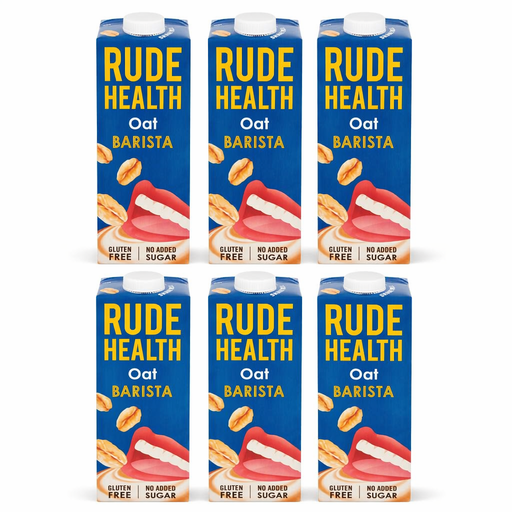
A single-carton barista option if you want to trial a coffee-oriented oat drink in one baking recipe.
Check how the result works in a delicate bake. If gluten-free suitability matters, check the finished drink’s claim on the exact pack rather than assuming it from a statement about its oats.
 No image available
This standard oat-drink option may be worth considering when you are checking how each ingredient fits a recipe’s intended sweetness.
The product name alone does not predict the finished bake. Check the nutrition and allergen information on the exact carton.
Usually, you can start with an unflavoured oat drink at the recipe’s stated milk volume. King Arthur Baking advises that non-dairy milk works in most baking recipes, while noting that differences in protein, fat and sugar can change structure, flavour and browning.
For an everyday substitution, start with a standard unflavoured drink; if you want to trial a richer formulation, consider a whole-style drink. Oatly presents its Whole drink for cooking and baking, but neither type guarantees the same result as dairy milk.
No: an oat drink is not automatically gluten-free, and the other recipe ingredients matter too. Check an explicit claim and allergen statements on the exact carton, then check ingredients such as flour and decorations separately. The Food Standards Agency notes that oats remain an allergen even in foods labelled gluten-free.
Follow the directions on your particular carton. Tesco says to refrigerate its Oat Drink after opening and consume it within five days; Sainsbury’s gives three days after opening for its Long Life Oat Drink.