What matters when choosing?
Start with the restriction the biscuits must meet, then compare the drink’s formulation with what the recipe calls for. Check the carton you will use as well as the other ingredients going into the dough.
| Priority | What to check | Your needs |
|---|
| Milk allergy |
Read the current ingredients, allergen declaration and precautionary wording for milk. Do not substitute a vegan label for an individual allergy check: GOV.UK warns against assuming vegan food is free from animal-based allergens, and M&S marks its vegan Barista Oat Drink as unsuitable for people with a milk allergy. |
I’m baking for someone with a milk allergy, so I need the information on the specific carton to fit their restriction. |
| Gluten and oats |
For a gluten-free bake, look for an explicit gluten-free claim on the drink and check the rest of the recipe. The Food Standards Agency says UK gluten-free labelling permits no more than 20 mg/kg of gluten in food as sold; oats must still be identified as an allergen. |
The biscuits need to be gluten-free, but I must also avoid oat drink altogether if the person eating them has an oat allergy. |
| Recipe formulation |
Compare ingredient lists rather than relying on “barista” or “original”. M&S lists water, oats and sea salt in its three-ingredient drink; Oatly’s Barista Edition is a different formulation that Oatly says can replace milk in cooking and baking. |
I want to know which ingredients I’m adding to the dough. If the biscuit result matters, I can try a small batch before making the full recipe. |
| Final label check |
Read the physical carton before mixing, including any precautionary allergen statement. Sainsbury’s and M&S advise checking packaging because ingredients and allergen information can change; check prepacked flour and additions too. |
Even if I’ve bought the drink before, I need the pack used for this batch to meet the recipe’s requirements. |
Brand and retailer references
These examples show why the exact product and its current label matter more than a brand name when baking for a dietary restriction.
Oatly
Oatly says its UK Barista Edition can be used in place of milk for cooking and baking.
- Its baking instructions give a starting point for a recipe that calls for milk.
- Oatly says its European products can contain a small amount of gluten. Check the current UK pack for an explicit gluten-free claim if the biscuits require one.
Alpro
Tesco describes Alpro Oat Original Long Life as plant-based and dairy-free, with no added sugars.
- The named product provides a labelled oat-drink option for comparing ingredients and nutrition information.
- Check the specific carton for any gluten-free requirement or milk-allergy suitability; dairy-free wording alone does not resolve those questions.
Minor Figures
Minor Figures and Tesco label Barista Oat gluten-free and vegan.
- Tesco lists gluten-free oats among the ingredients of this specific drink.
- It contains oats, so it does not suit an oat allergy. Check the current pack for any other relevant allergen wording.
Tesco
Tesco lists own-label and branded oat drinks, including products from Alpro, Oatly and Minor Figures.
- Individual product listings can help distinguish named drinks and their declared ingredients.
- A category listing does not establish free-from suitability; check the specific carton before baking.
Sainsbury's
Sainsbury’s provides allergen information for its own-brand products and advises customers to check packaging.
- Its allergen guidance can help shoppers identify which product information to consult.
- Sainsbury’s warns of possible cross-contact in open in-store bakery and counter environments; check how biscuit ingredients are supplied.
M&S
M&S lists both a three-ingredient oat drink and a separate Barista Oat Drink, with different suitability warnings.
- The three-ingredient drink lists water, oats and sea salt, making its formulation straightforward to compare.
- M&S marks that drink as unsuitable for coeliacs and people with a wheat allergy, and its Barista Oat Drink as unsuitable for people with a milk allergy.
Oat drinks on Joybuy
These oat drinks are options for recipes that replace milk in biscuits. Their labels and formulations differ; check the carton against any allergy or gluten-free requirement before using one for a free-from bake.
 No image available
Alpro Oat No Sugars Long Life Drink, 8 × 1L
An option to consider when replacing dairy ingredients, provided the current carton meets the recipe’s restrictions. The product information describes it as dairy-free and lists 0.0 g sugars per 100 ml; its allergen information identifies cereals containing gluten (oats), so do not select it for a gluten-free bake on that basis. Check precautionary wording for any diagnosed allergy, and try a small batch if the biscuit texture matters.
View on Joybuy
 No image available
Alpro Barista Oat Long Life Drink, 8 × 1L
This dairy-free oat drink is another formulation to consider for a milk-swap recipe, rather than evidence of a particular biscuit result. Its product information makes a no-added-sugars claim and identifies cereals containing gluten (oats); do not assume it is gluten-free. Check the current carton’s precautionary wording for an allergy-sensitive bake.
View on Joybuy
 No image available
Oatly Long Life Barista Oat Drink, 6 × 1L
Oatly says its Barista Edition can replace milk in cooking and baking; this product’s description also identifies baking use. It is an oat-containing, dairy-free drink, not an option for someone with an oat allergy. For a gluten-free or allergy-sensitive recipe, check the current carton for the necessary claim and precautionary wording; baking guidance does not establish a particular biscuit texture.
View on Joybuy
 No image available
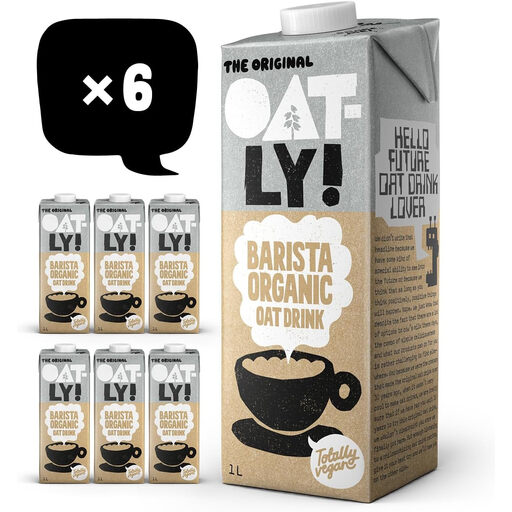
Oatly Organic Barista Oat Drink, 6 × 1L
The product description identifies this dairy-free drink for cooking and baking. Its listed formulation includes oats, rapeseed oil, sea salt and an acidity regulator, so it differs from a short-ingredient oat drink and does not suit an oat allergy. Check the carton for any required gluten-free claim or allergy precautions, and test a small batch when the biscuit result is important.
View on Joybuy
 No image available
Alpro Oat Original Long Life Drink, 8 × 1L
For a biscuit recipe replacing dairy ingredients, this product is described as dairy-free; check the carton against the needs of everyone eating the bake. Its listed allergen information identifies cereals containing gluten (oats), so do not assume gluten-free suitability. Check precautionary wording for a diagnosed allergy, and trial a small batch if biscuit texture is critical.
View on Joybuy
Questions about baking with oat drink
Is a dairy-free oat drink suitable for someone with a milk allergy?
Not on that wording alone. Check the specific carton’s ingredients, allergen information and precautionary statement against the person’s requirements. M&S, for example, marks its vegan Barista Oat Drink as unsuitable for people with a milk allergy.
Can I use a gluten-free oat drink in gluten-free biscuits?
Yes, if the carton is explicitly labelled gluten-free and every other biscuit ingredient is suitable too. The Food Standards Agency says UK gluten-free labelling permits no more than 20 mg/kg of gluten in food as sold, but oats remain an allergen; the drink would not suit someone with an oat allergy.
Can oat drink replace milk in a biscuit recipe?
Oatly says its UK Barista Edition can replace milk in cooking and baking, so the recipe’s stated milk quantity is a starting point for that drink. Oat-drink formulations differ, however; try a small batch if the texture or spread of the biscuits matters.
Should I check a carton I have bought before?
Yes. Tesco, M&S and Sainsbury’s advise checking current packaging because product information or ingredients can change. Read the carton used for this batch, particularly when baking for someone with an allergy or a gluten-free requirement.
Can I use loose in-store bakery ingredients for free-from biscuits?
Do not assume they meet the required restriction. Sainsbury’s warns that products prepared in its open in-store bakery and counter environments may be subject to cross-contact. Check how each ingredient is supplied and choose clearly labelled prepacked ingredients when the recipient’s requirements call for that information.


