Everyday oat-drink shoppers
If you use oat drink in cereal, tea, smoothies or cooking, compare the nutrients and sugars listed for the particular carton. Products with similar names need not have the same fortification or storage instructions.


Choose a barista oat drink when you mainly make coffee and want a product formulated for that use. For cereal, tea, smoothies or cooking, compare the exact carton’s fortification, sugars, ingredients and storage instructions instead; if you also have an allergy or gluten-related requirement, a vegan label is not a substitute for checking its allergen information.
The main use matters more than the word “vegan” on the front of the carton: coffee preparation, everyday use and allergen suitability call for different checks.
If you use oat drink in cereal, tea, smoothies or cooking, compare the nutrients and sugars listed for the particular carton. Products with similar names need not have the same fortification or storage instructions.
If you make lattes, cappuccinos or iced coffee, a barista variant is the relevant formulation to examine. Check its ingredients and nutrition panel rather than assuming it matches the brand’s everyday drink.
Vegan suitability and allergen absence are different questions, as the Food & Drink Federation explains. Read the current pack’s ingredient and allergen information, including any statement about oats, gluten or milk cross-contact.
Start with where you will use the drink, then compare the label details that affect that choice. A less-sweet preference or a short ingredient list can sit alongside either everyday or coffee use.
| Priority | What to check | Your needs |
|---|---|---|
| Coffee use | Look for a variant intended for hot or iced coffee. Compare its ingredients with the brand’s everyday drink if formulation matters to you. | I make lattes or cappuccinos and want a carton intended for coffee preparation. Alpro describes its Barista Oat for hot and iced coffee; M&S describes its Barista Oat as formulated for coffee. |
| Fortification | Read the exact carton’s declaration for calcium, iodine and any listed vitamins. Do not assume a short-ingredient drink is fortified. | For a drink I use regularly, I want to know which added nutrients it contains. Alpro lists calcium, iodine and vitamins B2 and D2 for Oat Original; M&S says its three-ingredient oat drink is not fortified. |
| Sugars and taste | Compare sugars per 100 ml with claims such as “no added sugars” or “no sugars”. The phrases do not mean the same thing. | I prefer a less-sweet drink, so I would check the nutrition panel rather than judge sweetness from the word “oat”. Oatly positions its No Sugars variant for this preference. |
| Ingredients | Compare the full lists for the variants you are considering. Check fortification separately from the length of the ingredient list. | A short list matters to me more than added nutrients. M&S lists water, oats and sea salt in its Only 3 Ingredients drink, which it says is not fortified. |
| Allergens | Read the current ingredient and allergen declaration, including relevant gluten-free claims and cross-contact information. Assess vegan suitability separately. | I need a drink that fits both my vegan shopping and any allergy or gluten-related requirement. The Food Standards Agency notes that even gluten-free oats remain an oat allergen. |
| Storage | Check whether the carton is chilled or can be stored unopened in a cupboard, then follow its instructions after opening. | I need a format that fits how quickly I use a carton. M&S instructs shoppers to keep its chilled three-ingredient drink at 0°C to +5°C and consume it within three days of opening. |
A vegan claim does not establish that a drink is free from milk-allergen cross-contact. Oats can also matter to shoppers checking gluten-related suitability or an oat allergy.
Read the current pack’s full ingredient and allergen declaration. The Food & Drink Federation distinguishes vegan claims from allergen-absence information, while the Food Standards Agency says gluten-free oats must still be identified as oats.
Barista drinks are intended for coffee, but their ingredient lists can differ from everyday versions. A coffee-oriented formulation is not, by itself, a reason to choose it for cereal or cooking.
Pick the carton for your main use, then compare its ingredients and nutrition panel with an everyday variant from the same brand.
M&S says its three-ingredient oat drink is not fortified, whereas Alpro Oat Original and Oatly Semi list added minerals and vitamins. Ingredient simplicity and fortification are separate choices.
If particular added nutrients matter to your selection, check them on the exact carton before choosing a short-ingredient option.
These examples show why the variant matters as much as the brand name; check the current label for the carton you intend to buy.
Alpro offers Oat Original for general use and a separate Barista Oat positioned for coffee.
Oatly’s range includes Semi and a No Sugars variant aimed at a less-sweet taste.
Minor Figures describes Barista Oat for coffee use and offers a separate Everyday Oat.
M&S offers a Barista Oat for coffee and a chilled Only 3 Ingredients Oat Drink.
These cartons cover everyday use, coffee-oriented barista variants and products named for a no-sugars preference. Compare the exact pack and allergen declaration for your intended use.
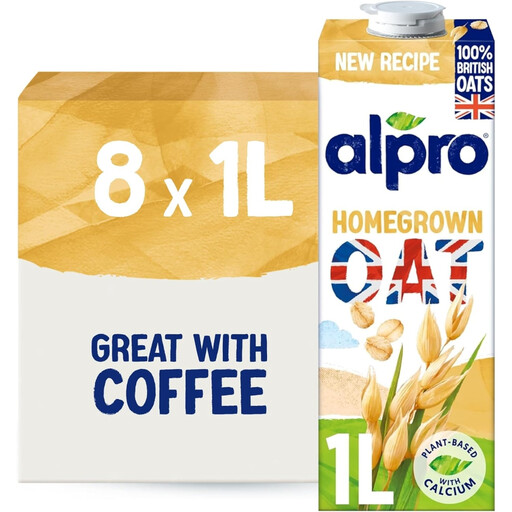 No image available
An everyday option to compare for cereal, tea or cooking. Alpro lists calcium, iodine and vitamins B2 and D2 for Oat Original; check the current pack if an allergen declaration affects your choice.
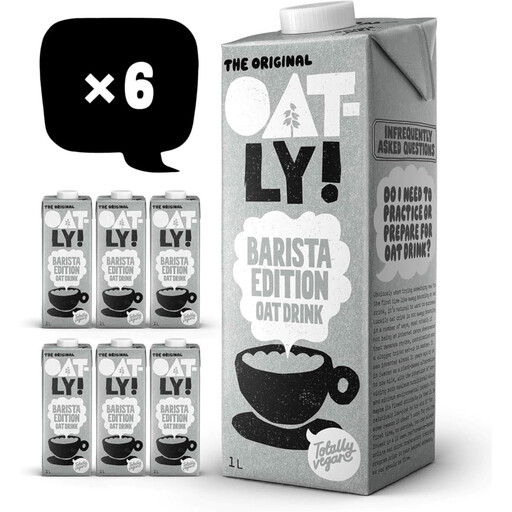 No image available
A barista-labelled option when coffee is your main use. The pack contains six 1L cartons; compare its current ingredients and allergen declaration with any everyday drink you are considering.
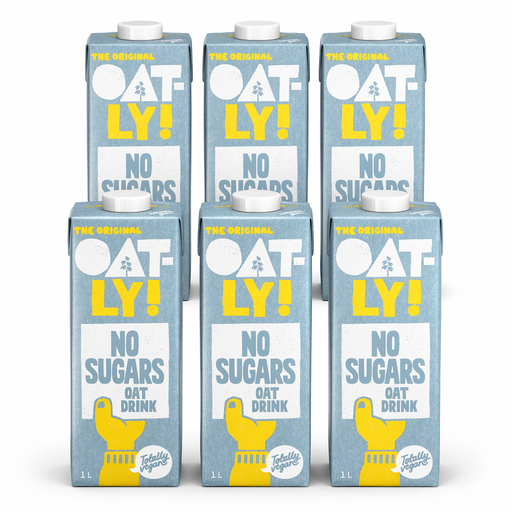 No image available
Consider this named variant if you prefer a less-sweet oat drink. Oatly describes No Sugars as a zero-sugar product; use the current carton’s nutrition and allergen information for your final comparison.
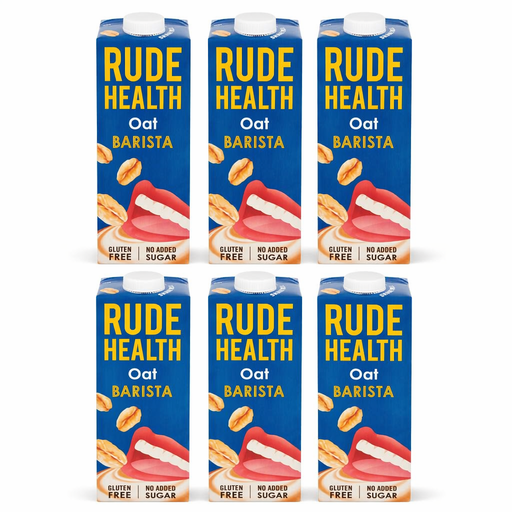 No image available
Another barista-labelled carton to compare if you mainly prepare coffee. Check the current ingredient list, nutrition panel and oat-allergen information against the other coffee options.
 No image available
An everyday oat drink named for a no-sugars preference. Check the current carton’s sugars per 100 ml before relying on that description, and read its allergen declaration if relevant to you.
No. The Food & Drink Federation distinguishes vegan claims from allergen-absence information. If a milk allergy matters to your purchase, read the ingredient and allergen information on the exact pack rather than relying on its vegan branding.
No: suitability depends on the product and the individual requirement. The Food Standards Agency says gluten-free oats must still be identified as oats because oats can themselves be an allergen. M&S specifically marks its Only 3 Ingredients Oat Drink as unsuitable for coeliacs and people with a wheat allergy; check the current pack of any drink you consider.
A barista variant is formulated and marketed for coffee use, whereas an everyday variant may be positioned for a wider range of uses. Alpro describes its Barista Oat for hot and iced coffee, including frothy drinks. Compare ingredients and nutrition on the exact cartons rather than assuming the two variants share a formulation.
Check the ingredients and nutrition information for the nutrients that matter to your choice. Alpro lists calcium, iodine and vitamins for Oat Original, while M&S explicitly says its Only 3 Ingredients Oat Drink is not fortified; neither label describes every oat drink.
No. A no-added-sugars statement does not, by itself, tell you that the drink contains no sugars. Compare the claim with sugars per 100 ml on the current nutrition panel; Oatly positions its separately named No Sugars variant as a zero-sugar drink.