Shoppers comparing calories
If you use oat drink regularly, compare the label’s calories per 100ml and then account for your usual pour in cereal, drinks or recipes. A smaller figure on the carton is not the calorie total for every serving.


When choosing dairy-free oat milk while managing your weight, compare calories per 100ml and the amount you usually pour; the dairy-free label alone does not tell you how a drink fits your eating pattern. A lower-calorie formulation may suit a calorie-focused choice, while no-sugars, everyday and barista drinks answer different preferences. Check the individual carton for nutrition, allergens and any gluten-free claim.
The useful comparison depends on whether you mainly care about the amount poured, sweetness or how an oat drink works in coffee.
If you use oat drink regularly, compare the label’s calories per 100ml and then account for your usual pour in cereal, drinks or recipes. A smaller figure on the carton is not the calorie total for every serving.
A no-sugars oat drink may suit your taste in tea, coffee or cereal. Check its calories separately: the sugar claim does not describe the whole nutrition panel.
If you make lattes or cappuccinos, a barista-style drink addresses a different need from choosing the lowest-calorie formulation. Compare the nutrition for the amount you put in each coffee.
Start with the volume you actually use, then compare labels on the same per-100ml basis. After that, decide which product features matter for your usual drinks and meals.
| Priority | What to check | Your needs |
|---|---|---|
| Calories and portion | Read kcal per 100ml. Compare the amount poured into a typical drink or bowl, rather than treating 100ml as your serving. | I want to account for the oat drink I use throughout the day, including in coffee, cereal and cooking. |
| Sugars and taste | Check sugars per 100ml and the full nutrition panel. A no-sugars name does not establish the carton’s calorie content. | Less sweetness matters to me, but I still want to know what my usual serving contributes. |
| Fibre and fortification | Compare fibre per 100ml or serving. If the drink regularly replaces dairy milk, check the particular carton for added calcium, iodine and vitamins. | I use oat drink often enough that its listed nutrients matter alongside taste and calories. |
| Coffee use | Decide whether you need a barista-style drink for frothing. Check its serving size and nutrition alongside anything else added to the coffee. | For my lattes, texture matters; for a splash in tea, I may prefer to compare everyday cartons instead. |
| Allergens and gluten | Read the exact carton’s allergen statement and, if needed, its gluten-free claim. Dairy-free does not mean oat-free or gluten-free. | I need the drink’s labelling to match my requirements for avoiding dairy, oats or gluten. |
Oatly lists 20 kcal per 100ml for Fibre Low-Cal Edition and 47 kcal per 100ml for Semi. Minor Figures lists 95 kcal per 200ml serving for Barista Oat. The serving bases differ, so the printed figures should not be compared without accounting for volume.
Compare per-100ml values on the cartons, then calculate the contribution from the amount you normally pour.
No-sugars describes one feature; it does not, by itself, tell you the drink’s calories, fat content or fortification.
Use the claim to narrow your choices, then read the nutrition and ingredient information for the exact carton.
Barista-style products address coffee preparation rather than calorie reduction. Minor Figures lists 95 kcal for a 200ml serving of its Barista Oat.
If foam matters to you, compare the amount used in your usual coffee with the serving information on the carton.
The Food Standards Agency notes that oats remain an allergen even in a food labelled gluten-free. Avoiding dairy is a separate requirement.
If you need to avoid gluten or oats, check the exact product’s gluten-free claim and allergen statement before buying.
These examples show why it helps to compare individual cartons rather than treating every drink from one brand as nutritionally alike.
Oatly’s UK range includes Fibre Low-Cal Edition, No Sugars and Semi oat drinks for different shopping priorities.
Tesco Groceries lists Alpro Oat Original among its oat drinks.
Minor Figures positions its Barista Oat for coffee preparation.
Tesco Groceries lists own-label and branded oat drinks in its oat-drink assortment.
These Joybuy options cover no-sugars, Original and barista-style oat drinks. Compare each carton’s per-100ml nutrition and pack size for the way you plan to use it.
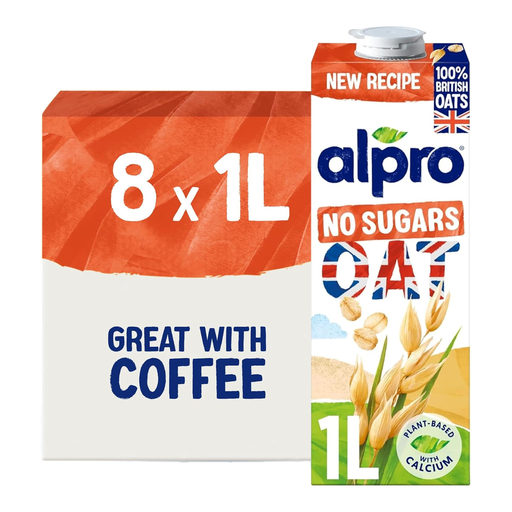 Image unavailable
A no-sugars option for shoppers comparing everyday oat drinks. Check calories per 100ml as well as the no-sugars wording, and consider whether eight cartons suit your storage and use.
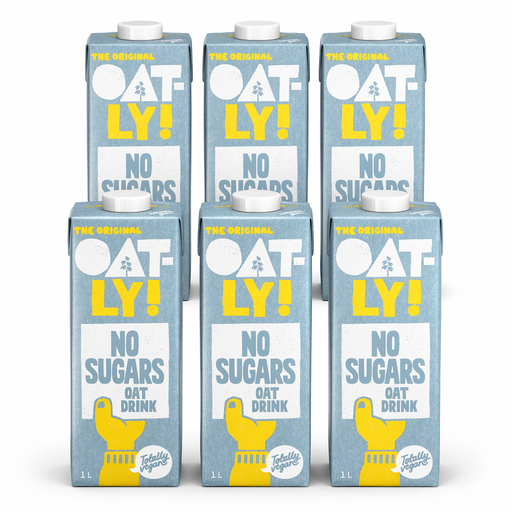 Image unavailable
A no-sugars oat drink for everyday use. Compare the carton’s calories and your usual serving as separate checks, and check its allergen statement if you need to avoid oats or gluten.
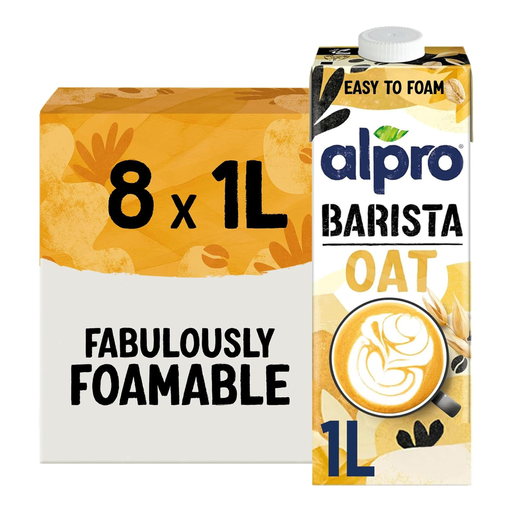 Image unavailable
A barista-style option when you want an oat drink for coffee preparation. Check the nutrition for the amount you put in each coffee; the eight-carton pack also calls for storage space.
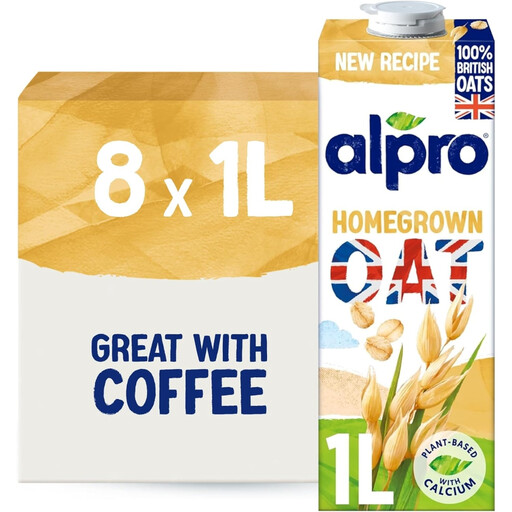 Image unavailable
An Original long-life oat drink to compare with the no-sugars and barista options for everyday use. Read its own nutrition panel rather than assuming those variants have the same figures, and consider the eight-carton pack size.
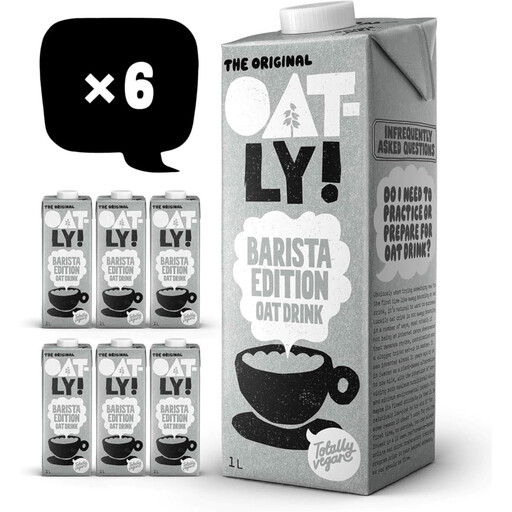 Image unavailable
A barista-style oat drink for shoppers choosing a coffee option. Compare its per-100ml nutrition and the quantity used in each drink; check the exact pack’s allergen information if needed.
Dairy-free is not, on its own, a calorie claim. For this decision, compare the specific oat drink’s calories per 100ml and the amount you use. NHS guidance frames weight management around an eating pattern that reduces calories and fits everyday life, rather than one particular product.
No-sugars does not, by itself, establish how its calories compare with another oat drink. If sweetness is your priority, use the claim as a starting point, then compare the cartons’ nutrition panels and your usual serving sizes.
Oatly lists 20 kcal and 2g fibre per 100ml for Fibre Low-Cal Edition. Those are product nutrition figures, not evidence that drinking it causes weight loss; consider the amount you would use.
Not automatically: dairy-free does not establish gluten-free or oat-free status. The Food Standards Agency says oats remain an allergen even in foods labelled gluten-free. Check the exact carton’s gluten-free claim and allergen statement against your requirements.
Choose a barista-style carton if its coffee use matters to you, but assess calories using the amount poured into your usual drink. Minor Figures lists 95 kcal per 200ml serving for Barista Oat; any sugar or syrup added to the coffee is separate from that figure.