Guests using one drink throughout the stay
If the carton needs to cover breakfast, tea and occasional cooking, check whether it can be stored before arrival and how quickly it must be used after opening.


For a cottage stay centred on cereal, tea and everyday cooking, choose a long-life oat drink if you need to shop before arrival; choose a barista version if making foamed coffee matters. Check the exact carton before buying for anyone avoiding gluten, wheat or oats: dairy-free wording does not establish suitability for those needs. Long-life describes storage before opening, so allow fridge space and follow the carton’s instructions once opened.
If the carton needs to cover breakfast, tea and occasional cooking, check whether it can be stored before arrival and how quickly it must be used after opening.
If lattes or cappuccinos are part of the routine, look at drinks specifically described for coffee or foaming rather than assuming every everyday oat drink will serve the same purpose.
Check the exact carton’s gluten-free claim, ingredients and allergen wording against the guest’s requirement. A dairy-free description answers a different question.
Start with the guests’ dietary requirements and the drink’s main use, then choose a pack format that fits the stay and available fridge space.
| Priority | What to check | Your needs |
|---|---|---|
| Dietary fit | Read the exact carton’s ingredients, allergen declaration and any gluten-free claim. The Food Standards Agency says oat remains an allergen even in gluten-free food; a gluten-free claim has a limit of 20 mg/kg gluten. | I need to distinguish dairy avoidance from gluten, wheat or oat restrictions before choosing a carton for another guest. |
| How it will be used | For lattes or cappuccinos, look for a named barista drink with a stated coffee or foaming use. For cereal, tea or cooking, check the everyday drink’s stated uses instead. | Will anyone make foamed coffee, or does one carton mainly need to cover breakfast and hot drinks? |
| Storage and quantity | Confirm whether the unopened carton is ambient or chilled, then read its refrigeration and use-within instructions for after opening. Compare the pack quantity with the length of the stay. | We may shop before arriving, but we still need space to refrigerate opened cartons and a quantity we can use. |
| Ingredients and fortification | Compare the ingredient list and any stated added nutrients on the exact product. Marks & Spencer lists its Only 3 Ingredients Oat Drink as unfortified, while its Barista Oat Drink lists added calcium, iodine and vitamins B12 and D. | I may prefer a shorter ingredient list, or I may specifically want a drink with stated fortification; those are separate choices. |
An oat drink can meet a dairy-free requirement without meeting a guest’s gluten or wheat requirements. Gluten-free wording does not resolve an oat allergy either.
Check the finished carton’s gluten-free claim and allergen wording for the particular guest. The Food Standards Agency identifies oat as an allergen even when a food is gluten-free.
A coffee-focused formulation addresses a different use from an everyday carton for cereal and tea; ingredient lists can differ too.
Decide whether anyone will actually make foamed coffee, then check the stated uses and ingredients of the drink you are considering.
A chilled carton needs refrigeration before opening, while an ambient carton’s storage conditions change once it is opened.
Check the unopened storage format before shopping ahead, and follow the individual carton’s refrigeration and use-within directions after opening.
Cartons left unused beyond their labelled opened period may have to be discarded.
The two describe different product characteristics: Marks & Spencer states that its Only 3 Ingredients Oat Drink is not fortified, while its Barista Oat Drink lists added nutrients.
If fortification matters to your choice, read the nutrition and ingredient information rather than judging by the number of ingredients.
These examples show differences between named oat drinks; a brand name alone does not establish the ingredients, storage format or allergen suitability of every variant.
Oatly’s UK Barista Edition is a coffee-focused option that the brand also describes for cooking and baking.
Alpro describes separate oat drinks for coffee and other uses, so the variant matters.
Minor Figures describes its Barista Oat for lattes, cappuccinos and everyday brewing.
Tesco’s oat-drinks category listed an own-label oat drink alongside branded long-life and barista drinks when reviewed.
Marks & Spencer lists a chilled three-ingredient oat drink and a separate fortified barista oat drink.
These options include long-life everyday and barista oat drinks for breakfast or coffee during a cottage stay. The pack quantities differ substantially, so check how much your group expects to use.
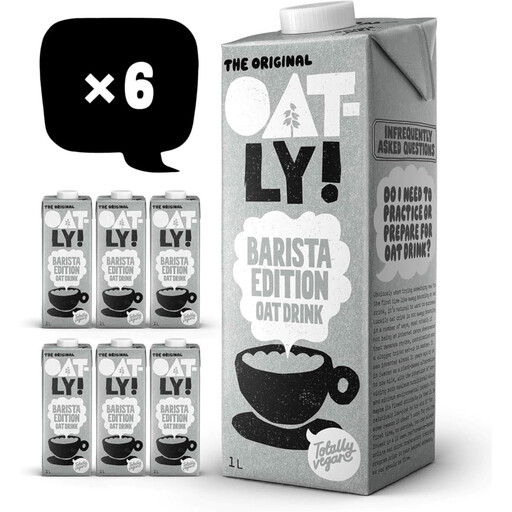 Image unavailable
Consider this barista drink if coffee is a priority but the cartons may also be used for cereal or cooking; Oatly describes its Barista Edition for coffee, cooking and baking. Check whether six 1L cartons fit the stay, and read the exact cartons for storage and allergen directions.
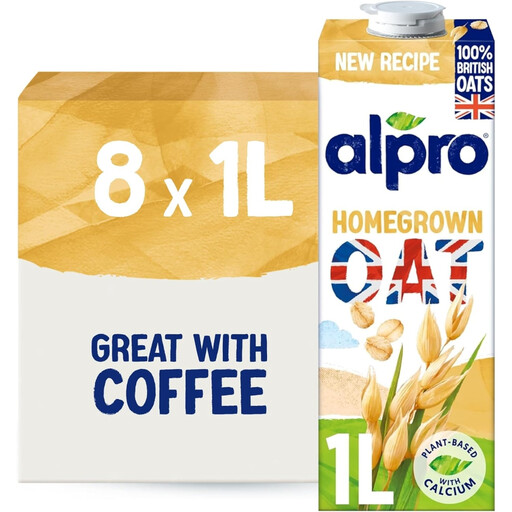 Image unavailable
An original long-life drink to consider when breakfast and general hot drinks matter more than foamed coffee. Eight 1L cartons call for a check against the group’s likely use; read the exact cartons for storage and dietary suitability.
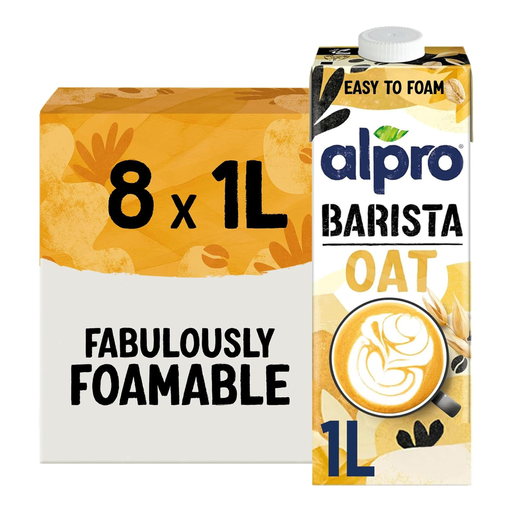 Image unavailable
Consider this coffee-focused variant if the group plans to make lattes or cappuccinos; Alpro describes its Barista Oat as made for coffee. The pack contains eight 1L cartons. Check the exact cartons’ allergen and opened-storage instructions.
 Image unavailable
This named long-life variant comes as eight 1L cartons for general-use shopping. If its sugar profile affects your choice, read the nutrition declaration on the exact carton rather than relying on the variant name; check its allergen and storage directions too.
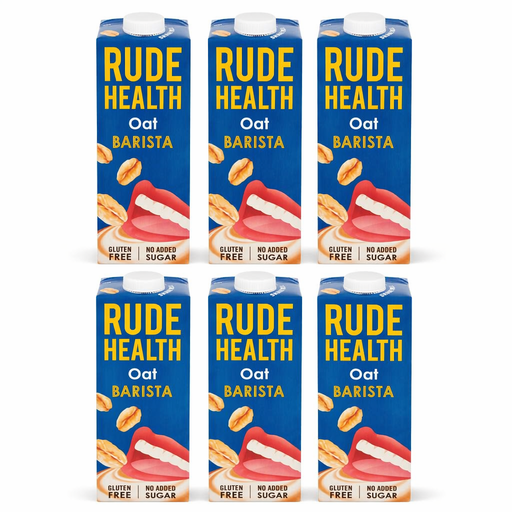 Image unavailable
A single 1L barista carton may suit a stay needing less oat drink than a multipack. If dairy avoidance or gluten avoidance is essential, check the exact finished carton’s claims and allergen wording before choosing it.
No. Dairy-free and gluten-free are separate claims. The Food Standards Agency sets a limit of 20 mg/kg gluten for food labelled gluten-free and says oat must still be identified as an allergen; check the exact carton’s gluten-free claim and allergen declaration for the guest’s needs.
No: gluten-free labelling does not remove oat from an oat drink. The Food Standards Agency identifies oat as an allergen even where a food is gluten-free, so do not use that claim as evidence of suitability for an oat-allergic guest.
Choose a barista drink if guests plan to make lattes, cappuccinos or other foamed coffees; Oatly, Alpro and Minor Figures describe named barista products for coffee. If the main uses are cereal and tea, an everyday oat drink may be the more relevant type to check.
Only when the specific carton is labelled for ambient storage. Oatly distinguishes shelf-stable cartons, which can be kept at room temperature before opening, from chilled drinks that must stay refrigerated. Follow the storage and best-before instructions on your carton.
Follow the individual carton’s refrigerated-storage and use-within instructions. Marks & Spencer specifies three days after opening for its Only 3 Ingredients Oat Drink and five days for its Barista Oat Drink, so one period should not be applied to every product.