People with diabetes who use oat drink daily
The amount added to cereal, porridge, smoothies or coffee changes the carbohydrate contribution. Diabetes UK advises considering total carbohydrate quantity when managing glucose levels.


When choosing oat milk while managing diabetes, compare the carbohydrate in the amount you actually pour rather than relying on a ‘no sugars’ label: Diabetes UK says total carbohydrate quantity has the biggest effect on glucose levels after eating. If it will regularly replace dairy milk, also check whether it is unsweetened and fortified with calcium, as Diabetes UK advises. For a family-size purchase, check the total volume: six 1L cartons are not an exact six-UK-pint bottle.
The amount added to cereal, porridge, smoothies or coffee changes the carbohydrate contribution. Diabetes UK advises considering total carbohydrate quantity when managing glucose levels.
A ‘no sugars’ claim does not make an oat drink carbohydrate-free. Compare both lines on the nutrition panel, and check calcium fortification if the drink regularly replaces dairy milk.
A multipack can provide several cartons for household use, but its carton count is not its volume in pints. Check the size of each carton and the storage directions before buying.
Start with the nutrition panel for the amount you normally use, then check fortification and whether the pack contains the volume and format you need.
| Priority | What to check | Your needs |
|---|---|---|
| Carbohydrate per portion | Read carbohydrate per 100ml and work it out for the volume you pour. Diabetes UK says total carbohydrate quantity has the biggest effect on glucose levels after eating. | A splash in tea and a large latte use different amounts of oat drink; I want to account for the portion I actually have. |
| ‘No sugars’ labelling | Check sugars and total carbohydrate separately. Alpro UK lists 0.0g sugars but 6.4g carbohydrate per 100ml for its Oat No Sugars 1L drink. | If I choose a drink with no listed sugars, I still want to know how much carbohydrate my usual serving contains. |
| Calcium fortification | Check the exact carton for calcium fortification alongside its sugar and carbohydrate values. Diabetes UK advises choosing unsweetened, calcium-fortified plant-based milk alternatives. | When oat drink regularly replaces dairy milk, calcium fortification matters to my choice as well as the nutrition figures for each serving. |
| Pack volume and storage | Check the number of cartons, volume per carton and storage instructions. Six 1L cartons contain 6L, which is not six UK pints. | For household stock, I need to know how many cartons will fit in the cupboard and how each one must be stored after opening. |
Alpro UK lists 6.4g carbohydrate per 100ml for Oat No Sugars 1L despite its 0.0g sugars figure. The difference matters more as the amount poured increases.
Use the carbohydrate figure and your actual portion when comparing drinks for cereal, coffee or cooking.
A drink intended for coffee still needs a nutrition check if carbohydrate is part of the decision. M&S lists 7.7g carbohydrate and 3.8g sugars per 100g for its Barista Oat Drink.
If coffee preparation matters to you, compare the barista drink’s panel with the standard or no-sugars options you would otherwise use, keeping the stated units in view.
Carton count and total volume describe different things: a pack of six 1L cartons contains 6L, not six UK pints.
Read both the carton count and the volume on each carton before deciding how much to stock.
Diabetes UK advises checking that plant-based milk alternatives are fortified with calcium. A product’s oat base alone does not tell you whether it meets that preference.
Check fortification on the exact product label, as well as its carbohydrate and sugars.
Alpro offers a 1L Oat No Sugars drink for shoppers comparing labelled sugars with total carbohydrate.
Oatly has original, no-sugars and barista oat-drink formats; Ocado lists a 1.5L Barista Edition.
Minor Figures offers Everyday Oat in a six-carton pack, a format to consider when stocking up.
Tesco Groceries lists 1L own-label oat drinks, including Long Life Oat Original.
M&S lists 1L oat drinks, including a Barista Oat Drink intended for coffee.
These oat-drink multipacks offer cartons for household use, with original, no-sugars and barista options. Check each carton’s nutrition panel for your usual portion; none of the pack titles describes a single six-UK-pint bottle.
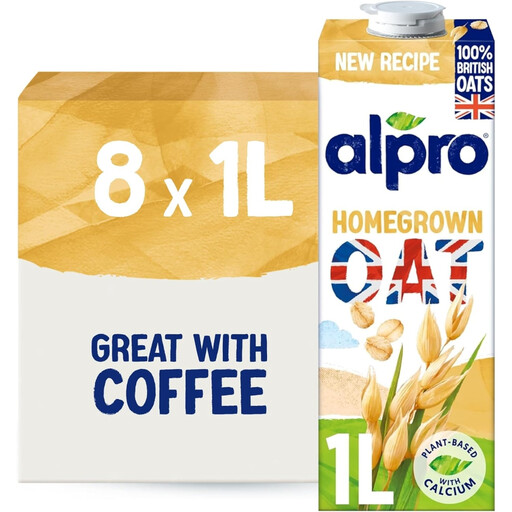 No image available
For households using oat drink in cereal or hot drinks, this is an eight-carton pack rather than one large bottle. Compare the carbohydrate on the carton with the amount you normally pour.
 No image available
For a household that prefers a no-sugars oat drink, this pack contains eight 1L cartons. ‘No Sugars’ does not mean carbohydrate-free: check the carbohydrate line for the portion you use.
 No image available
This eight-carton barista pack is an option when coffee preparation is part of the household’s use. Compare its carbohydrate and sugars with other oat drinks rather than judging it by its coffee-focused name.
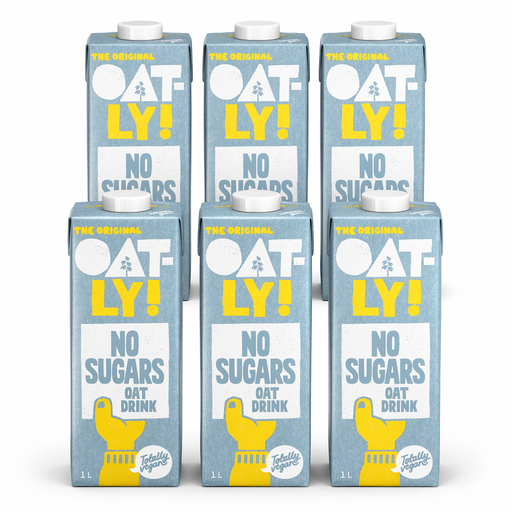 No image available
Six 1L cartons provide a multipack for households choosing a no-sugars format, not an exact six-pint container. Check total carbohydrate on the carton for the amount used in drinks or food.
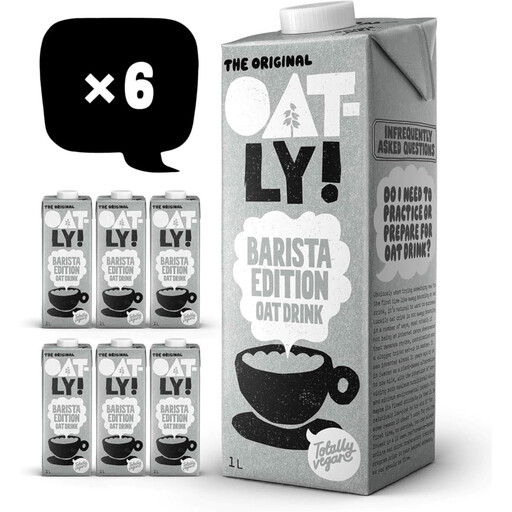 No image available
This six-carton barista pack is aimed at households buying oat drink for coffee as well as stocking up. If carbohydrate is a deciding factor, check its nutrition panel for the volume used in each drink.
No. Alpro UK lists 0.0g sugars but 6.4g carbohydrate per 100ml for its Oat No Sugars 1L drink. Read both figures and consider the amount you pour; Diabetes UK says total carbohydrate quantity has the biggest effect on glucose levels after eating.
Start with carbohydrate per 100ml and the quantity you will use, rather than the sugar figure alone. Diabetes UK also advises checking that plant-based milk alternatives are unsweetened and fortified with calcium.
Yes, the volume changes how much of the drink’s labelled carbohydrate you consume. A splash in tea and the oat drink used for a large latte are different portions, so compare the nutrition panel with the amount you normally add.