Vegan shoppers managing diabetes
A vegan label does not tell you how much carbohydrate or sugar is in a serving. Diabetes UK advises checking these values and looking for an unsweetened, calcium-fortified dairy alternative.


Vegan oat milk is not automatically suitable for everyone managing diabetes: compare carbohydrate as well as sugars per 100ml, then account for how much you pour. If it regularly replaces dairy, Diabetes UK advises choosing an unsweetened drink fortified with calcium and vitamin B12, and checking for iodine; coffee texture and a short ingredient list are separate considerations.
A vegan label does not tell you how much carbohydrate or sugar is in a serving. Diabetes UK advises checking these values and looking for an unsweetened, calcium-fortified dairy alternative.
If you pour oat milk several times a day, compare the per-100ml nutrition panel with the amount you actually use. A splash in tea and a larger serving on cereal contribute different amounts.
Barista oat drinks are positioned for coffee preparation, but texture is only one part of the choice. Check their carbohydrate and sugars alongside the serving size you use.
Start with the amount you pour, then use the nutrition panel to compare drinks on the same basis. Fortification, coffee use and allergen information matter according to your circumstances.
| Priority | What to check | Your needs |
|---|---|---|
| Carbohydrate and sugars | Read both figures per 100ml, then consider the volume poured. Compare like-for-like units: the M&S three-ingredient drink declares nutrition per 100g, not per 100ml. | I want to account for the oat drink in my usual carbohydrate intake, whether I use a little in tea or pour a larger serving. Diabetes UK says both the type and amount of carbohydrate matter in diabetes management. |
| Fortification | Check the specific carton for calcium and vitamin B12, and look for iodine. A short ingredient list does not establish that these nutrients have been added. | If oat milk regularly replaces dairy for me, I want an unsweetened, fortified option. These are the label checks Diabetes UK recommends for dairy alternatives in a vegan diet. |
| Coffee use | Check whether the drink is intended for steaming or frothing, then read its carbohydrate and sugars on the stated serving basis. | Foam matters in my coffee, but I still want to know what goes into the amount I pour. Minor Figures positions its Barista Oat for lattes and cappuccinos. |
| Allergens | Read the ingredients, precautionary allergen information and any gluten-free or coeliac suitability statement on the exact carton. Do not use a vegan label in place of these checks. | Where an allergy or coeliac disease is relevant, I need information about the particular drink, not just its vegan description. The Food Standards Agency notes that vegan products can present a cross-contamination risk. |
Vegan describes the product’s dietary formulation, not its carbohydrate or sugar content. Diabetes UK advises considering the type and amount of carbohydrate consumed when managing diabetes.
Compare both nutrition figures on the carton and relate them to the quantity you actually use.
Alpro UK lists 3.2g sugars per 100ml for Oat Original despite its no-added-sugars description; its Oat No Sugars lists 0.0g. The latter still lists 6.4g carbohydrate per 100ml.
Read the “of which sugars” and total carbohydrate lines rather than relying on either front-of-pack phrase alone.
M&S describes its Only 3 Ingredients Oat Drink as not fortified. A short ingredient list therefore does not answer the nutrient question when a drink regularly replaces dairy.
Check the carton for calcium and vitamin B12, and for iodine, in line with Diabetes UK’s advice on dairy alternatives.
A vegan description does not rule out allergen cross-contact. Suitability also depends on the specific ingredients and manufacturing information for the drink.
If an allergy is relevant, read the full ingredient list and precautionary allergen statement on the carton.
Alpro UK lists both Oat No Sugars and Oat Original, which illustrate why the sugar line deserves a separate check from the front-of-pack wording.
Minor Figures positions Barista Oat for lattes and cappuccinos.
M&S lists a three-ingredient oat drink and a separate fortified Barista Oat Drink; their attributes should not be treated as interchangeable.
Oatly describes its original oat drink as fortified, while other named Oatly drinks include no-sugars and barista options.
Tesco’s oat-drink range includes own-label and other-brand products, with standard, no-sugars and barista descriptions.
These options include cartons labelled No Sugars and drinks positioned for barista use. Compare each carton’s carbohydrate, sugars, fortification and allergen information against how you intend to use it.
 No image available
For regular use, compare the carbohydrate figure with the amount you pour; the No Sugars name alone does not answer that question. This is an 8 × 1L pack. Check fortification and allergen information on the carton if either affects your choice.
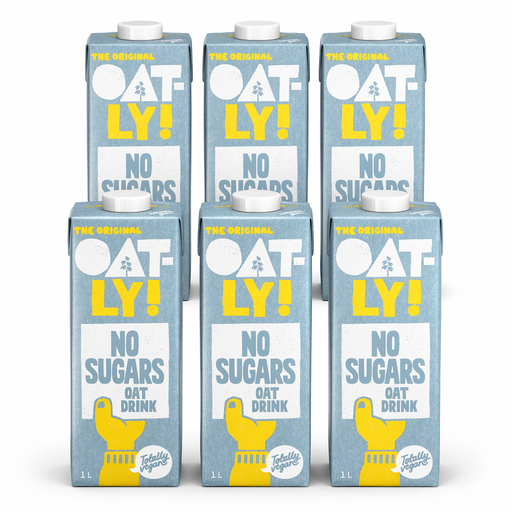 No image available
This 6 × 1L pack is labelled No Sugars. Read the particular carton’s per-100ml carbohydrate and sugars figures, and check its fortification if you plan to use it regularly in place of dairy.
 No image available
Consider this 6 × 1L barista pack if coffee preparation is a priority. Compare the sugars and carbohydrate on the carton with the quantity you use in each drink rather than assuming a barista label describes its nutrition.
 No image available
This 8 × 1L barista pack is an option to examine for coffee use. Check both carbohydrate and sugars per 100ml; if it will also replace dairy regularly, check the carton for calcium, vitamin B12 and iodine.
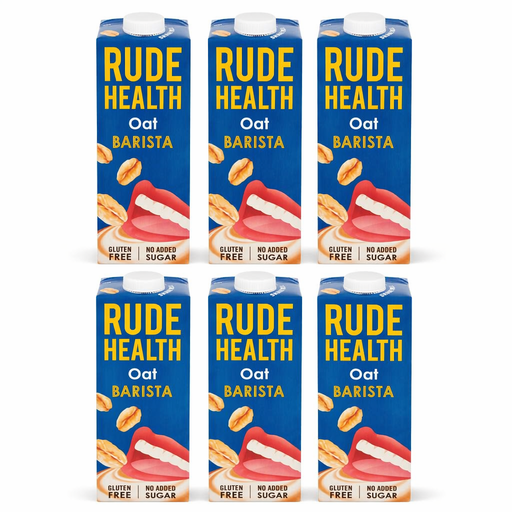 No image available
This 1L barista drink is another option to examine for coffee. Read its carbohydrate and sugars per 100ml, and check the finished carton’s fortification and allergen statements where relevant.
No: a vegan description does not specify carbohydrate or sugar content. Diabetes UK says the type and amount of carbohydrate consumed can affect diabetes management, so read both figures and consider the serving you use.
No. Alpro UK lists 3.2g sugars per 100ml for Oat Original, described as having no added sugars, and 0.0g for Oat No Sugars. Check total carbohydrate as well: the No Sugars drink lists 6.4g per 100ml.
Diabetes UK advises choosing an unsweetened dairy alternative fortified with calcium and vitamin B12, and checking for iodine. Read the particular carton: M&S states that its Only 3 Ingredients Oat Drink is not fortified.
No. Check the exact product’s suitability statement rather than assuming that an oat drink or a vegan label answers the question. M&S states that its Only 3 Ingredients Oat Drink is not suitable for coeliacs.
No. Vegan labelling does not rule out allergen cross-contact. If a milk allergy is relevant, check the specific carton’s ingredients and precautionary allergen information rather than relying on its vegan description.